- Plants
- ›Vascular Plants
- ›flowering plants
- ›Dicots
- ›Mints, Plantains, Olives, and Allies
- ›bladderwort family
- ›Utricularia
- ›Utricularia
- ›Orchidioides
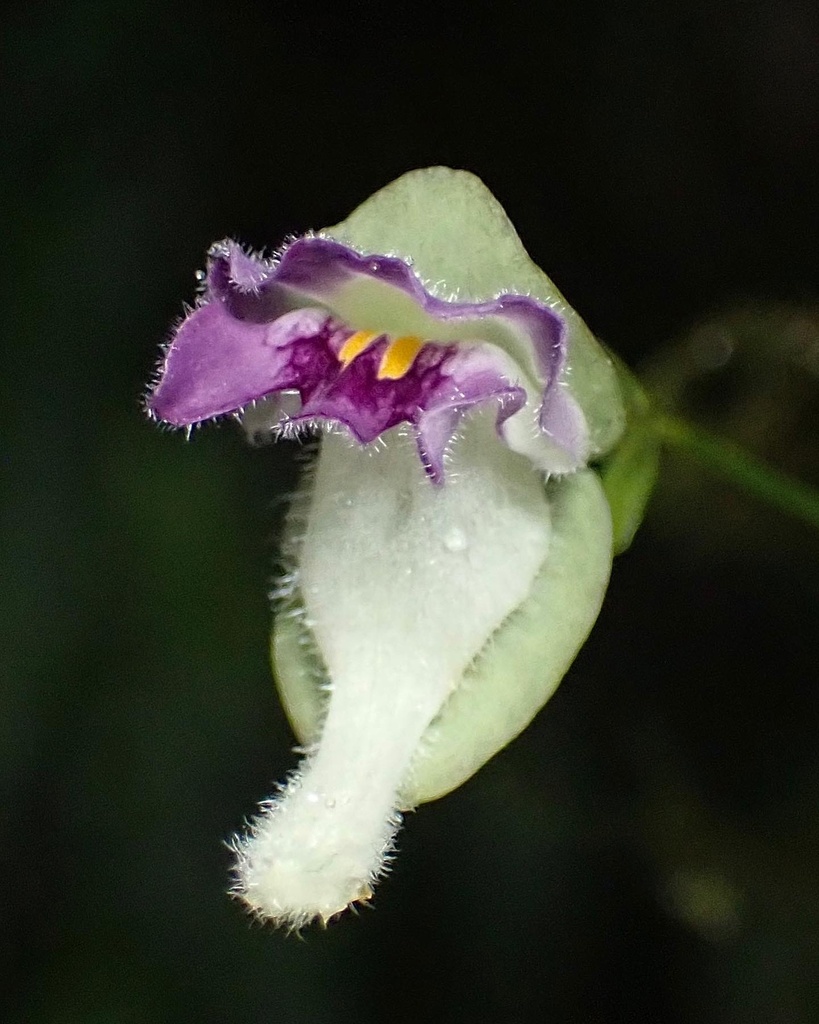
Jameson's utricularia
Utricularia jamesoniana
Utricularia jamesoniana is a small perennial epiphyte carnivorous plant in the family Lentibulariaceae. It is native to Central America, the Antilles, and northern and western South America. Specifically, it can be found in Bolivia, Brazil, Colombia, Costa Rica, Ecuador, French Guiana, Guatemala, Guyana, Nicaragua, Panama, Peru, Suriname, and Venezuela and on the islands of Guadeloupe, Hispaniola, Dominica, and Martinique. The species was originally published and described by Daniel Oliver in 1860. Its habitat is reported as being mossy tree trunks in montane cloud forests or lowland rain forests at altitudes from sea level to 2,500 m (8,202 ft). It flowers year-round.
Where it lives
Recorded sightings
—
geo-referenced records in GBIF, from museums, herbaria and field observers.
Drag the globe to turn it. Dots are where records exist, not a range map; darker means more records.
In the stacks
Searching the stacks…
Every page naming Utricularia jamesoniana in the Biodiversity Heritage Library →
This page is assembled live from iNaturalist, GBIF, Wikipedia, the Source Library and the Internet Archive. It is not yet part of the hand-edited codex. iNaturalist taxon 277992.