- Plants
- ›Vascular Plants
- ›flowering plants
- ›monocots
- ›Agaves, Orchids, Irises, and Allies
- ›agave and allies
- ›Asparagus subfamily
- ›Asparagus
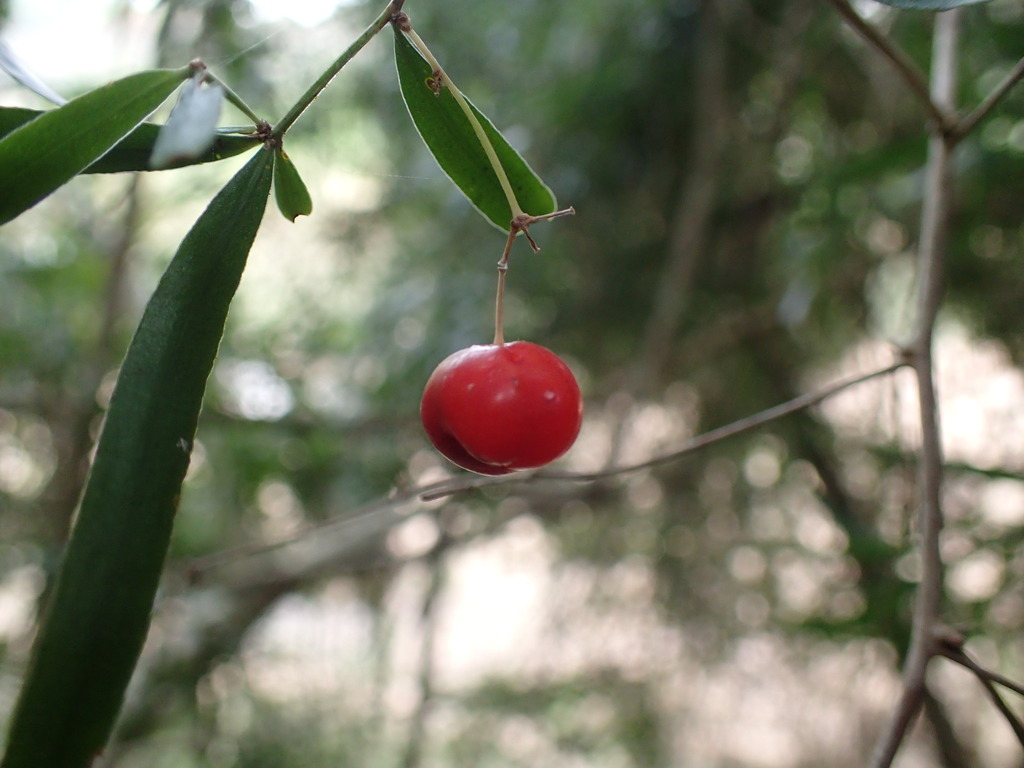
Sicklethorn
Asparagus falcatus
Asparagus falcatus (Sicklethorn, Large Forest Asparagus, Imblekazana or Doringtou) is a large, thorny, climbing plant of the Asparagus genus, that is indigenous to South Africa and Mozambique. It is often grown as a security hedge in southern Africa.
From the article Asparagus falcatus on Wikipedia (CC BY-SA), quoted section by section
Description
This local Asparagus species sends up long shoots (sometimes up to 7 metres (23 ft) high) from its base of roots and massive tubers. These shoots are initially soft and curl around branches or fences. However, they soon harden, and the downward-pointing thorns help to hook the tendril onto its support - as well as providing defence. The leaves are dark-green, thin and curved. It produces fragrant white blossoms that are followed by bright red berries, each containing a shiny black seed. The fruits attract a wide variety of birds.
Wikipedia: “Appearance”
Range & habitat
In South Africa, this creeper is indigenous to the forests of the Eastern Cape and Kwazulu Natal. It also occurs in neighbouring Mozambique.
Wikipedia: “Distribution”
How it is grown
This rapidly growing climber can be grown in very shady parts of a garden, although it also tolerates some sun. It also prefers moist spots, though once established it can also tolerate some drought. It serves as a very good safety hedge when planted along a fence that it can grow up through. It can easily be propagated by seed, although it can also be grown from cuttings/trucheons.
Wikipedia: “Asparagus falcatus in cultivation”
Where it lives
Recorded sightings
—
geo-referenced records in GBIF, from museums, herbaria and field observers.
Drag the globe to turn it. Dots are where records exist, not a range map; darker means more records.
In the stacks
Searching the stacks…
Every page naming Asparagus falcatus in the Biodiversity Heritage Library →
This page is assembled live from iNaturalist, GBIF, Wikipedia, the Source Library and the Internet Archive. It is not yet part of the hand-edited codex. iNaturalist taxon 283326.