- Plants
- ›Vascular Plants
- ›flowering plants
- ›monocots
- ›gingers, bananas, and allies
- ›Lobster-claws
- ›Heliconia
- ›Taeniostrobus
- ›Aurantiacae
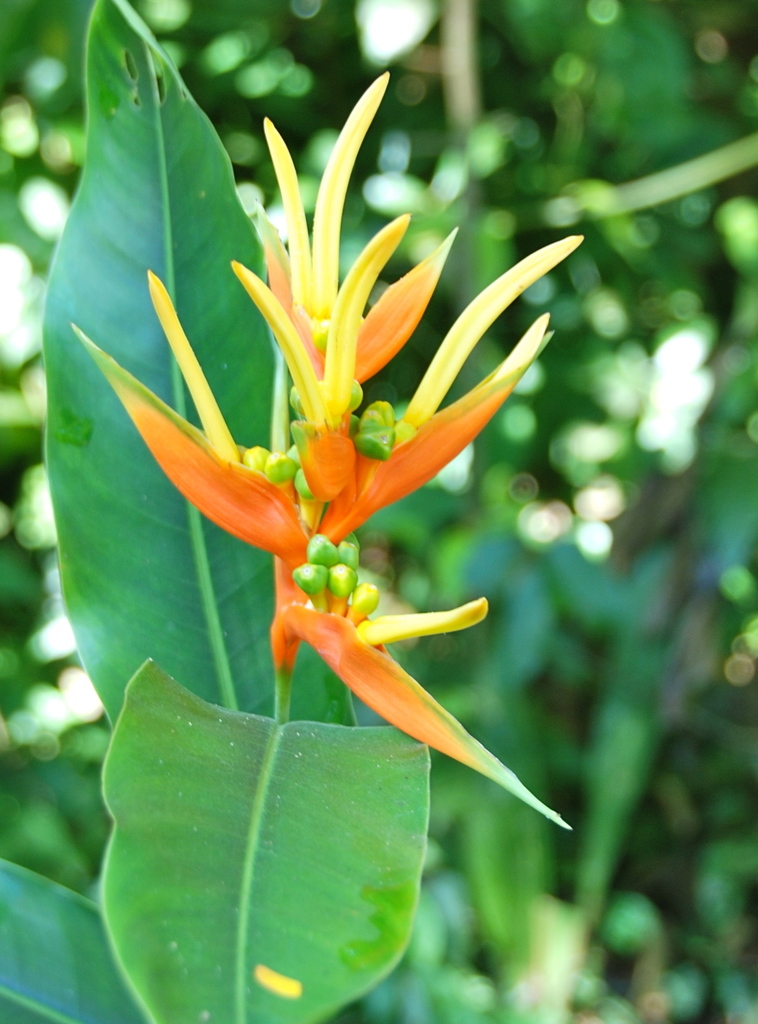
Heliconia aurantiaca
Heliconia aurantiaca, sometimes known as the Golden Dwarf Heliconia or Yellow Heliconia, is a species of flowering plant belonging to the monotypic Heliconia family, the Heliconiaceae.
From the article Heliconia aurantiaca on Wikipedia (CC BY-SA), quoted section by section
Description
Heliconia aurantiaca grows up to 1.5m tall (~5ft). It's herbaceous and arises from rhizomes. Its leaves are large and glossy, similar to those on banana and ginger plants. Blades up to 35cm long and 7cm wide (~14 x 3 inches) are lobed or "eared" at their bases, and have no petioles, or very short ones. Inflorescences are held erect atop peduncles. Rachises and scoop-shaped bracts subtending individual flowers are red to orange. The flowers' remarkable structure results from having evolved to accommodate both hummingbird pollinators and insect herbivores; they develop upside-down and at right angles to their bracts. Perianths are curved, green to yellow, and with green to yellow ovaries. Mature fruits are blue and hairless. Fruits are drupes.
Range & habitat
Heliconia aurantiaca naturally occurs from southern Mexico south into Costa Rica.
Wikipedia: “Distribution”
In human culture
The genus name Heliconia is named after Mount Helicon in southern Greece, regarded as the home of the Muses. The species name aurantiaca is from the New Latin aurantiacus meaning "orange, between yellow and scarlet," apparently in reference to the flower color.
Wikipedia: “Etymology”
Where it lives
Recorded sightings
—
geo-referenced records in GBIF, from museums, herbaria and field observers.
Drag the globe to turn it. Dots are where records exist, not a range map; darker means more records.
In the stacks
Searching the stacks…
Every page naming Heliconia aurantiaca in the Biodiversity Heritage Library →
This page is assembled live from iNaturalist, GBIF, Wikipedia, the Source Library and the Internet Archive. It is not yet part of the hand-edited codex. iNaturalist taxon 283628.