- Plants
- ›Vascular Plants
- ›flowering plants
- ›Dicots
- ›Legumes, Milkworts, and Allies
- ›Legumes
- ›Acacias, Mimosas, Mesquites, and Allies
- ›Ingeae
- ›Inga
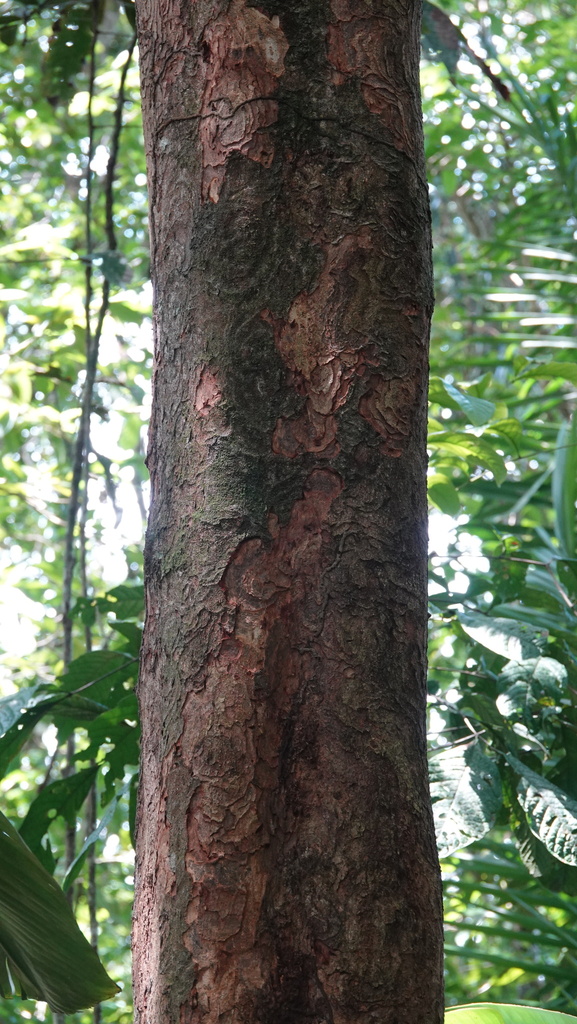
white inga
Inga alba
Inga alba is a species of tree from the family Fabaceae, native to Central and South America. The common name in English is white inga.
From the article Inga alba on Wikipedia (CC BY-SA), quoted section by section
Description
Inga alba can grow up to 40 m in height. It has red bark and 4 to 5 leaf pairs (occasionally 3 or 6 pairs), with the distal pair 6.1–10 cm long and 2.5—7.7 cm wide. The rachis is 5—13.5 cm long and wingless. The glands are cone-shaped, the stipules obsolete. The inflorescences are short, the shaft is 4–20 mm long and the rachis 5–8 mm long. The flowers are pale green and the stamen are white. The fruits are flat up to 14 cm long and 2 cm wide. It flowers between August and November and bears fruit between January and March.
Range & habitat
Inga alba's distribution ranges from Mexico and Central America down to Peru, Bolivia and Brazil in South America.
Wikipedia: “Distribution”
Where it lives
Recorded sightings
—
geo-referenced records in GBIF, from museums, herbaria and field observers.
Drag the globe to turn it. Dots are where records exist, not a range map; darker means more records.
In the stacks
Searching the stacks…
Every page naming Inga alba in the Biodiversity Heritage Library →
This page is assembled live from iNaturalist, GBIF, Wikipedia, the Source Library and the Internet Archive. It is not yet part of the hand-edited codex. iNaturalist taxon 287656.