- Animals
- ›Arthropods
- ›Crustaceans
- ›Typical Crustaceans
- ›Malacostracans
- ›Mantis Shrimps
- ›Mantis Shrimps
- ›Unipeltata
- ›Gonodactyloidea
- ›Gonodactylidae
- ›Neogonodactylus
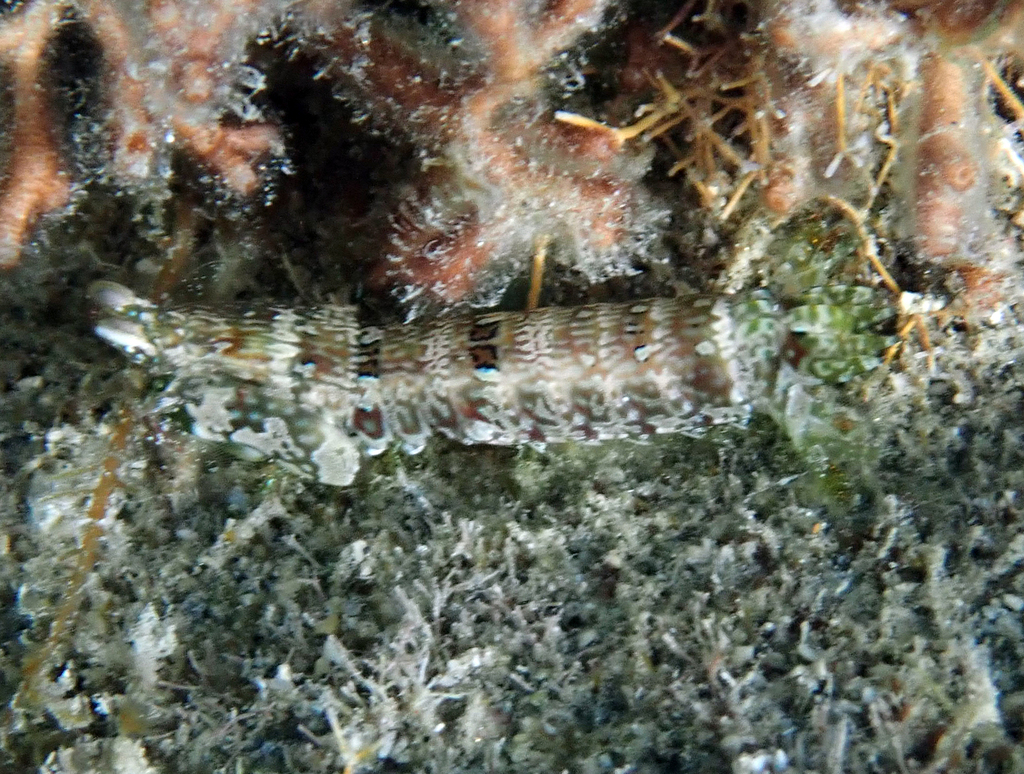
Neogonodactylus bredini
Neogonodactylus bredini, commonly known as the split-thumb mantis shrimp, is a stomatopod native to tropical parts of the western Atlantic. It lives in the littoral zone and prefers shallow waters, most common in depths up to 15 meters. N. bredini thrive among sponges, corals, and rocks on the ocean floor. Like other stomatopods, it has large, powerful raptorial claws that it uses to fight other stomatopods and break the shells of prey.
N. bredini lives in rocky crevices and cavities, a highly contested resource on the ocean floor. It has complex social behaviors, able to recognize other individuals of its species, and will often participate in aggressive contests with them over control of territory. Its enlarged raptorial claws have blunt edges, putting it under the smasher class of mantis shrimp, and they make it a skilled fighter and hunter that opportunistically preys on hard- and soft-shelled prey.
From the article Neogonodactylus bredini on Wikipedia (CC BY-SA), quoted section by section
Description
Neogonodactylus bredini is usually light green in color, although it can range between reddish, darker green, and blue. Their walking legs are yellow or orange, and their dactyls are usually pink. Like other smashing type mantis shrimp, its raptorial claws have a blunt, swollen base for smashing hard-shelled prey. Males grow to about 70mm in size, females to 75mm. N. bredini can be distinguished from the similar Neogonodactylus lacunatus by a lack of channeled grooves along its carapace, which are observed in N. lacunatus.
Wikipedia: “Appearance”
Range & habitat
Neogonodactylus bredini is native to tropical parts of the western Atlantic. It is found around the Gulf of Mexico and the Caribbean Sea around coastal areas, from the southern edge of the Bermudas and the Carolinas to the northern parts of Curaçao and Bon-Aire.
Wikipedia: “Geographic range”
What it does
Neogonodactylus bredini is a generalist predator, preying on soft-bodied and hard-bodied animals opportunistically. It will eat worms, fish, shrimp, crabs, and whatever prey is readily available in its habitat. Like other smasher-type stomatopods, it hunts hard-shelled prey, like snails and crabs, by smashing them with the blunt edge of its raptorial claw. However, N. bredini will strike soft- and hard-bodied prey alike. It can travel up to 2 meters away from its cavity to hunt, going on upwards of 10 hunts a day and bringing prey back to its cavity to eat. N. bredini is capable of learning from its prey and will strategically target weak spots or seams on shells. If a single blow does not break a shell, an individual may experimentally strike a shell many times to test the effectiveness of specific strike locations. It will strike differently shaped shells in different places in order to break them open with the least effort.
Wikipedia: “Diet”
Where it lives
Recorded sightings
—
geo-referenced records in GBIF, from museums, herbaria and field observers.
Drag the globe to turn it. Dots are where records exist, not a range map; darker means more records.
In the stacks
Searching the stacks…
Every page naming Neogonodactylus bredini in the Biodiversity Heritage Library →
This page is assembled live from iNaturalist, GBIF, Wikipedia, the Source Library and the Internet Archive. It is not yet part of the hand-edited codex. iNaturalist taxon 295537.