- Plants
- ›Vascular Plants
- ›Ferns
- ›Leptosporangiate Ferns
- ›Polypod Ferns
- ›eupolypods II
- ›spleenwort family
- ›Asplenium
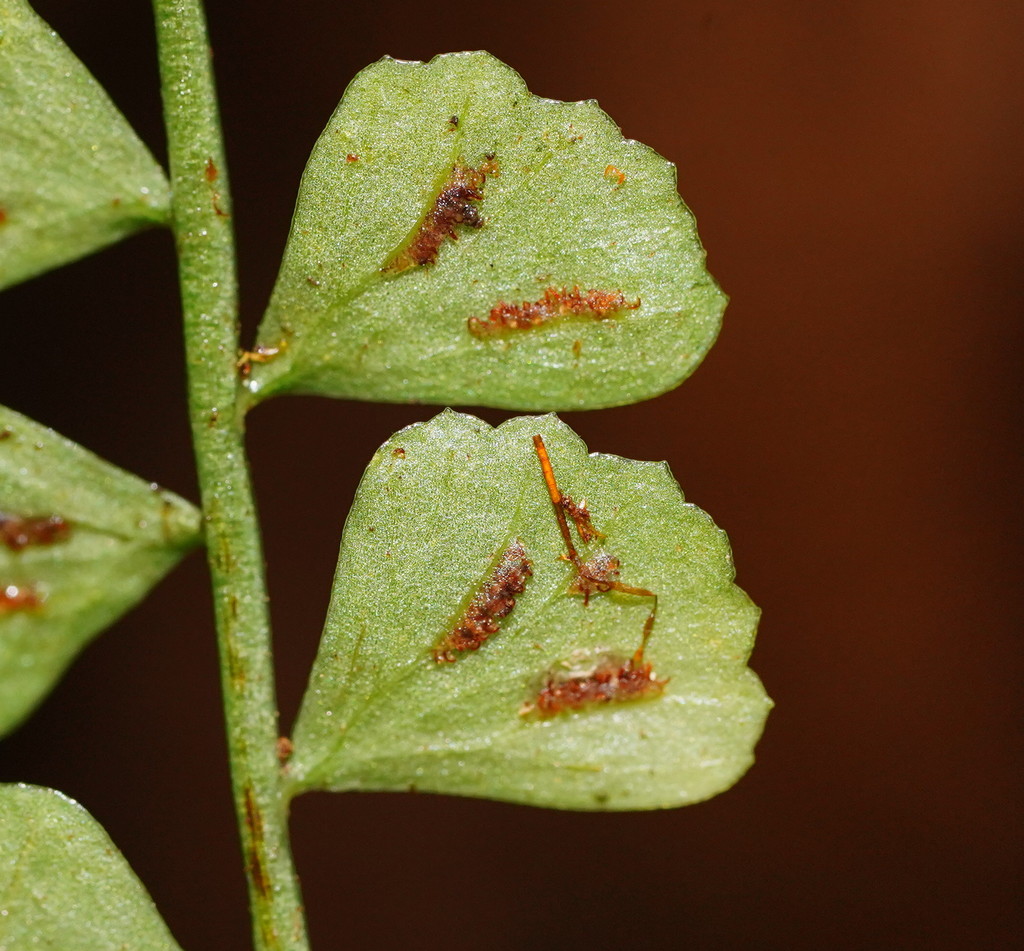
Necklace Fern
Asplenium flabellifolium
Asplenium flabellifolium is commonly known as the necklace fern. This small fern occurs in all states of Australia, as well as in New Zealand. It was initially described by Spanish botanist Antonio José Cavanilles.
From the article Asplenium flabellifolium on Wikipedia (CC BY-SA), quoted section by section
Description
The fronds are 10 to 20 cm (3.9 to 7.9 in) long, with 5 to 20 pairs of pinnae (leaflets), often fan-shaped or sometimes lanceolate. The fronds are flaccid and tend to droop. Spores are born in elongate sori on the underside of the fronds. It has short, erect rhizomes bearing small, dark-brown scales.
Range & habitat
Its natural habitats are open forest or scrub, rainforest, and grasslands. Usually on the ground or rocks, but sometimes epiphytic. Often seen in rock crevices, caves, on fallen logs and tree trunks, beside streams, or near cliffs, or waterfalls.
Wikipedia: “Distribution and habitat”
In human culture
The name walking fern refers to the plant's tendency for the fronds to re-root at their tips, producing new plants, giving the semblance of walking. Butterfly fern references the shape of the pinnules.
== References ==
Wikipedia: “Etymology”
Where it lives
Recorded sightings
—
geo-referenced records in GBIF, from museums, herbaria and field observers.
Drag the globe to turn it. Dots are where records exist, not a range map; darker means more records.
In the stacks
Searching the stacks…
Every page naming Asplenium flabellifolium in the Biodiversity Heritage Library →
This page is assembled live from iNaturalist, GBIF, Wikipedia, the Source Library and the Internet Archive. It is not yet part of the hand-edited codex. iNaturalist taxon 323489.