- Animals
- ›Arthropods
- ›Hexapods
- ›Insects
- ›Winged and Once-winged Insects
- ›Flies
- ›Brachyceran Flies
- ›Cyclorrhaphan Flies
- ›Schizophoran Flies
- ›Acalyptrate Flies
- ›Fruit, Signal, and Picture-winged Flies
- ›Signal Flies
- ›Platystomatinae
- ›Platystoma
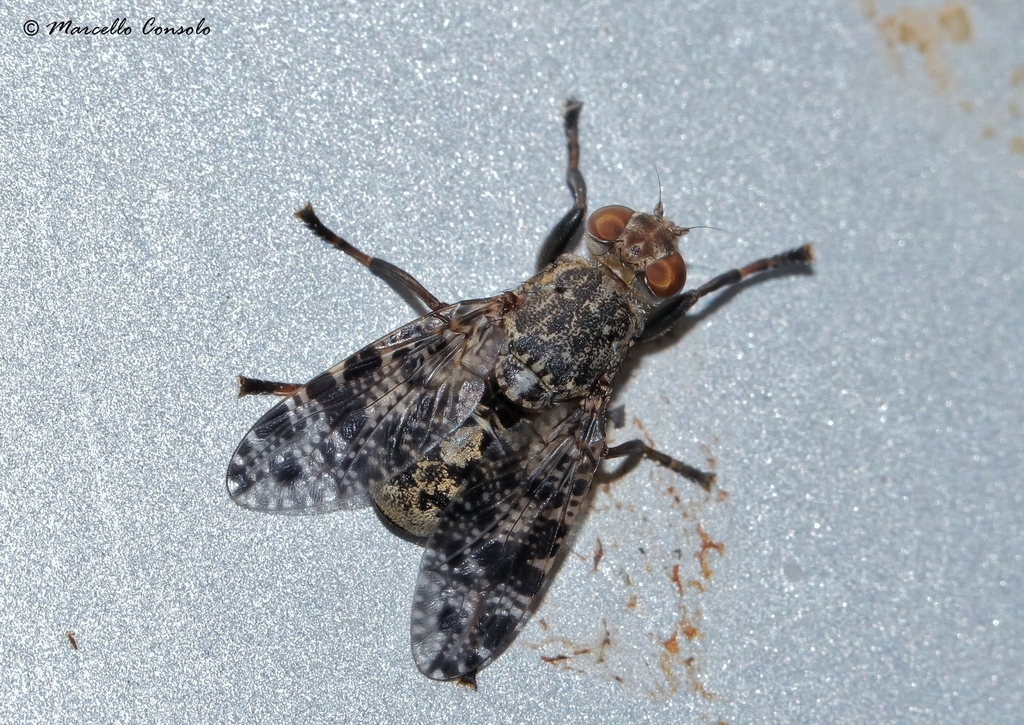
Platystoma lugubre
Platystoma lugubre is a species of fly in the family Platystomatidae, commonly found in Europe and known for its distinctive wing patterns.
From the article Platystoma lugubre on Wikipedia (CC BY-SA), quoted section by section
Description
Platystoma lugubre can reach a length of 6–10 millimetres (0.24–0.39 in). These medium-sized flies have a body mottled with greyish and yellow. The upperside of the abdomen is shiny black with two large spots of yellow gray pollonisity. The lower part of the abdomen is lemon yellow. The large eyes are reddish. Halteres are reddish yellow. Legs are black. Wings are black, mottled with transparent spots. This species is rather similar to Platystoma seminationis, but the latter is clearly smaller and quite common.
Range & habitat
These flies mainly inhabit the edges of forests, parks, gardens, woodlands, scrubs and cemeteries.
Wikipedia: “Habitat”
Listen
Looking for field recordings…
Where it lives
Recorded sightings
—
geo-referenced records in GBIF, from museums, herbaria and field observers.
Drag the globe to turn it. Dots are where records exist, not a range map; darker means more records.
In the stacks
Searching the stacks…
Every page naming Platystoma lugubre in the Biodiversity Heritage Library →
This page is assembled live from iNaturalist, GBIF, Wikipedia, the Source Library and the Internet Archive. It is not yet part of the hand-edited codex. iNaturalist taxon 324315.