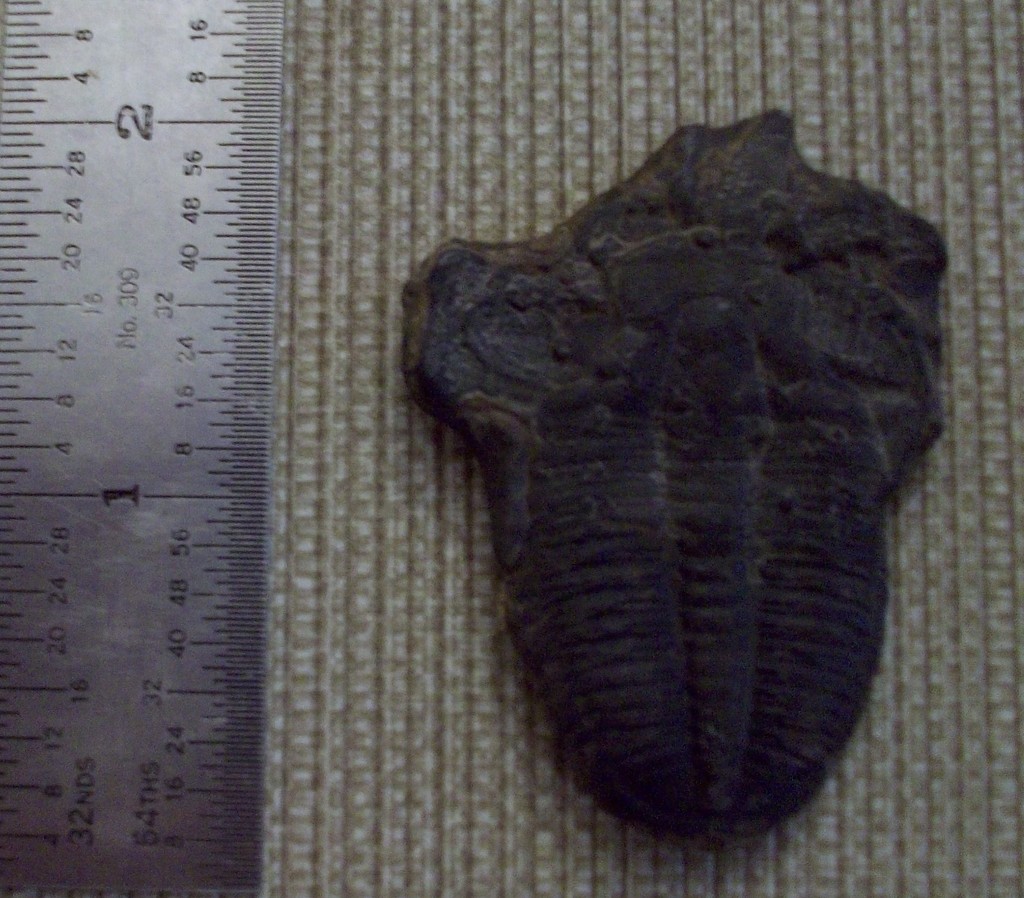
Ptychopariida
Ptychopariida is a large, heterogeneous order of trilobite containing some of the most primitive species known. The earliest species occurred in the second half of the Lower Cambrian, and the last species did not survive the Ordovician–Silurian extinction event.
Trilobites have facial sutures that run along the margin of the glabella and/or fixigena to the shoulder point where the cephalon meets the thorax. These sutures outline the cranidium, or the main, central part of the head that does not include the librigena (free cheeks). The eyes are medial along the glabella on the suture line (and some species have no eyes). The fossils of the moults of trilobites can often be told from the fossils of the actual animals by whether the librigena are present. (The librigena, or cheek spines, detach during moulting.) In ptychopariids, short bladelike genal spines are often present on the tips of the librigena.

Where it lives
Recorded sightings
—
geo-referenced records in GBIF, from museums, herbaria and field observers.
Drag the globe to turn it. Dots are where records exist, not a range map; darker means more records.
In the stacks
Searching the stacks…
Every page naming Ptychopariida in the Biodiversity Heritage Library →
This page is assembled live from iNaturalist, GBIF, Wikipedia, the Source Library and the Internet Archive. It is not yet part of the hand-edited codex. iNaturalist taxon 325840.