- Plants
- ›Vascular Plants
- ›flowering plants
- ›Dicots
- ›Heathers, Balsams, Primroses, and Allies
- ›sapodilla family
- ›Pouteria
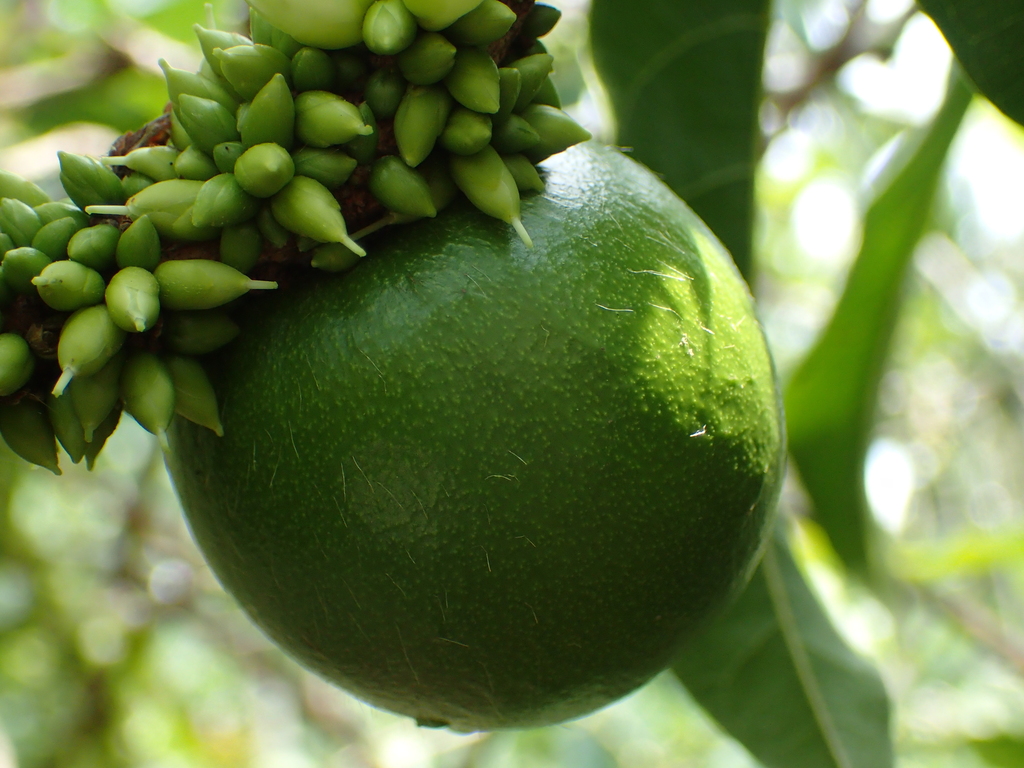
Abiu
Pouteria caimito
Pouteria caimito, the abiu (Portuguese pronunciation: [ɐˈbiw]), is a tropical fruit tree in the family Sapotaceae. It grows in the Amazonian region of South America, and this type of fruit can also be found in Cuba, the Philippines and other countries in Southeast Asia. It grows to an average of 10 metres (33 feet) high, with ovoid fruits. The inside of the fruit is translucent and white. It has a creamy and jelly-like texture with a taste resembling caramel custard.†
From the article Pouteria caimito on Wikipedia (CC BY-SA), quoted section by section
Description
P. caimito grows to an average of 10 metres (33 feet) high, and can grow as high as 35 metres (115 ft) under good conditions. The leaves range from oblong to elliptical. They can be 10–20 centimetres (4–8 inches) in length and 3.5–6.5 cm (1+1⁄2–2+1⁄2 in) in width. Abiu may have several flowering periods a year, with potential for both flowers and fruit on the tree at one time. The development time from flower to ripe fruit is about 3 months. The main crop season varies by climate. The flowers on the tree may occur either singly or in clusters of two to five flowers. They appear on the leaf axils on long, thin shoots. The flowers are small with four to five petals. The petals are cylindrical and are white to greenish in color. The flowers are hermaphroditic, meaning they are both sexes. The flowers open in the morning and can stay open for about two days.
Aroma and volatile compounds. …
Range & habitat
P. caimito is commonly considered to be native to the headwaters of the Amazon. It grows wild in the lower eastern part of the Andes from southwestern Venezuela to Peru. It also grows around Tingo Maria and Iquitos, Peru, and it can commonly be found in the Province of Guayas in Ecuador, where it is sold in the markets. The abiu was cultivated by Amerindians and it became widespread in the Amazon, but the origins of the fruit's distribution outside the Amazon is uncertain. In the Amazon basin, it is found to grow heavily in the northern Brazilian state of Pará, but is also found sparsely in collections from the Atlantic rainforest near Rio de Janeiro and Bahia. It can also be found in Colombia in areas such as the regions of Caquetá, Meta, and Vaupes and it is very plentiful in Amazonas, Venezuela and in Cuba. It has also been growing for a very long time in Trinidad and it is endemic in some parts of Southeast Asia like Indonesia and the Philippines. The abiu grows best in areas that have a year-round moist and warm climate. It can now be found throughout most of the Amazon basin. It is a common dooryard tree in the backyards and streets in the city of many Brazilian towns, but it is not usually grown commercially. It has also been introduced outside of the Americas; for example, it is grown on the Pacific island of Tahiti since 1993. The abiu habitats are nearly all tropical. …
Wikipedia: “Distribution and habitat”
At the table
The wood of the abiu tree is dense, heavy, and hard and is used as lumber in construction.
Culinary. The fruit of the abiu tree is edible and considered one of the best of the sapotes due to having the sweet, caramel-like taste of sapodilla with a smoother texture. It is commonly eaten out of hand, although in Colombia, those eating the fruit this way are advised to grease their lips to keep the gummy latex from sticking; this hazard can be avoided by selecting fully ripe fruits and scooping out the flesh with a utensil. The tartness of a bit of added lime juice may enhance the flavor, especially when chilled. The melting, sweet pulp of the abiu is also used to flavor ice cream and cut into yogurt for a light and delicious breakfast. The subtlety of the flavor limits its use in more complex confections and salads. Abiu fruit is a significant source of calcium, phosphorus, vitamin A, and vitamin C.
Nutritional and phytochemical studies. Compositional work on Amazonian fruits reports that abiu pulp has high soluble solids and sugars and a comparatively high pH among surveyed species. A 2025 study on P. …
Wikipedia: “Uses”
How it is grown
The tree grows best in tropical areas and in places that have a warm, moist climate all year long, and is slightly less hardy than related sapotes such as the canistel and sapodilla (nispero). Within the United States, it grows well in South Florida as far north as Palm Beach County, and has survived brief freezes. It prefers wet, slightly acidic soil with high organic content, and may suffer from iron deficiency (chlorosis) in alkaline soils. A tree that has just been planted is fragile and needs protection from wind and cold weather. Only light pruning is necessary and feeding should be frequent, but light.
Propagation. Propagation is nearly always by seeds, but the fruit of seedling trees is variable. Fresh seeds need to be planted within a few days if they are to remain viable, and germinate in two to three weeks. The lower branches of the seedling may be pruned after a year, and the first fruit can be expected in three years, with substantial yields at five years. Grafting, budding, and air layering can be used to propagate superior strains and advance the production schedule.
Pests and diseases. The commercial value of the fruit in its native range is limited because it is often damaged by small insects. In Brazil, the main pest that destroys the fruit is thought to be the fruit fly. …
Wikipedia: “Cultivation”
Where it lives
Recorded sightings
—
geo-referenced records in GBIF, from museums, herbaria and field observers.
Drag the globe to turn it. Dots are where records exist, not a range map; darker means more records.
In the old herbals & bestiaries

In the stacks
Searching the stacks…
Every page naming Pouteria caimito in the Biodiversity Heritage Library →
This page is assembled live from iNaturalist, GBIF, Wikipedia, the Source Library and the Internet Archive. It is not yet part of the hand-edited codex. iNaturalist taxon 327692.