- Plants
- ›Vascular Plants
- ›flowering plants
- ›Dicots
- ›Mints, Plantains, Olives, and Allies
- ›Acanthus Family
- ›Acanthoideae
- ›Justicieae
- ›Tetrameriinae
Fittonia
Fittonia (or nerve plant or mosaic plant) is a genus of evergreen perennial flowering plants in the acanthus ('bear’s britches') family, Acanthaceae. The genus is native to tropical and subtropical forested areas in northern and western South America, mainly Peru.
The most commonly cultivated species is F. albivenis and its range of cultivars. They are low-lying, forest floor plants, typically only growing between 10–15 cm (4–6 in) tall, without the 5-10 cm (1-4 in) tall flower stalks. The main feature of the species is its lush, green foliage, streaked with veins of white to deep pink, depending on cultivar; this veining earns the plant its common name of 'Nerve-Plant', as the "network" of vessels appears to resemble the layout of a nervous system. The plants also possess a short fuzz on their stems, like other acanthus family genera. Small buds may appear after a time where the stem splits into leaves.
2 branches of this genus, most-observed first
See this branch on the Wheel of Life →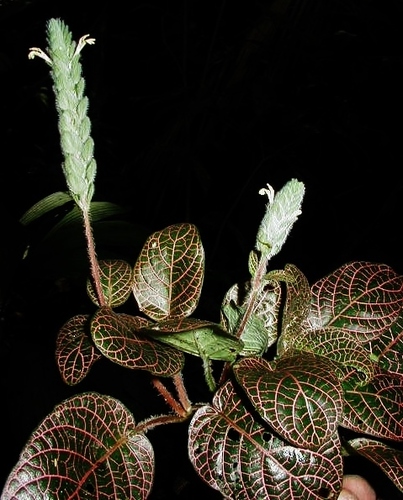

Where it lives
Recorded sightings
—
geo-referenced records in GBIF, from museums, herbaria and field observers.
Drag the globe to turn it. Dots are where records exist, not a range map; darker means more records.
In the stacks
Searching the stacks…
Every page naming Fittonia in the Biodiversity Heritage Library →
This page is assembled live from iNaturalist, GBIF, Wikipedia, the Source Library and the Internet Archive. It is not yet part of the hand-edited codex. iNaturalist taxon 327858.