- Animals
- ›Arthropods
- ›Crustaceans
- ›Typical Crustaceans
- ›Malacostracans
- ›Decapods, Isopods, and allies
- ›Decapods and Krill
- ›Decapods
- ›Crabs, Lobsters, Shrimps, and Allies
- ›True Crabs
- ›Eubrachyuran Crabs
- ›Heterotrematan Crabs
- ›Spider Crabs and Decorator Crabs
- ›Mithracidae
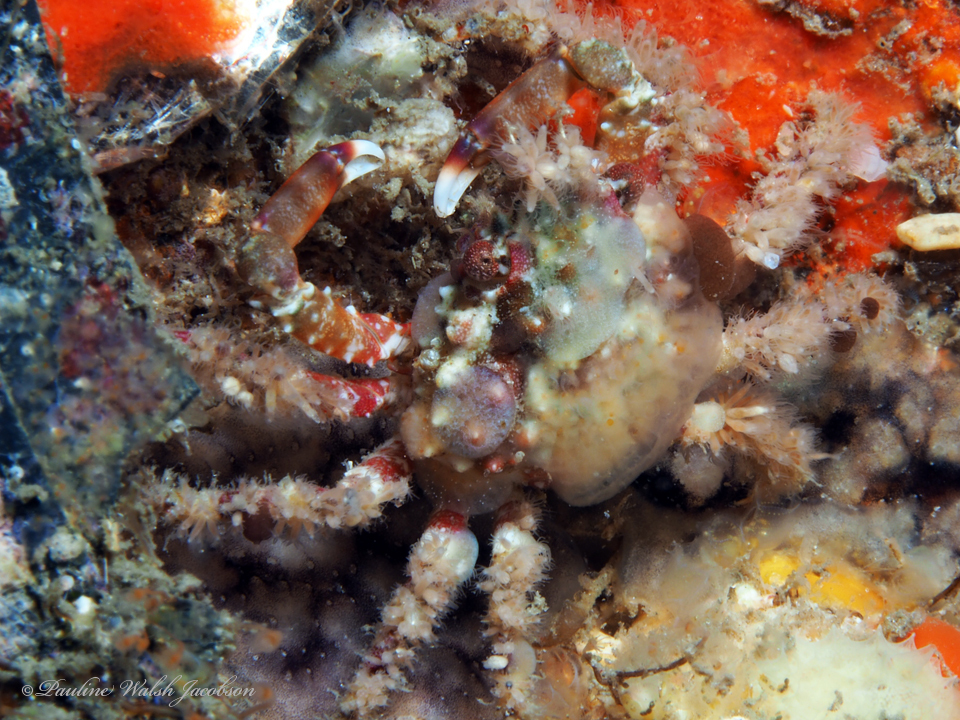
Nemausa
51 Nemausa is a large main-belt asteroid that was discovered on 22 January 1858, by Joseph Jean Pierre Laurent. Laurent made the discovery from the private observatory of Benjamin Valz in Nîmes, France. The house, at 32 rue Nationale in Nîmes, has a plaque commemorating the discovery. With Laurent's permission, Valz named the asteroid after the Celtic god Nemausus, the patron god and namesake of Nîmes during Roman times.
Based upon its spectrum, this is listed as a C-type asteroid in the Tholen classification taxonomy, and as a Cgh by Bus and Binzel (2002). This indicates a composition similar to carbonaceous chondrite meteorites. Absorption features in the spectrum indicate the presence of phyllosilicates. It may have a water content of about 14%.
3 branches of this genus, most-observed first
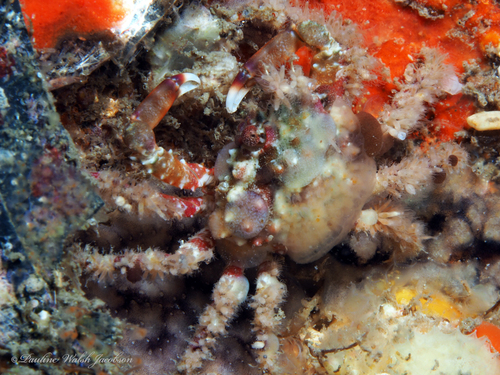
Nemausa acuticornis
speciesNemausa acuticornis
Nemausa spinipes
speciesNemausa spinipes
Nemausa sinensis
speciesNemausa sinensis
Where it lives
Recorded sightings
—
geo-referenced records in GBIF, from museums, herbaria and field observers.
Drag the globe to turn it. Dots are where records exist, not a range map; darker means more records.
In the stacks
Searching the stacks…
Every page naming Nemausa in the Biodiversity Heritage Library →
This page is assembled live from iNaturalist, GBIF, Wikipedia, the Source Library and the Internet Archive. It is not yet part of the hand-edited codex. iNaturalist taxon 328997.