- Animals
- ›Arthropods
- ›Hexapods
- ›Insects
- ›Winged and Once-winged Insects
- ›True Bugs, Hoppers, Aphids, and allies
- ›Plant-parasitic Hemipterans
- ›Scale Insects
- ›Mealybugs
- ›Dysmicoccus
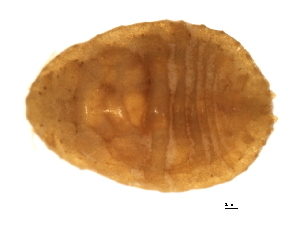
pineapple mealybug
Dysmicoccus brevipes
Dysmicoccus brevipes is a mealybug. The scientific name was published for the first time by Theodore Dru Alison Cockerell in 1893. The species is found primarily on pineapple and other species in the genus Ananas, but also infests citrus trees, cotton, banana, coffee and other plants.
From the article Dysmicoccus brevipes on Wikipedia (CC BY-SA), quoted section by section
Description
The adult Dysmicoccus brevipes has a pink to pink-orange coloured body. The body's shape varies from round till oval and is between 2.3 and 3.0 millimetres long. There are seventeen pairs of wax-producing glands which produce short wax filaments which conceal the body. The larvae are flattened and have long hairs.
Wikipedia: “Characteristics”
Range & habitat
Dysmicoccus brevipes can be found in a wide variety of regions. It has been found in Hawaii, the Pacific, Central and South America, Australia and Africa.
Wikipedia: “Distribution”
What it does
The species is ovoviviparous, and the female gives birth to live young, typically two or three hundred, after which she dies. The first stage larvae are known as "crawlers" and disperse, sometimes being conveyed by the wind to new host plants. The larval stage is variable but lasts for about five weeks. The only larval stages that feed are the first and the beginning of the second instar stage. After the third moult, the larva becomes mature, and the total lifespan averages 95 days.
Wikipedia: “Ecology”
Listen
Looking for field recordings…
Where it lives
Recorded sightings
—
geo-referenced records in GBIF, from museums, herbaria and field observers.
Drag the globe to turn it. Dots are where records exist, not a range map; darker means more records.
In the stacks
Searching the stacks…
Every page naming Dysmicoccus brevipes in the Biodiversity Heritage Library →
This page is assembled live from iNaturalist, GBIF, Wikipedia, the Source Library and the Internet Archive. It is not yet part of the hand-edited codex. iNaturalist taxon 330241.