- Plants
- ›Vascular Plants
- ›flowering plants
- ›Dicots
- ›Mallows, Rock Roses, and Allies
- ›Mallow and Hibiscus Family
- ›Byttnerioideae
- ›Theobroma
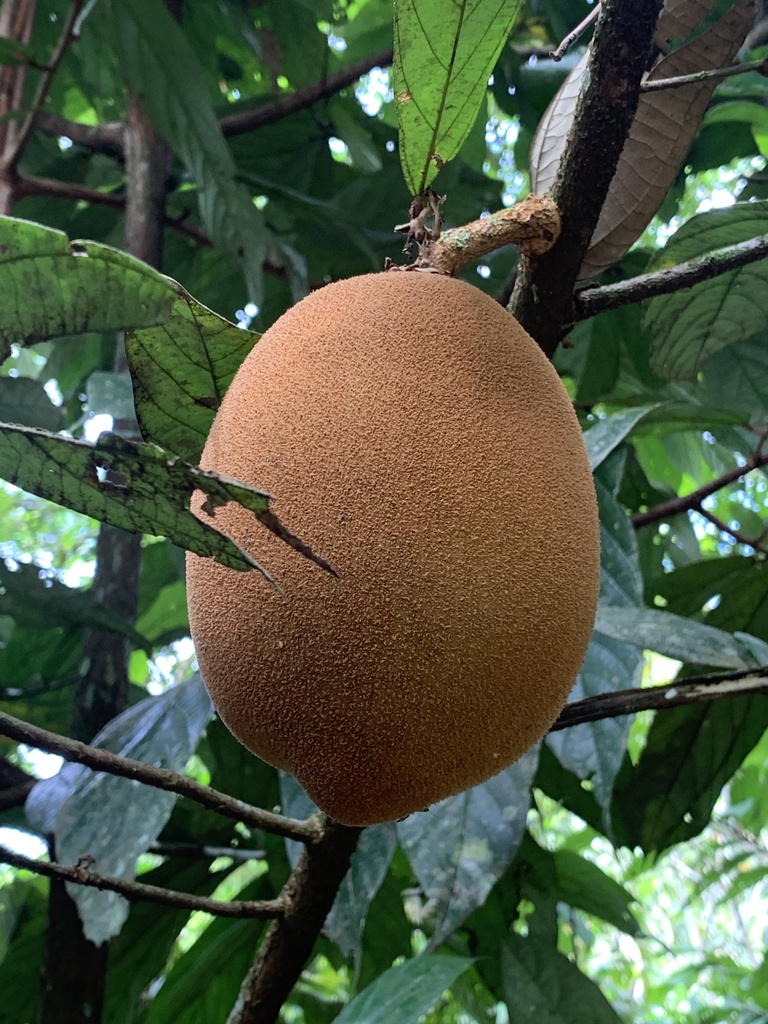
Cupuaçu
Theobroma grandiflorum
Theobroma grandiflorum, commonly known as cupuaçu, also spelled cupuassu, cupuazú, cupu assu, or copoazu, is a tropical rainforest tree related to cacao. Native and common throughout the Amazon basin, it is naturally cultivated in the jungles of northern Brazil, with the largest production in Pará, Amazonas and Amapá, Colombia, Bolivia and Peru. The pulp of the cupuaçu fruit is consumed throughout Central and South America, especially in the northern states of Brazil, and is used to make ice creams, snack bars, and other products.
From the article Theobroma grandiflorum on Wikipedia (CC BY-SA), quoted section by section
Description
Cupuaçu trees usually range from 5–15 m (16–49 ft) in height, though some can reach 20 m (66 ft). They have brown bark, and the leaves range from 25–35 cm (9.8–13.8 in) long and 6–10 cm (2.4–3.9 in) across, with 9 or 10 pairs of veins. As the trees mature, the leaves change from pink-tinted to green, and eventually they begin bearing fruit. Flowers of cupuaçu are structurally complex, and require pollination from biotic vectors. The majority of cupuaçu trees are self-incompatible, which can result in decreased pollination levels, and consequently, a decrease in fruit yields. Pollination can also be negatively affected by environmental conditions. Pollinators, which include chrysomelid weevils and stingless bees, are unable to fly between flowers in heavy rains.
The white pulp of the cupuaçu has an odour described as a mix of chocolate and pineapple and is frequently used in desserts, juices and sweets. The juice tastes primarily like pear, banana, passion fruit, and melon. Chocolate made from cupuaçu, very similar to that made from cocoa, is called cupulate.
In medicine
Cupuaçu flavors derive from its phytochemicals, such as tannins, glycosides, theograndins, catechins, quercetin, kaempferol and isoscutellarein. It also contains theacrine, caffeine, theobromine, and theophylline as found in cacao, although with a much lower amount of caffeine.
Wikipedia: “Phytochemicals”
How it is grown
Cupuaçu is most commonly propagated from seed, but grafting and rooted cuttings are also used. Cupuaçu trees are often incorporated in agroforestry systems throughout the Amazon due to their high tolerance of infertile soils, which are predominant in the Amazon region. Cupuaçu is generally harvested from the ground once they have naturally fallen from the tree. It can be difficult to determine peak ripeness because there is no noticeable external color change in the fruit. However studies have shown that in Western Colombian Amazon conditions, fruits generally reach full maturity within 117 days after fruit set. Brazilians either eat it raw or use it in making sweets. Commercial food products include pulp and powder.
Wikipedia: “Cultivation”
Where it lives
Recorded sightings
—
geo-referenced records in GBIF, from museums, herbaria and field observers.
Drag the globe to turn it. Dots are where records exist, not a range map; darker means more records.
In the stacks
Searching the stacks…
Every page naming Theobroma grandiflorum in the Biodiversity Heritage Library →
This page is assembled live from iNaturalist, GBIF, Wikipedia, the Source Library and the Internet Archive. It is not yet part of the hand-edited codex. iNaturalist taxon 332439.