- Plants
- ›Vascular Plants
- ›flowering plants
- ›Dicots
- ›Gentians, Dogbanes, Madders, and Allies
- ›madder family
- ›Ixoroideae
- ›Coffeeae
- ›Coffea
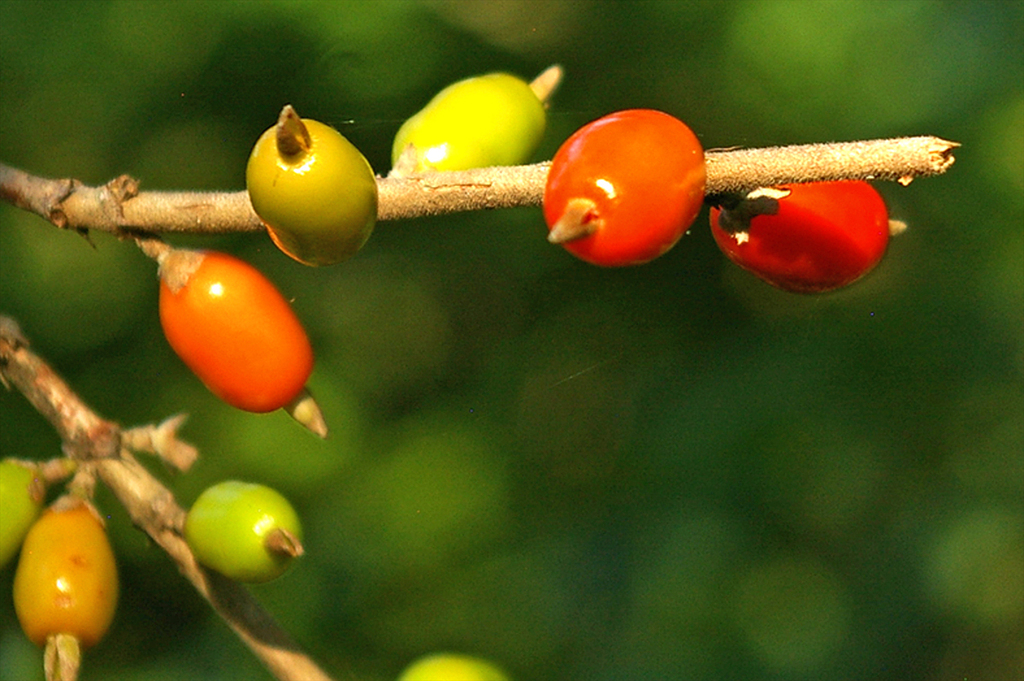
Mozambique coffee
Coffea racemosa
Coffea racemosa, also known as racemosa coffee and Inhambane coffee, is a species of flowering plant in the family Rubiaceae. It has naturally low levels of caffeine, less than half of that found in Coffea arabica, and a quarter of that in Robusta coffee.
Coffea racemosa is endemic to the coastal forest belt between northern KwaZulu-Natal in South Africa and Mozambique, found in an area less than 150 km2 (58 sq mi) in size. It was widely cultivated by the Portuguese during the 1960–1970s in Mozambique; as of 2018 only two plantations, at Ibo Island and in Hluhluwe, remained.
From the article Coffea racemosa on Wikipedia (CC BY-SA), quoted section by section
How it is grown
Coffea racemosa is an open-branched shrub or small tree growing up to 3.5 m (11 ft) tall. It has white to pinkish singular flowers (2 cm (1 in) in diameter) or in few-flowered clusters along the branches, which bloom between September and February. The fruit is near-spherical in shape and purple to black when ripe. The fruit is harvested from the wild for local use as a coffee. The beans are one third of the size of Arabica beans. The beans are roasted and ground to a powder then used to make coffee. Salt is sometimes sprinkled over them as they are roasted.
Wikipedia: “Cultivation”
Where it lives
Recorded sightings
—
geo-referenced records in GBIF, from museums, herbaria and field observers.
Drag the globe to turn it. Dots are where records exist, not a range map; darker means more records.
In the stacks
Searching the stacks…
Every page naming Coffea racemosa in the Biodiversity Heritage Library →
This page is assembled live from iNaturalist, GBIF, Wikipedia, the Source Library and the Internet Archive. It is not yet part of the hand-edited codex. iNaturalist taxon 340090.