- Plants
- ›Vascular Plants
- ›flowering plants
- ›Dicots
- ›beeches, oaks, walnuts, and allies
- ›beech family
- ›Castanopsis
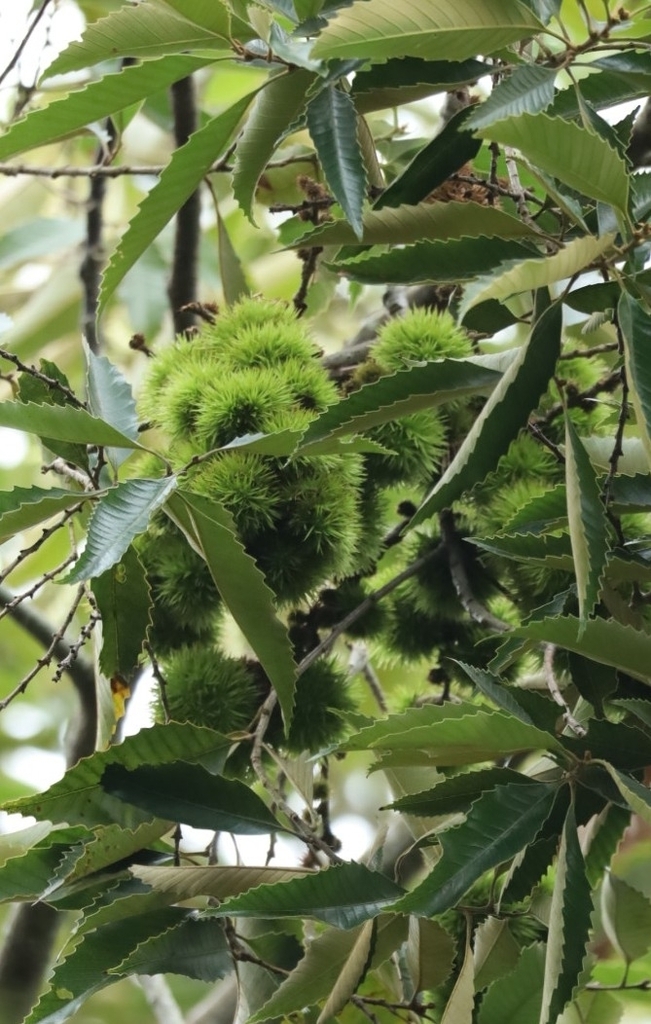
Castanopsis indica
Castanopsis indica is a tree in the family Fagaceae.
From the article Castanopsis indica on Wikipedia (CC BY-SA), quoted section by section
Description
Castanopsis indica is a tallish tree, growing up around 8–14 m (26–46 ft) in height with a dense, full crown. The leaves are thick and leathery with a serrated edge. They are oblong and elliptical, with an acute tip, are nearly evergreen and have a short petiole. The bark of the tree is rough and grey. The fruit is reddish-brown and round, found in small clusters, and is covered with long, thin spines. The fruit is often fed upon by squirrels. The tree can be found between 300–1,000 m (980–3,280 ft) above sea level.
At the table
The nuts of the tree are considered edible. The wood is locally used in construction and the bark can be used in tanning. In Nepal the leaves are used to wrap things.
== References ==
Wikipedia: “Uses”
Where it lives
Recorded sightings
—
geo-referenced records in GBIF, from museums, herbaria and field observers.
Drag the globe to turn it. Dots are where records exist, not a range map; darker means more records.
In the stacks
Searching the stacks…
Every page naming Castanopsis indica in the Biodiversity Heritage Library →
This page is assembled live from iNaturalist, GBIF, Wikipedia, the Source Library and the Internet Archive. It is not yet part of the hand-edited codex. iNaturalist taxon 341063.