- Plants
- ›Vascular Plants
- ›flowering plants
- ›Dicots
- ›Gentians, Dogbanes, Madders, and Allies
- ›Dogbane Family
- ›Rauvolfioideae
- ›Plumerieae
- ›Thevetiinae
- ›Cerbera
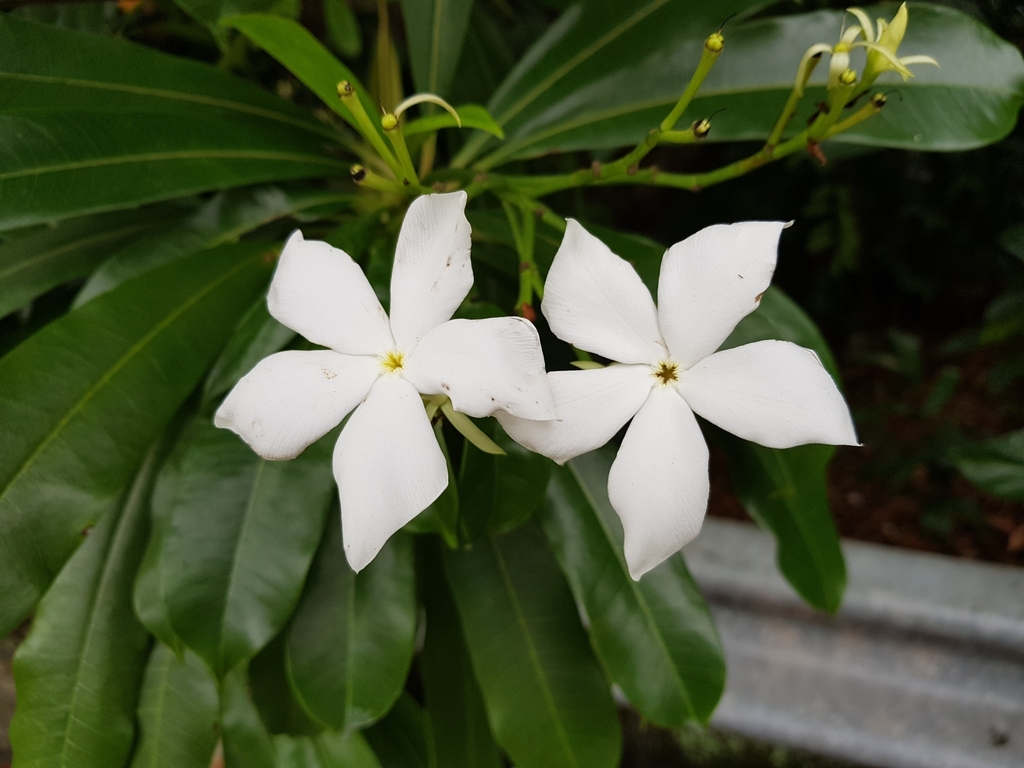
Pong Pong
Cerbera odollam
Cerbera odollam is a tree species in the family Apocynaceae commonly known as the suicide tree or pong-pong. It bears a fruit known as othalanga whose seeds yield a potent poison called cerberin. It has historically been used in trials by ordeal, especially in Madagascar, where it has caused thousands of deaths annually, and continues to be used for suicide, particularly in Kerala, India. It can cause fatal heart arrhythmias with just one kernel and is responsible for numerous poisonings due to its easily masked taste and limited testing.
It is native to South and Southeast Asia, Pacific Islands, and Queensland, Australia, growing preferentially along sandy coasts, riverbanks, and by mangrove swamps. It is also grown in tropical areas such as Hawaii as an ornamental. It is a 10–12 meter tall plant with glossy leaves, white-yellow flowers, and poisonous seeds encased in a red-ripening fruit that resembles oleander and produces a milky latex. Its seeds are used as biopesticides, insect repellents, and rat poisons due to their toxicity and have also been studied as a non-edible, sustainable feedstock for biodiesel production on non-arable land.
From the article Cerbera odollam on Wikipedia (CC BY-SA), quoted section by section
Description
Cerbera odollam bears a close resemblance to oleander, another highly toxic plant from the same family. It grows to approximately 10–12 meters in height. Its leaves are glossy and it has white flowers with yellow throats. The plant as a whole yields a milky, white latex. Its fruit, about 5–10cm in length, starts green and becomes red as it matures. It has a green fibrous shell enclosing an ovoid kernel measuring approximately 2 cm × 1.5 cm and containing two extremely poisonous seeds. On exposure to air, the white kernel turns violet, then dark grey, and ultimately brown, or black.
At the table
The seeds of C. odollam are used as biopesticides, insect repellants, and rat poisons due to its toxicity to these animals. Investigations have also been made into the feasibility of using the seeds as a feedstock in the production of biodiesel. Oil can be extracted from the seeds and transesterified into fatty acid methyl esters. This is a good alternative to other plants commonly used for biodiesels because unlike these plants, it grows on typically non-arable land and therefore does not compete with food crops.
Wikipedia: “Modern uses”
Toxicity
Cerberin, the poisonous compound in the kernels of Cerbera odollam, is a cardiac glycoside and, as such, blocks the heart's sodium and potassium ATPase. One kernel contains a fatal dose of the toxin.
Symptoms. Electrocardiographic abnormalities are common, the most common being sinus bradycardia. Around half of the patients develop thrombocytopenia. Temporary cardiac pacing has been used in the management, apart from other supportive measures. Other common symptoms of cerberin poisoning include a burning sensation in the mouth, vomiting, retching, nausea, irregular breathing, headache, coma, and death. Some cases are asymptomatic.
Use as a poison. Cerbera odollam is commonly used for poisonings as well as suicides. Its bitter flavor can easily be masked by spicy food, allowing victims to ingest it without noticing. In Kerala, C. odollam is responsible for about 50% of plant poisoning cases and 10% of all poisonings. The fatalities from poisonings, particularly from C. odollam, are underestimated due to the lack of testing in most cases. Poisonings outside the tree's natural range are considered rare.
Where it lives
Recorded sightings
—
geo-referenced records in GBIF, from museums, herbaria and field observers.
Drag the globe to turn it. Dots are where records exist, not a range map; darker means more records.
In the stacks
Searching the stacks…
Every page naming Cerbera odollam in the Biodiversity Heritage Library →
This page is assembled live from iNaturalist, GBIF, Wikipedia, the Source Library and the Internet Archive. It is not yet part of the hand-edited codex. iNaturalist taxon 343758.