- Plants
- ›Vascular Plants
- ›flowering plants
- ›Dicots
- ›Heathers, Balsams, Primroses, and Allies
- ›persimmon family
- ›Diospyros
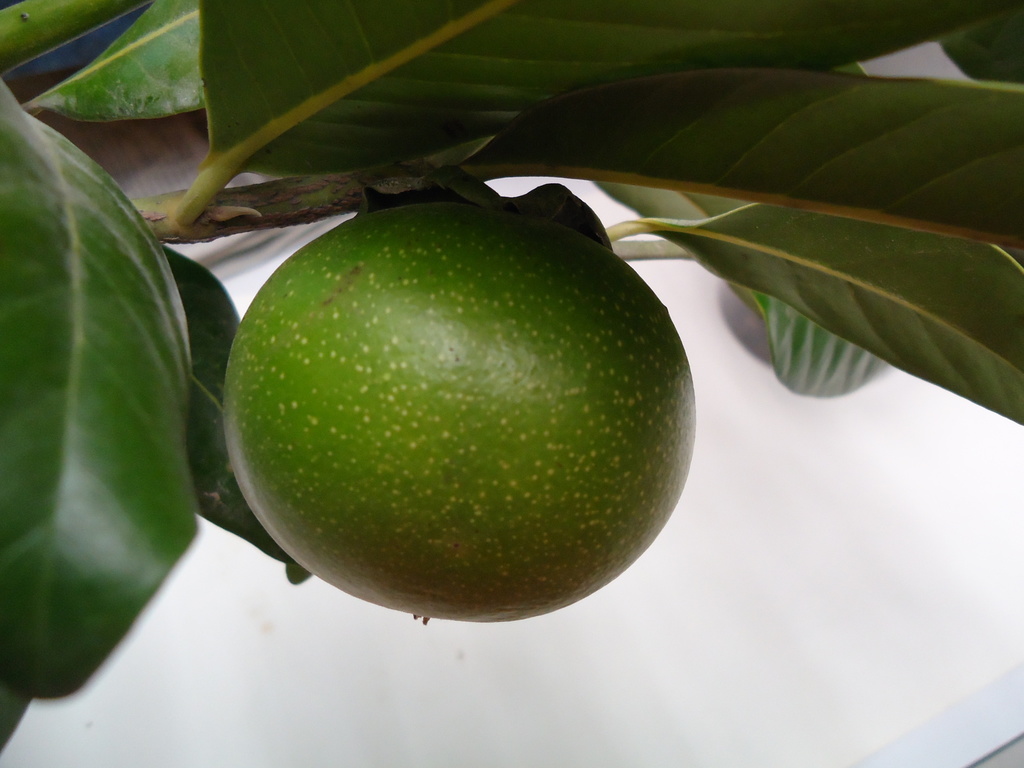
Black Sapote
Diospyros nigra
Diospyros nigra, the black sapote, is a species of persimmon. Common names include chocolate pudding fruit, black soapapple and (in Spanish) zapote prieto. The tropical fruit tree is native to Mexico, Central America, and Colombia. The common name sapote refers to any soft, edible fruit. Black sapote is not related to white sapote and is only distantly related to mamey sapote. The genus Diospyros has numerous other fruit bearing tree species in addition to the persimmons and black sapote. It is said to taste like chocolate pudding.
From the article Diospyros nigra on Wikipedia (CC BY-SA), quoted section by section
Description
Mature trees can grow to over 25 m (82 ft) in height and are evergreen. It is frost sensitive but can tolerate light frosts. The leaves are elliptic-oblong, tapered at both ends, dark green, glossy and 10–30 cm (3.9–11.8 in) long. Some trees bear only male flowers. Others have both male and female flowers, though some of these are self-incompatible. Fruiting takes about 3–4 years from seed and the trees are heavy bearers.
How it is grown
Propagation is usually from seed, which can retain viability for several months and require around 30 days for germination. Some trees are seedless however, and can be propagated by air-layering or shield budding.
Wikipedia: “Propagation”
In human culture
The etymology of Diospyros is "divine fruit". It derives from the greek words "dios" and "pyron". This term, translated from Greek, can be variously rendered as "God's pear", "Wheat of Zeus" and "Jove's fire".
Wikipedia: “Etymology”
Where it lives
Recorded sightings
—
geo-referenced records in GBIF, from museums, herbaria and field observers.
Drag the globe to turn it. Dots are where records exist, not a range map; darker means more records.
In the old herbals & bestiaries

In the stacks
Searching the stacks…
Every page naming Diospyros nigra in the Biodiversity Heritage Library →
This page is assembled live from iNaturalist, GBIF, Wikipedia, the Source Library and the Internet Archive. It is not yet part of the hand-edited codex. iNaturalist taxon 343829.