- Animals
- ›Arthropods
- ›Crustaceans
- ›Typical Crustaceans
- ›Malacostracans
- ›Decapods, Isopods, and allies
- ›Amphipods, Isopods, and Allies
- ›Isopods
- ›Seapills and allies
- ›Seapills
- ›Typical Seapills
- ›Sphaeroma
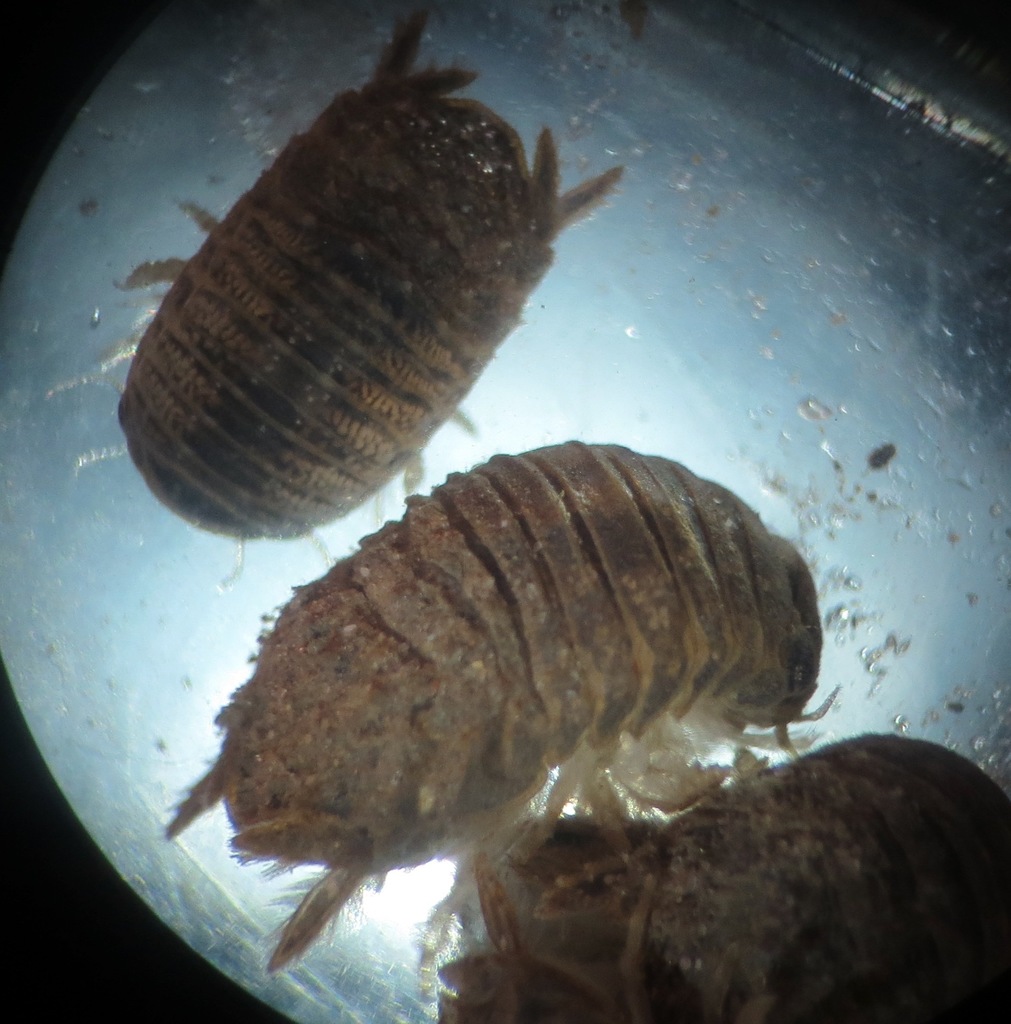
Mangroveborer
Sphaeroma terebrans
Sphaeroma terebrans is a mangrove-boring isopod, first described by Spence Bate in 1866. It is 8–10 millimetres (0.31–0.39 in) long, and is thought to have been introduced to North America by wooden-hulled ships. The isopod is found throughout the Gulf of Mexico mainly in mangrove swamps of Louisiana and Florida. S. terebrans will also bore into boats, wooden pilings and other wooden structures.
The burrowing activities of Sphaeroma terebrans hinder the growth of mangroves, and its wood boring activities limits mangroves to the upper limits of the intertidal zone.
From the article Sphaeroma terebrans on Wikipedia (CC BY-SA), quoted section by section
Description
The anatomy of S. terebrans is composed of a head, a chest with seven pairs of pereopods, and an abdomen with five pairs of pleopods. These pairs of pleopods are used for both respiration and swimming. The pleotelson is covered with tubercles and the head is semicircular with eyes made of many ocelli. Like other isopods, it has two pairs of antennae: antenna 1 has an 11-segment flagellum that extends to the first pereonite. Antenna 2 has a 16-segment flagellum and extends to the posterior side of the second pereonite. S. terebrans uses mandibles, cephalothorax, pleotelson, pleopods, and pereonites for burrowing.
Wikipedia: “Anatomy”
Range & habitat
Sterebrans terebrans is known for invading areas with warm climates and subtropical and tropical waters. Regions include Africa (Nigeria, South Africa), Florida, Venezuela, Cuba, and the Panama Canal. They are typically found in the intertidal zones of the red mangrove. These isopods are often introduced unintentionally via ships. They are primarily found in mangroves but have also made appearances in salt marshes, rotten wood, man-made structures, and free-hanging aerial roots. Though the mangrove and the isopod have a non-symbiotic relationship, there are both consequences and advantages for the mangroves and the surrounding environment. S. terebrans helps to regulate the growth of the mangroves and aids in recycling dead wood. However, the isopod has also been linked to catastrophic damage to the mangrove population such as reduced root production, increased root atrophy, and nutrient deficiencies. This damage is described as ecologically catastrophic, meaning there is a natural imbalance due to intensive destruction. For example, damage to red mangrove root systems went from approximately 20% damage to having 90% damage within a few years between two investigations. Mangroves combat this damage by putting energy and nutrients into growing lateral roots near the burrows to create a stable root structure, which shapes the mangrove islands in the intertidal zones. S. …
Wikipedia: “Distribution & invasiveness”
What it does
Sphaeroma terebrans utilize an internal fertilization system, meaning that fertilization occurs in the individual isopods rather than outside of the body. However, the sperm transfer from male to female is indirect using spermatophores in water currents to transport it to the females. After the burrow has been made, as described in the burrowing section, males enter the burrow to mate with the females right before leaving and moving on to their next location. Mating occurs around the time of partial molting. Maturation of the fertilized eggs occurs when they are kept in the marsupium of the oostegites (abdominal segments). Overall, the best breeding times were when the environment has high oxygen and nutrient levels, especially after rainfall, and the temperature is around 75 °F (24 °C). Post fertilization, the embryos show as egg-shaped. Over time, the limb buds appear and the embryo takes on a comma-shaped appearance with a soft, white exoskeleton. Females are able to carry up to eighty embryos during one fertilization term but only host up to twenty juveniles in the burrow. The number of embryos the female carries is dependent on the length of her body. Two broods may be produced by one female throughout the year, one in the fall and the other in the winter-to-spring transition period. It is more likely for the females born in the summer to produce in the fall session. …
Wikipedia: “Reproduction”
Where it lives
Recorded sightings
—
geo-referenced records in GBIF, from museums, herbaria and field observers.
Drag the globe to turn it. Dots are where records exist, not a range map; darker means more records.
In the stacks
Searching the stacks…
Every page naming Sphaeroma terebrans in the Biodiversity Heritage Library →
This page is assembled live from iNaturalist, GBIF, Wikipedia, the Source Library and the Internet Archive. It is not yet part of the hand-edited codex. iNaturalist taxon 345765.