- Plants
- ›Vascular Plants
- ›flowering plants
- ›Dicots
- ›Legumes, Milkworts, and Allies
- ›Legumes
- ›Faboideae
- ›Phaseoleae
- ›Phaseolinae
- ›Psophocarpus
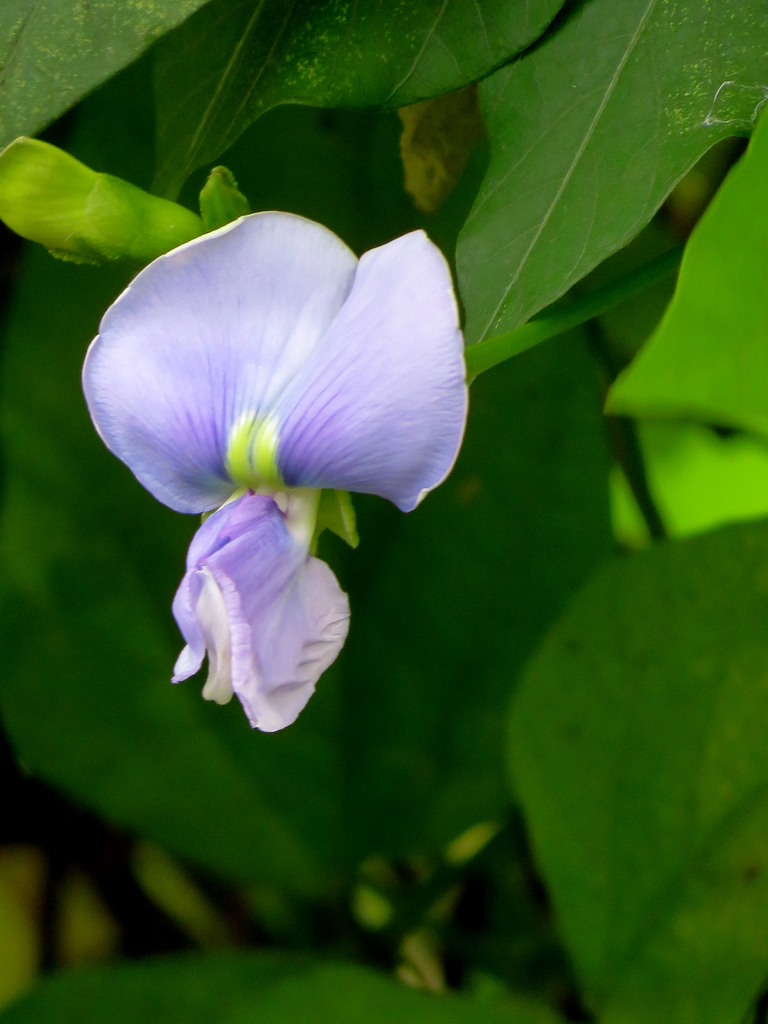
Winged Bean
Psophocarpus tetragonolobus
The winged bean (Psophocarpus tetragonolobus), also known as cigarillas, Goa bean, four-angled bean, four-cornered bean, manila bean, princess bean, star bean, kamrangi bean, pea, or dragon bean, is a tropical herbaceous legume plant.
Winged bean is widely recognised by consumers and farmers in South Asia and South East Asia for its variety of uses and disease resistance. Winged bean is nutrient-rich and all parts of the plant are edible. The leaves can be eaten like spinach, flowers can be used in salads, tubers can be eaten raw or cooked, and seeds can be used in similar ways as the soybean. The winged bean is an underutilised species but has the potential to become a major multi-use food crop in the tropics of Asia, Africa, and Latin America.
From the article Winged bean on Wikipedia (CC BY-SA), quoted section by section
Description
The winged bean plant grows as a vine with climbing stems and leaves, 3–4 m (10–13 ft) in height. It is an herbaceous perennial, but can be grown as an annual. It is generally taller and notably larger than the common bean. The leaves can be 15 cm (6 in) long. The shape of its leaves ranges from ovate to deltoid, ovate-lanceolate, lanceolate, and long lanceolate. The green tone of the leaves also varies. The stem is most commonly green, but sometimes boasts purple. The large flower is pale blue. The bean pod may be smooth or rough, depending on the genotype. It is typically 15–22 cm (6–8+1⁄2 in) long, rectangular in cross-section (though sometimes appearing flat), and has four wings with frilly edges running lengthwise. The skin is waxy and the flesh partially translucent in the young pods. The colour of the pods may be cream, green, pink, or purple. When fully ripe, the pod turns an ash-brown colour and splits open to release the seeds (beans). The seed shape is often round; Oval and rectangular seeds also occur. Seeds may appear white, cream, dark tan, or brown, depending on growing and storage conditions. The beans themselves are similar to soybeans in both use and nutritional content (being 29.8% to 39% protein).
Range & habitat
Most likely originating from New Guinea, the species grows abundantly in the hot, humid equatorial countries of South and Southeast Asia, as well as tropical Africa. It is widely known in Southeast Asia and Papua New Guinea, but only cultivated on a small scale. It tends to be found in open areas and old garden sites, less so in the forest.
Wikipedia: “Distribution and habitat”
At the table
The entire winged bean plant is edible. The leaves, flowers, roots, and bean pods can be eaten raw or cooked; the pods are edible even when raw and unripe. The seeds are edible after cooking. Each of these parts contains vitamin A, vitamin C, calcium and iron, among other nutrients. The tender pods, which are the most widely eaten part of the plant, are best when eaten before they exceed 2.5 cm (1 in) in length. They are ready for harvest within three months of planting. The flowers are used to colour rice and pastry. The young leaves can be picked and prepared as a leaf vegetable, similar to spinach. The nutrient-rich, tuberous roots have a nutty flavour. They are about 20% protein; winged bean roots have more protein than many other root vegetables. The leaves and flowers are also high in protein (10–15%). The seeds are about 35% protein and 18% fat. They require cooking for two to three hours to destroy the trypsin inhibitors and hemagglutinins that inhibit digestion. They can be eaten dried or roasted. Dried and ground seeds make a useful flour, and can be brewed to make a coffee-like drink.
The beans are rich not only in protein, but in tocopherols (antioxidants that facilitate vitamin-A utilisation in the body). They can be made into milk when blended with water and an emulsifier. Winged bean milk is similar to soy milk, but without the bean-rich flavour. …
Wikipedia: “Culinary”
How it is grown
Although winged bean thrives in hot weather and favours humidity, it is adaptable. The plant's ability to grow in heavy rainfall makes it a candidate for the people of the African tropics. Winged bean production is optimal in humidity, but the species is susceptible to moisture stress and waterlogging. Ideal growing temperature is 25 °C. Lower temperatures suppress germination, and extremely high temperatures inhibit yield. Even moderate variations in the growing climate can affect yield. Growing winged bean in lower temperatures can increase tuber production. Leaf expansion rate is higher in a warmer climate. For the highest yields, the soil should remain moist throughout the plant's life cycle. Although the plant is tropical, it can flourish in a dry climate if irrigated. If the plant matures during the drier part of the growing season, yields are higher. Winged bean is an effective cover crop; planting it uniform with the ground suppresses weed growth. As a restorative crop, winged bean can improve nutrient-poor soil with nitrogen when it is turned over into the soil.
Wikipedia: “Growing conditions”
Where it lives
Recorded sightings
—
geo-referenced records in GBIF, from museums, herbaria and field observers.
Drag the globe to turn it. Dots are where records exist, not a range map; darker means more records.
In the stacks
Searching the stacks…
Every page naming Psophocarpus tetragonolobus in the Biodiversity Heritage Library →
This page is assembled live from iNaturalist, GBIF, Wikipedia, the Source Library and the Internet Archive. It is not yet part of the hand-edited codex. iNaturalist taxon 346168.