- Plants
- ›Vascular Plants
- ›flowering plants
- ›Dicots
- ›Mints, Plantains, Olives, and Allies
- ›Acanthus Family
- ›Acanthoideae
- ›Justicieae
- ›Tetrameriinae
- ›Clinacanthus
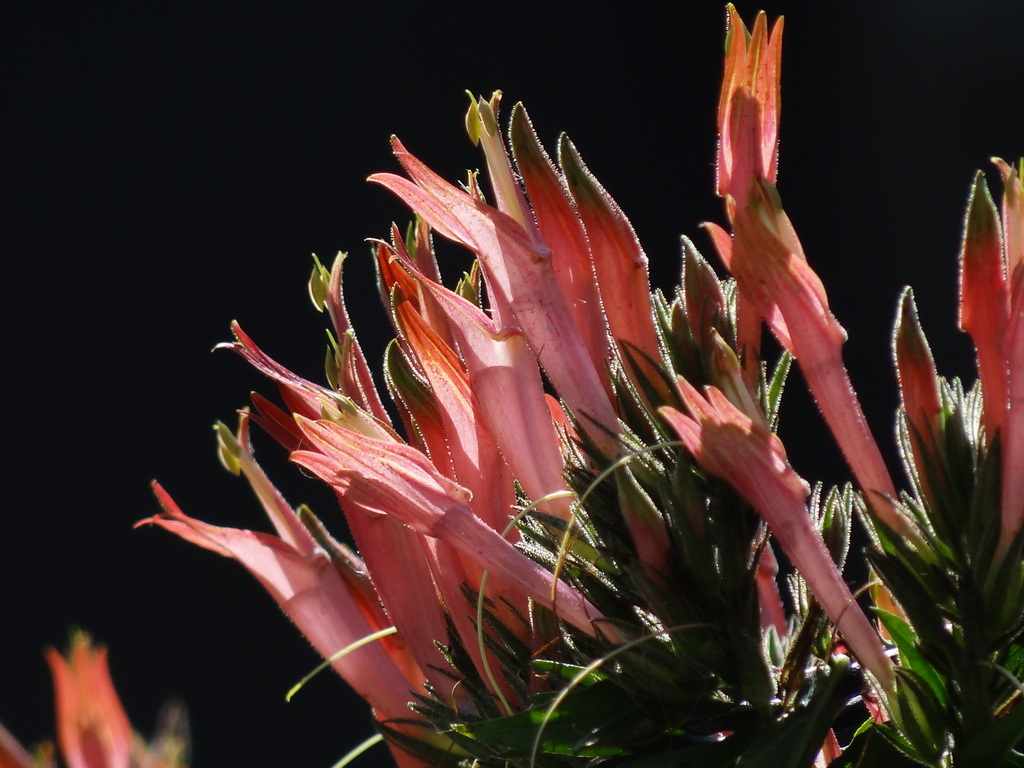
Sabah Snake Grass
Clinacanthus nutans
Clinacanthus nutans is a species of plant in the family Acanthaceae. It is also known by the common names belalai gajah (Malay), phaya yo (Thai), Sabah snake grass, ki tajam (Sunda), and dandang gendis (Jawa). This plant is used in the traditional herbal medicines of Malaysia, Indonesia, Thailand, and China. It has been used in Indonesia in the treatment of dysentery and diabetes.
From the article Clinacanthus nutans on Wikipedia (CC BY-SA), quoted section by section
Description
Clinacanthus nutans is a herbaceous plant that grows in low shrubs up to 2.5 meters (8 ft 2 in) high. Its stems are green, woody, upright and cylindrical. Its leaves are green, simple, lanceolate with pointed tips and rounded bases, and are 8–12 cm (3.1–4.7 in) long and 4–6 cm (1.6–2.4 in) wide. Its flowers are red and panicle-shaped, with tube-shaped elongated petals 3.5 cm (1.4 in) long.
At the table
It is used in treating skin rashes, insects and snake bites, lesions caused by herpes simplex virus, diabetes, and gout in Malaysia, Indonesia, Thailand and China.
== References ==
Wikipedia: “Medicinal uses”
Where it lives
Recorded sightings
—
geo-referenced records in GBIF, from museums, herbaria and field observers.
Drag the globe to turn it. Dots are where records exist, not a range map; darker means more records.
In the stacks
Searching the stacks…
Every page naming Clinacanthus nutans in the Biodiversity Heritage Library →
This page is assembled live from iNaturalist, GBIF, Wikipedia, the Source Library and the Internet Archive. It is not yet part of the hand-edited codex. iNaturalist taxon 347718.