- Plants
- ›Vascular Plants
- ›flowering plants
- ›Dicots
- ›Heathers, Balsams, Primroses, and Allies
- ›sapodilla family
- ›Palaquium
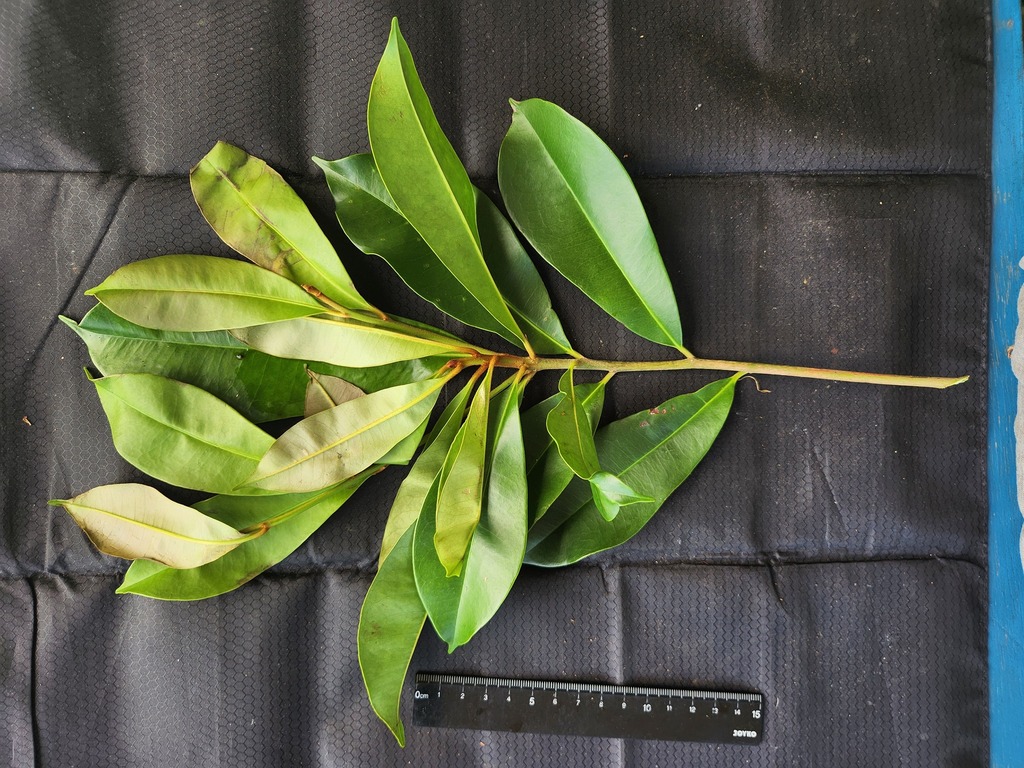
Palaquium rostratum
Palaquium rostratum is a tree in the Sapotaceae family. It grows up to 45 metres (150 ft) tall. The bark is greyish brown. Inflorescences bear up to two brownish tomentose flowers. The fruits are ellipsoid, up to 3.5 cm (1 in) long. The specific epithet rostratum is from the Latin meaning "beaked", likely referring to the fruit. Habitat is mixed dipterocarp and kerangas forests from sea-level to 1,200 metres (4,000 ft) altitude. The timber is used for furniture-making. P. rostratum is...
From the article Palaquium rostratum on Wikipedia (CC BY-SA), quoted section by section
Description
Palaquium rostratum grows up to 45 m (150 ft) tall. The bark is greyish brown. Inflorescences bear up to two brownish tomentose flowers. The fruits are ellipsoid, up to 3.5 cm (1.4 in) long. The timber is used for furniture-making.
Range & habitat
Palaquium rostratum is native to southern Thailand, Peninsular Malaysia and many areas of maritime Southeast Asia including the Philippines, Sumatra, Borneo, Java, the Maluku Islands and Sulawesi. Its habitat is mixed dipterocarp and kerangas forests from sea level to 1,200 m (4,000 ft) altitude.
Wikipedia: “Distribution and habitat”
At the table
The fruit of Palaquium rostratum is edible. The seeds are locally turned into cooking oil. The timber is used in making furniture.
== References ==
Wikipedia: “Uses”
Where it lives
Recorded sightings
—
geo-referenced records in GBIF, from museums, herbaria and field observers.
Drag the globe to turn it. Dots are where records exist, not a range map; darker means more records.
In the stacks
Searching the stacks…
Every page naming Palaquium rostratum in the Biodiversity Heritage Library →
This page is assembled live from iNaturalist, GBIF, Wikipedia, the Source Library and the Internet Archive. It is not yet part of the hand-edited codex. iNaturalist taxon 348329.