- Fungi Including Lichens
- ›Basidiomycete Fungi
- ›Higher Basidiomycetes
- ›Mushrooms, Bracket Fungi, Puffballs, and Allies
- ›Thelephorales
- ›Boletopsidaceae
- ›Hydnellum
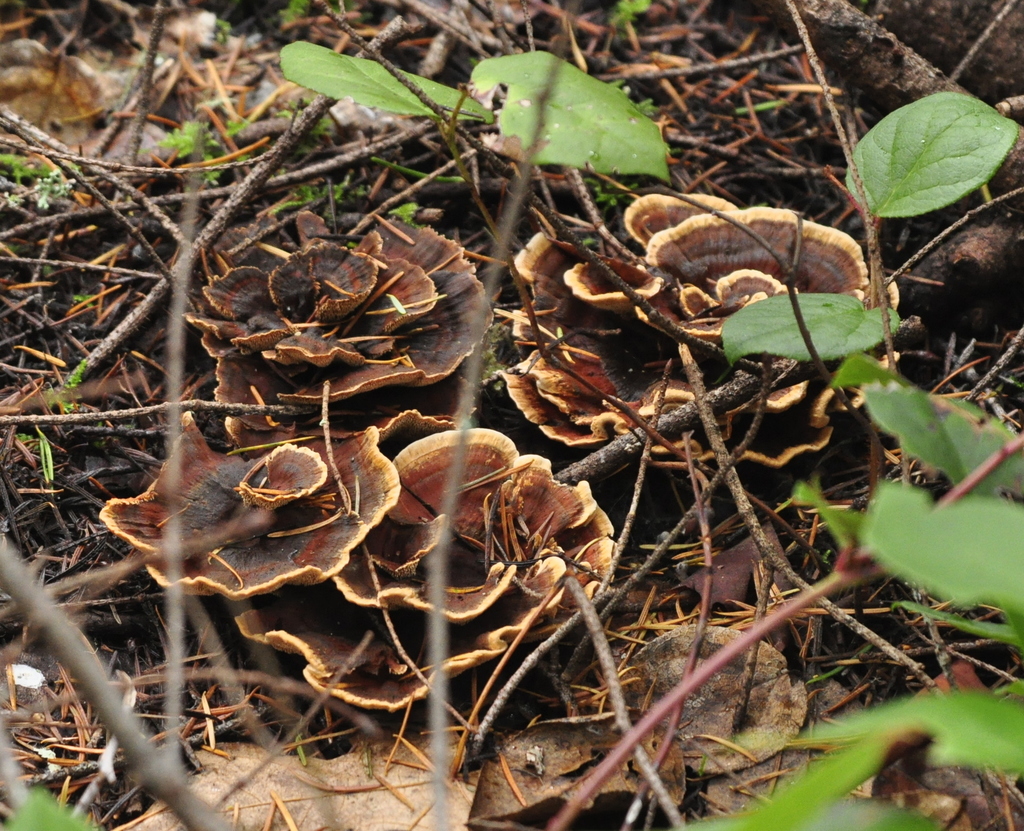
Hydnellum conigenum
Hydnellum conigenum, commonly known as the funnel hydnum, is a species of tooth fungus in the family Bankeraceae found in North America. It was first described in 1903 by American mycologist Charles Horton Peck from collections made growing on fallen cones of ponderosa pine, near the base of the Moscow Mountains (Moscow, Idaho). Peck thought it was similar to H. aurantiacum, differing in its smaller size, more slender stipe, non-zoned flesh, more even cap, and somewhat unusual substrate. Howard James Banker transferred it to the genus Hydnellum in 1906. Its range extends from New Mexico to British Columbia and the Great Lakes region, where it grows in coniferous forests.
Where it lives
Recorded sightings
—
geo-referenced records in GBIF, from museums, herbaria and field observers.
Drag the globe to turn it. Dots are where records exist, not a range map; darker means more records.
In the stacks
Searching the stacks…
Every page naming Hydnellum conigenum in the Biodiversity Heritage Library →
This page is assembled live from iNaturalist, GBIF, Wikipedia, the Source Library and the Internet Archive. It is not yet part of the hand-edited codex. iNaturalist taxon 351027.