- Animals
- ›Chordates
- ›Vertebrates
- ›Reptiles
- ›Snakes and Lizards
- ›Snakes
- ›Elapid Snakes
- ›Australian Elapids (inc. Sea Snakes)
- ›Hoplocephalus
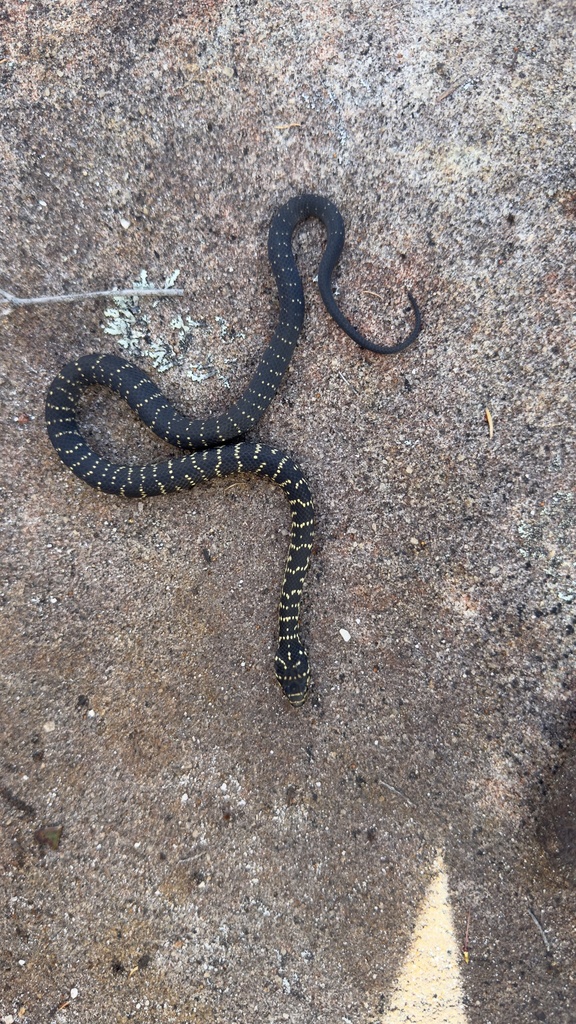
Broad-headed Snake
Hoplocephalus bungaroides
The broad-headed snake (Hoplocephalus bungaroides) is a species of venomous snake in the family Elapidae. The species is restricted to the Sydney Basin in New South Wales, Australia. It is one of three snakes in the genus Hoplocephalus, all restricted to eastern Australia. It is currently endangered in New South Wales and is listed as vulnerable under the Commonwealth Legislation.
From the article Broad-headed snake on Wikipedia (CC BY-SA), quoted section by section
Description
The broad-headed snake is a small to medium-sized species of venomous snake, which attains an average total length (including tail) of 60 cm (24 in), although some records show that it can grow as long as 90 cm (35 in). It is black with numerous irregular yellow markings arranged in narrow cross-bands, which for inexperienced people can easily lead to confusion with a young diamond python, which is superficially very similar and found in the same habitat.In 2023 a man was bitten in the Southern Highlands of NSW after capturing a Broad-headed snake he believed to be a Diamond Python to show his children.
Range & habitat
The broad-headed snake is found in the Sydney Basin in New South Wales, Australia. The snake's choice of habitat depends on temperature, age, sex, and breeding status. In the colder months, adult and juvenile snakes reside in the crevices of sandstone outcrops on exposed cliff edges to maximise warmth from the sun. When the temperature rises in spring, adult males and non-breeding females move to adjacent woodlands and forests, inhabiting hollow trees during the summer months. Juvenile snakes and gravid females remain in the rocks and move to cooler, shaded areas. Their habitat has been degraded by urbanization, illegal rock removal, vandalisation and indiscriminate reptile collecting. The sandstone rocks that the snakes occupy are valued for landscaping purposes. Their removal has led to a loss of habitat for both the snakes and their prey.
Wikipedia: “Distribution and habitat”
What it does
The broad-headed snake feeds infrequently on small reptiles and mammals. Snakes in captivity are able to maintain or gain weight when fed one to two newborn rats per month. In one documented case, a snake survived a fast lasting twelve months. Juveniles feed mostly on Lesueur's velvet gecko (Amalosia lesueurii) and occasionally on small skinks. Adults feed on Lesueur's velvet gecko, but also prey on other lizards, small snakes, and mice.
Wikipedia: “Diet”
Where it lives
Recorded sightings
—
geo-referenced records in GBIF, from museums, herbaria and field observers.
Drag the globe to turn it. Dots are where records exist, not a range map; darker means more records.
In the stacks
Searching the stacks…
Every page naming Hoplocephalus bungaroides in the Biodiversity Heritage Library →
This page is assembled live from iNaturalist, GBIF, Wikipedia, the Source Library and the Internet Archive. It is not yet part of the hand-edited codex. iNaturalist taxon 35234.