- Animals
- ›Arthropods
- ›Hexapods
- ›Insects
- ›Winged and Once-winged Insects
- ›Ants, Bees, Wasps, and Sawflies
- ›Narrow-waisted Wasps, Ants, and Bees
- ›Ants, Bees, and Stinging Wasps
- ›Vespoid Wasps
- ›Hornets, Paper Wasps, Potter Wasps, and Allies
- ›Hornets and Yellowjackets
- ›Vespa
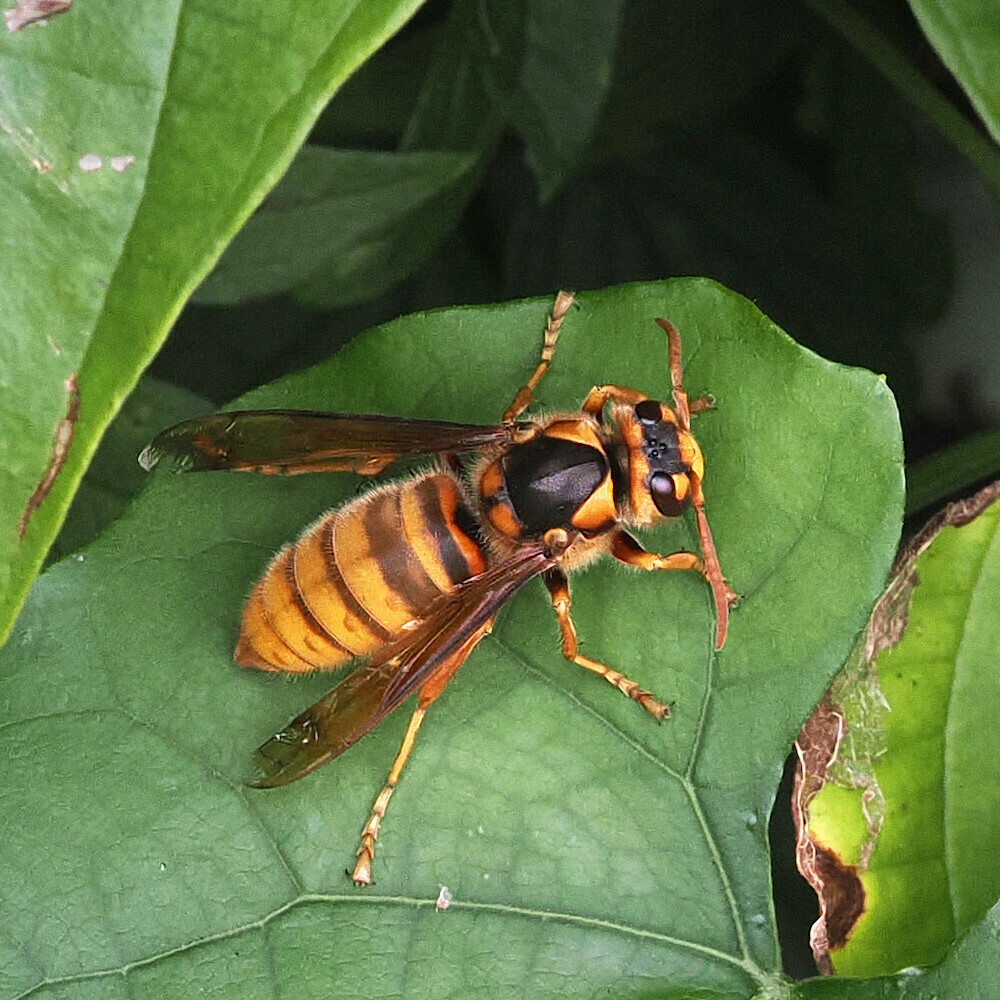
Yellow Hornet
Vespa simillima
Vespa simillima, the yellow hornet, including the color form known as the Japanese hornet or Japanese yellow hornet (キイロスズメバチ), is a common hornet species in the Eastern Hemisphere. The typical mainland color form (Japanese: ケブカスズメバチ, Korean: 털보말벌, 'hairy wasp') is darker and hairier than the yellow form; it lives in Hokkaido, the Korean Peninsula, Eastern Siberia and China, but is less common elsewhere in Japan, where the yellow color form predominates. It should not be confused with the Asian giant hornet (Vespa mandarinia), which has a color form sometimes referred to as the "Japanese giant hornet". While there is a history of recognizing subspecies within many hornets, the most recent taxonomic revision treats all subspecific names in the genus Vespa as synonyms, effectively relegating them to no more than informal names for regional color forms.
From the article Vespa simillima on Wikipedia (CC BY-SA), quoted section by section
What it does
V. simillima colonies are all founded by one single foundress, the same with all other species in their genus. The queen performs all tasks, including egg laying, foraging, and nest building, until workers begin to hatch. This can sometimes lead to nests dying out early in the nesting period, if the queen is killed while foraging before workers can hatch. As the number of workers grows, the division of labor gradually shifts with the queen ultimately only performing egg laying and larval trophallaxis. The average time from egg to adult for V. simillima is 30.8 days, and the average length of survival for adult workers is 12.9 days. Adult mortality rate increases constantly after the start of foraging activities outside the nest. V. simillima are solitary predators, hunting and foraging alone. Food gathered by workers is handed over at the nest, where other workers distribute it among larvae and other nest mates. Nest material is immediately treated and applied to the nest directly by the gathering worker, not passed to a different worker.
Wikipedia: “Behavior”
Listen
Looking for field recordings…
Where it lives
Recorded sightings
—
geo-referenced records in GBIF, from museums, herbaria and field observers.
Drag the globe to turn it. Dots are where records exist, not a range map; darker means more records.
In the stacks
Searching the stacks…
Every page naming Vespa simillima in the Biodiversity Heritage Library →
This page is assembled live from iNaturalist, GBIF, Wikipedia, the Source Library and the Internet Archive. It is not yet part of the hand-edited codex. iNaturalist taxon 358142.