- Plants
- ›Vascular Plants
- ›flowering plants
- ›Dicots
- ›carrots, ivies, and allies
- ›carrot family
- ›Apioideae
- ›Oenantheae
- ›Sium
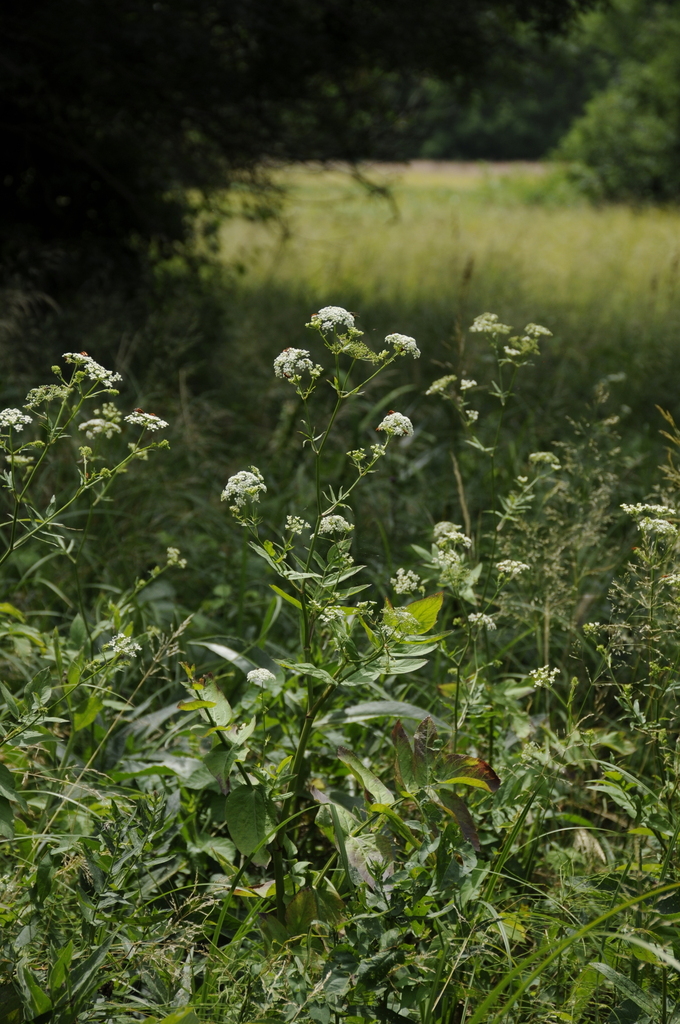
Skirret
Sium sisarum
Sium sisarum, commonly known as skirret, is a perennial plant of the family Apiaceae in the same family as carrots and parsnip. Skirret is grown as a root vegetable. The English name skirret is derived from the Middle English 'skirwhit' or 'skirwort', meaning 'white root'. In Scots it is known as crummock and in Irish as sciréad. Its Danish name sukkerrod, Dutch name suikerwortel and German name "Zuckerwurzel" translate as 'sugar root'.
Skirret has a cluster of bright white, sweetish, somewhat aromatic roots, each approximately 15–20 centimetres (6–8 in) in length. These are used as a vegetable in the same manner as the common salsify, black salsify and the parsnip.
From the article Sium sisarum on Wikipedia (CC BY-SA), quoted section by section
At the table
The roots are scrubbed, cut into lengths, boiled, and served like parsnips or carrots. Skirret roots can be stewed, baked, roasted, fried in batter as fritter, or creamed, and also be grated and used raw in salads. A woody core may be present in some roots, though this seems to be variable in different plants. If present, it should be removed before cooking because it is difficult to remove after.
Wikipedia: “Culinary use”
How it is grown
Skirret grows about 1 m (40 in) high and is very resistant to cold, as well as pests and diseases. It can be grown from seeds, but may also be started from root divisions. The roots are best eaten when the plant is dormant during the winter, as in the spring, the roots become woody and covered with small hairs. Lack of moisture can also make the root more fibrous. The plant prefers sandy and moist soil.
Wikipedia: “Cultivation”
In human culture
The plant's first known description is siser mentioned by Pliny the Elder as a favourite of the Emperor Tiberius, though this may have also been a reference to a parsnip or carrot. The twelfth-century Benedictine abbess Hildegard von Bingen discussed the medicinal properties of skirret in her work Physica:
Skirret (gerla) is hot and dry. Eaten in moderation, it is not very helpful or harmful. If someone should eat a lot of it, its heat and dryness would stir up fevers in him and harm his intestines. A person whose face has weak skin, which easily splits, should pound skirret in a mortar and add oil. When he goes to bed at night, he should rub it on his face, continuing until he is healed. A 1390 manuscript The Forme of Cury used by King Richard II of England's master cooks included two recipes for fritters that included 'skyrwates'. Cookery books in the 14th century instruct cooks to fry skirrets in oil or butter. Maud Grieve in A Modern Herbal mentions that it has been cultivated in Great Britain since 1548 and is supposed to be a useful diet in chest complaints. The seventeenth-century English herbalist Nicholas Culpeper said about the plant:
Sisari, secacul. Of Scirrets. …
Wikipedia: “History”
Where it lives
Recorded sightings
—
geo-referenced records in GBIF, from museums, herbaria and field observers.
Drag the globe to turn it. Dots are where records exist, not a range map; darker means more records.
In the old herbals & bestiaries

Commentaries on the Six Books of Dioscorides
Pietro Andrea Mattioli · 1560 · p.388

Ortus sanitatis
1491 · p.420

Notable Commentaries on the History of Plants
Leonhart Fuchs · 1542 · p.786

Notable Commentaries on the History of Plants
Leonhart Fuchs · 1549 · p.784

Notable Commentaries on the History of Plants
Leonhart Fuchs · 1549 · p.783

On Medical Materials in Six Books
Dioscorides · 1550 · p.271

On the Names of Plants
Hieronymus Bock (Tragus) · 1552 · p.984

Six Groups of the History of Plants
Rembert Dodoens · 1583 · p.691

Plant Touchstone (Phytobasanos)
Fabio Colonna · 1592 · p.104
In the stacks
Searching the stacks…
Every page naming Sium sisarum in the Biodiversity Heritage Library →
This page is assembled live from iNaturalist, GBIF, Wikipedia, the Source Library and the Internet Archive. It is not yet part of the hand-edited codex. iNaturalist taxon 360193.