- Plants
- ›Vascular Plants
- ›flowering plants
- ›monocots
- ›grasses, sedges, cattails, and allies
- ›bushcane family
- ›Flagellaria
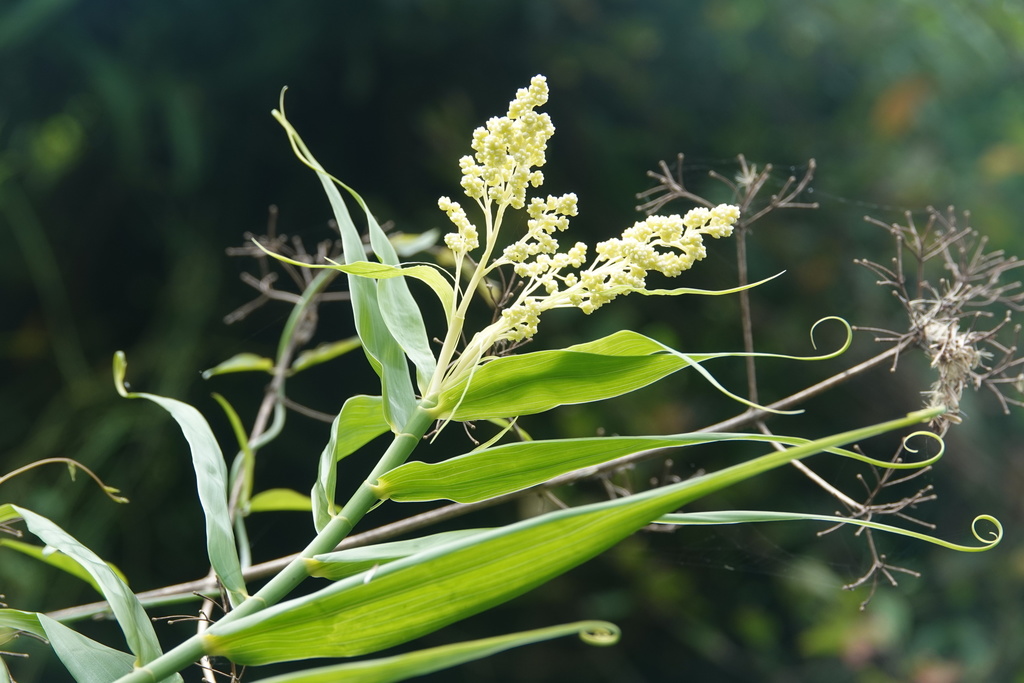
Indian Bushcane
Flagellaria indica
Flagellaria indica is a climbing plant found in many of the tropical and subtropical regions of the Old World, in India, Bangladesh, Southeast Asia, Polynesia, and Australia.
A strong climber, it grows often up to 15 metres (49 ft) tall, with thick cane-like stems exceeding 15 mm (0.6 in) in diameter. Its leaves, without hairs, are 10 to 40 centimetres (4 to 16 in) long, and 5 to 20 mm (0.2 to 0.8 in) wide, with a coiled apical tendril which forms the holding part of the climbing plant. Fragrant white flowers form in panicles, 10 to 25 centimetres (4 to 10 in) long. The fruit is inedible. The globose drupes are red when mature, 5 millimetres (25⁄128 in) in diameter, usually with only one seed.
Where it lives
Recorded sightings
—
geo-referenced records in GBIF, from museums, herbaria and field observers.
Drag the globe to turn it. Dots are where records exist, not a range map; darker means more records.
In the stacks
Searching the stacks…
Every page naming Flagellaria indica in the Biodiversity Heritage Library →
This page is assembled live from iNaturalist, GBIF, Wikipedia, the Source Library and the Internet Archive. It is not yet part of the hand-edited codex. iNaturalist taxon 360343.