- Animals
- ›Arthropods
- ›Hexapods
- ›Insects
- ›Winged and Once-winged Insects
- ›Ants, Bees, Wasps, and Sawflies
- ›Narrow-waisted Wasps, Ants, and Bees
- ›Ants, Bees, and Stinging Wasps
- ›Bees and Apoid Wasps
- ›Bees
- ›Honey Bees, Bumble Bees, and Allies
- ›Apine Bees
- ›Bombini
- ›Bombus
- ›Bombus
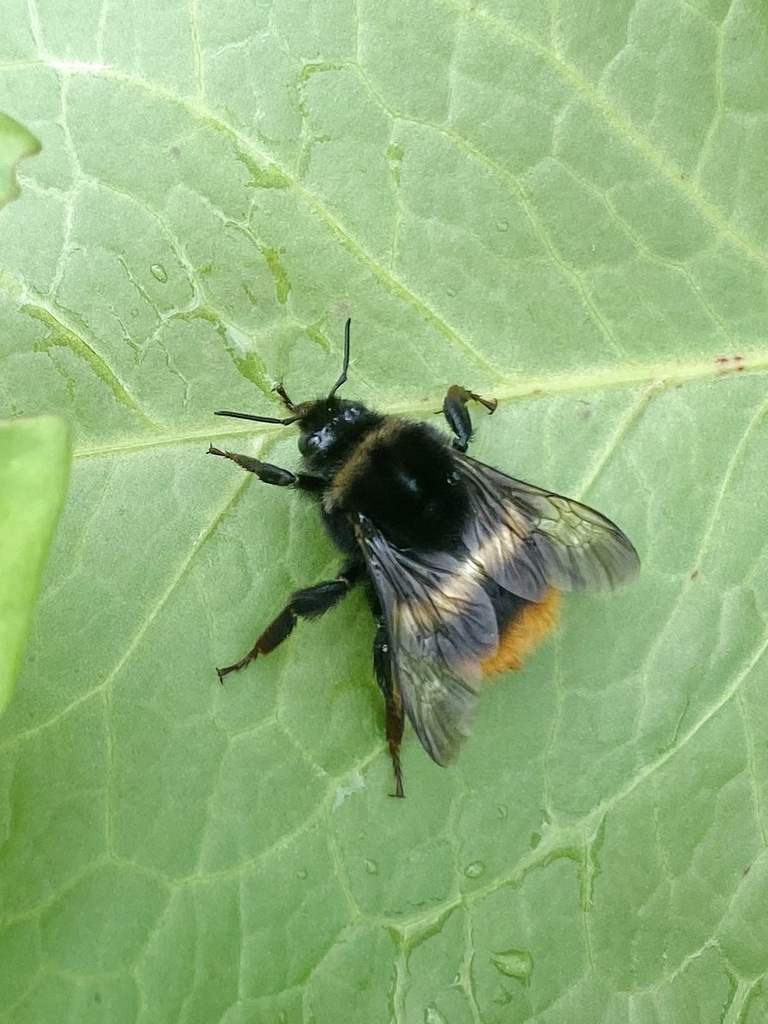
Mimic Bumble Bee
Bombus hypocrita
Bombus hypocrita, also known as the short-tongued bumblebee, is a Japanese bumblebee commonly used in commercial pollination. These short-tongued bumblebees have a proboscis about 7-9mm long, which is folded under their head when flying. Bumblebees are a small fuzzy insect with yellow and black banding along their abdomen. They are round and covered in pile, the hair-like structures that give them their distinct fuzzy appearance.
From the article Bombus hypocrita on Wikipedia (CC BY-SA), quoted section by section
Range & habitat
Bombus hypocrita is one of the most common native bumblebees found in Japan, and can be found throughout all of Japan. B. hypocrita prefer to forage in open, sunny areas and nest underground, often in abandoned rodent dens. B. hypocrita are able to travel over 800 meters foraging for food.
Wikipedia: “Distribution and habitat”
What it does
Bumblebees are common commercial pollinators, as they are able to pollinate effectively using a technique called buzz-foraging. Buzz-foraging is when the Bumblebee lands on the anther of the flower and rapidly vibrates their whole body to get as much of the pollen on their body as possible. This allows them to be effective pollinators even for plants like tomatoes who have flowers that do not produce nectar.
Mating. Bombus hypocrita have very similar reproductive cycles as most other bumblebees with one queen and her colony of male and female worker bees. They have been observed scent-marking flowers and there have been indications that this scent marking plays an important role in premating reproductive isolation. Queens will oviposit 7-10 eggs in wax cells, which can then either hatch without fertilization, resulting in haploid males, or become fertilized, producing diploid females.
Diet. The main source of food is the nectar of flowering herbs and shrubs, preferring flowers with wide or shallow faces such as roses, squash flowers, or morning glories. It has been speculated that these bumblebees visit squash flowers to help facilitate reproduction in the colony.
Wikipedia: “Behaviour”
Listen
Looking for field recordings…
Where it lives
Recorded sightings
—
geo-referenced records in GBIF, from museums, herbaria and field observers.
Drag the globe to turn it. Dots are where records exist, not a range map; darker means more records.
In the stacks
Searching the stacks…
Every page naming Bombus hypocrita in the Biodiversity Heritage Library →
This page is assembled live from iNaturalist, GBIF, Wikipedia, the Source Library and the Internet Archive. It is not yet part of the hand-edited codex. iNaturalist taxon 361902.