- Animals
- ›Arthropods
- ›Hexapods
- ›Insects
- ›Winged and Once-winged Insects
- ›True Bugs, Hoppers, Aphids, and allies
- ›True Hoppers
- ›Spittlebugs, Cicadas, Leafhoppers and Treehoppers
- ›Leafhoppers and Treehoppers
- ›Typical Treehoppers
- ›Centrotinae
- ›Centrotini
- ›Centrotus
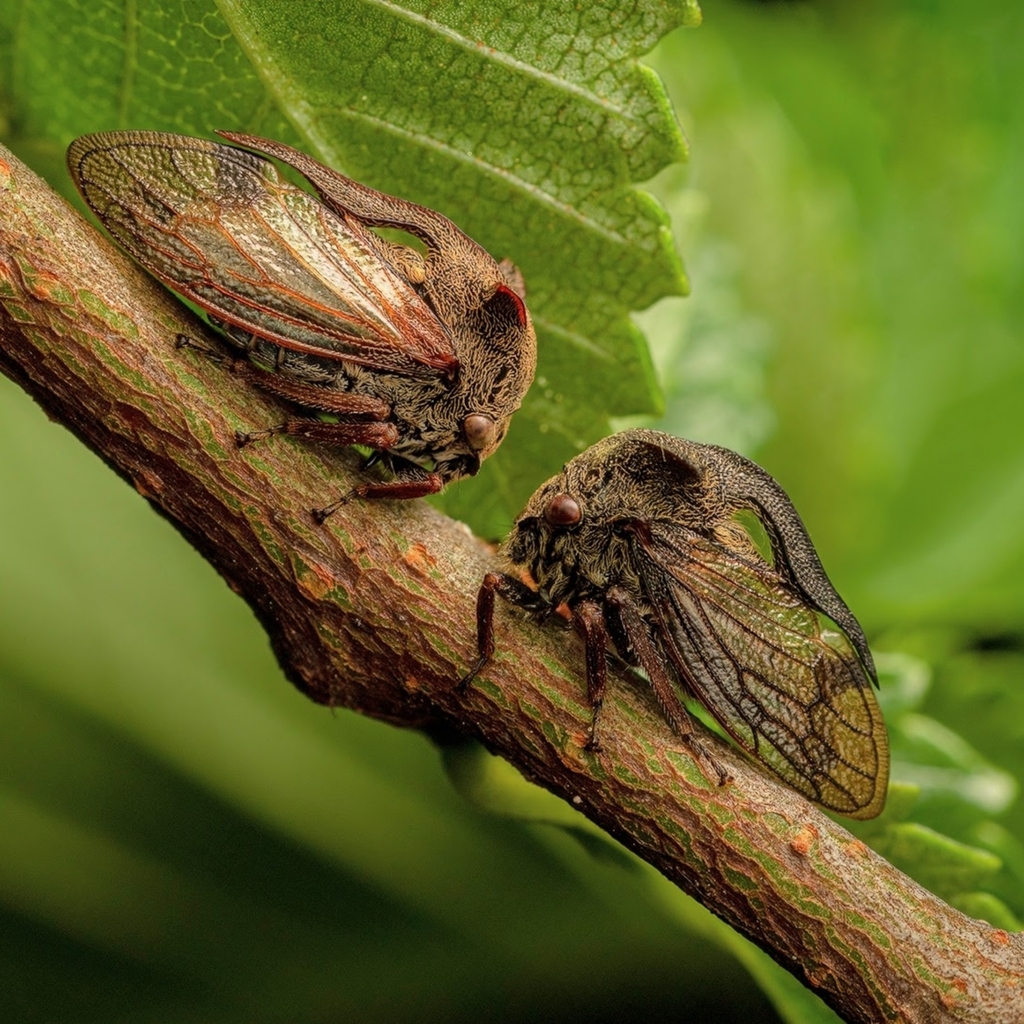
Horned Treehopper
Centrotus cornutus
Centrotus cornutus (thorn-hopper) is a species of 'treehoppers' belonging to the family Membracidae.
From the article Centrotus cornutus on Wikipedia (CC BY-SA), quoted section by section
Description
The adult males reach 7–10 millimetres (0.28–0.39 in) in length, while females are slightly larger. The basic colouration of the stocky body is dark-brown. The large protruding eyes are round and reddish-brown to red. The pronotum is hairy, arched up and pulled back in a long, wave-shaped extension above the wings, with two sharp, ear-shaped lateral protrusions (hence the Latin name cornutus, meaning "horned"). The legs are very short. The front wings are pale brown and translucent, with evident brown veins. The bizarre horn-like extensions of the pronotum apparently help the camouflage. As a matter of fact, when this insect is at rest on a branch with the legs retracted, it looks like a part of the branch itself. This species is rather similar to Gargara genistae, the second UK species of treehoppers, that lacks the horn-like protrusions, has a shorter extension above the wings and it is associated with broom.
Range & habitat
This species is present in most of Europe, in the eastern Palearctic realm and in the Near East. It is one of only two UK treehoppers.
Wikipedia: “Distribution”
Listen
Looking for field recordings…
Where it lives
Recorded sightings
—
geo-referenced records in GBIF, from museums, herbaria and field observers.
Drag the globe to turn it. Dots are where records exist, not a range map; darker means more records.
In the stacks
Searching the stacks…
Every page naming Centrotus cornutus in the Biodiversity Heritage Library →
This page is assembled live from iNaturalist, GBIF, Wikipedia, the Source Library and the Internet Archive. It is not yet part of the hand-edited codex. iNaturalist taxon 362433.