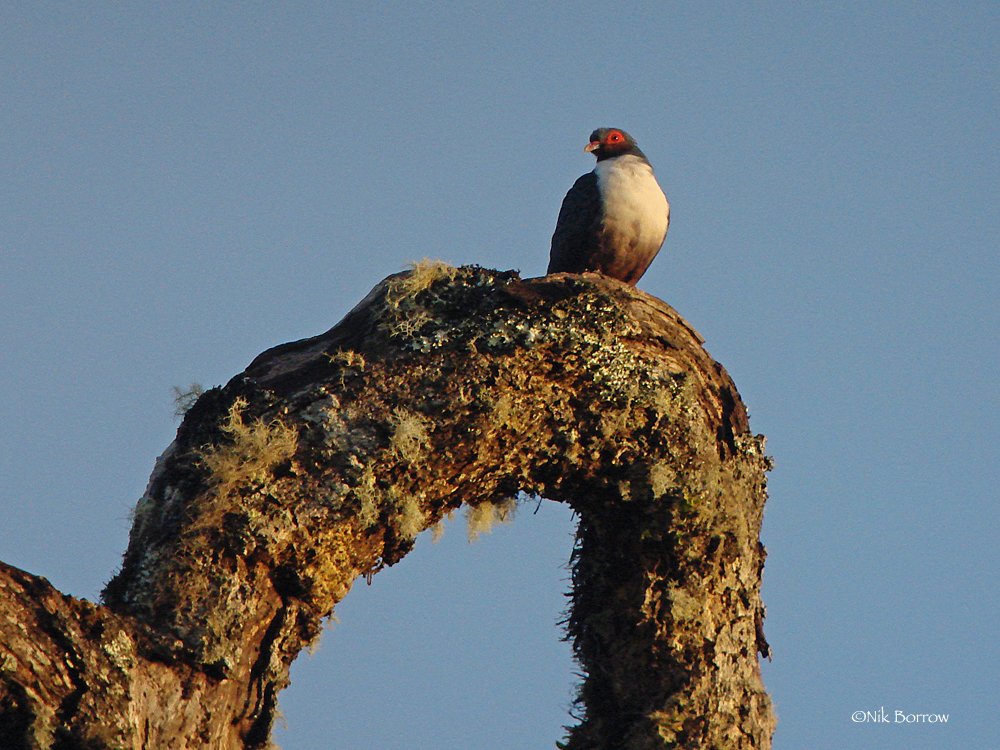
Mountain-Pigeons
Gymnophaps
Mountain pigeons are four species of birds in the genus Gymnophaps in the pigeon family Columbidae. They are found on islands in eastern Indonesia and western Melanesia, where they inhabit hill and montane forest. Medium-sized pigeons with long tails and wings, they are 33–38.5 cm (13.0–15.2 in) long and weigh 259–385 g (9.1–13.6 oz). They mostly have dull grey, white, or chestnut-brown plumage, their most distinctive feature being bright red skin around the eyes. Males and females mostly look alike, but the Papuan and pale mountain pigeons show slight sexual dimorphism. Mountain pigeons are very social and are usually seen in flocks of 10–40 birds, although some species can form flocks of more than 100 individuals. They are generally quiet and do not make many vocalisations apart from a distinctive whooshing noise while leaving their high-altitude roosts to feed in the morning.
The genus was originally described by the Italian zoologist Tommaso Salvadori in 1874 and currently contains the Papuan, Seram, Buru, and pale mountain pigeons. The species are allopatric (having geographically separated populations) and form a single superspecies. Mountain pigeons are arboreal (tree-inhabiting) and feed on a wide variety of fruit-like figs and drupes, mainly foraging for food in the canopy. Nests can be of two types: a shallow depression in the forest floor or short grass; and a platform of sticks placed at a height of several metres in a tree. Clutches consist of a single white egg. All four species are listed as being of least concern on the IUCN Red List.
4 branches of this genus, most-observed first · about 4 known species

Papuan Mountain-Pigeon
speciesGymnophaps albertisii

Buru Mountain-Pigeon
speciesGymnophaps mada

Seram Mountain-Pigeon
speciesGymnophaps stalkeri
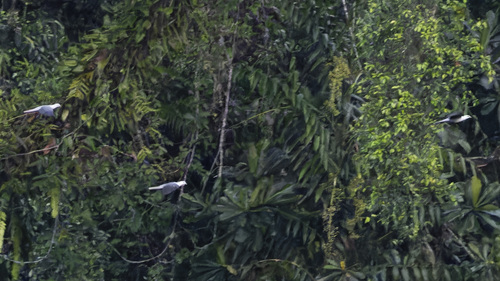
Pale Mountain-Pigeon
speciesGymnophaps solomonensis
Where it lives
Recorded sightings
—
geo-referenced records in GBIF, from museums, herbaria and field observers.
Drag the globe to turn it. Dots are where records exist, not a range map; darker means more records.
In the stacks
Searching the stacks…
Every page naming Gymnophaps in the Biodiversity Heritage Library →
This page is assembled live from iNaturalist, GBIF, Wikipedia, the Source Library and the Internet Archive. It is not yet part of the hand-edited codex. iNaturalist taxon 3668.