- Animals
- ›Arthropods
- ›Hexapods
- ›Insects
- ›Winged and Once-winged Insects
- ›Flies
- ›Brachyceran Flies
- ›Cyclorrhaphan Flies
- ›Schizophoran Flies
- ›Acalyptrate Flies
- ›Fruit, Signal, and Picture-winged Flies
- ›Fruit Flies
- ›Cucurbit Fruit Flies
- ›Dacini
- ›Bactrocera
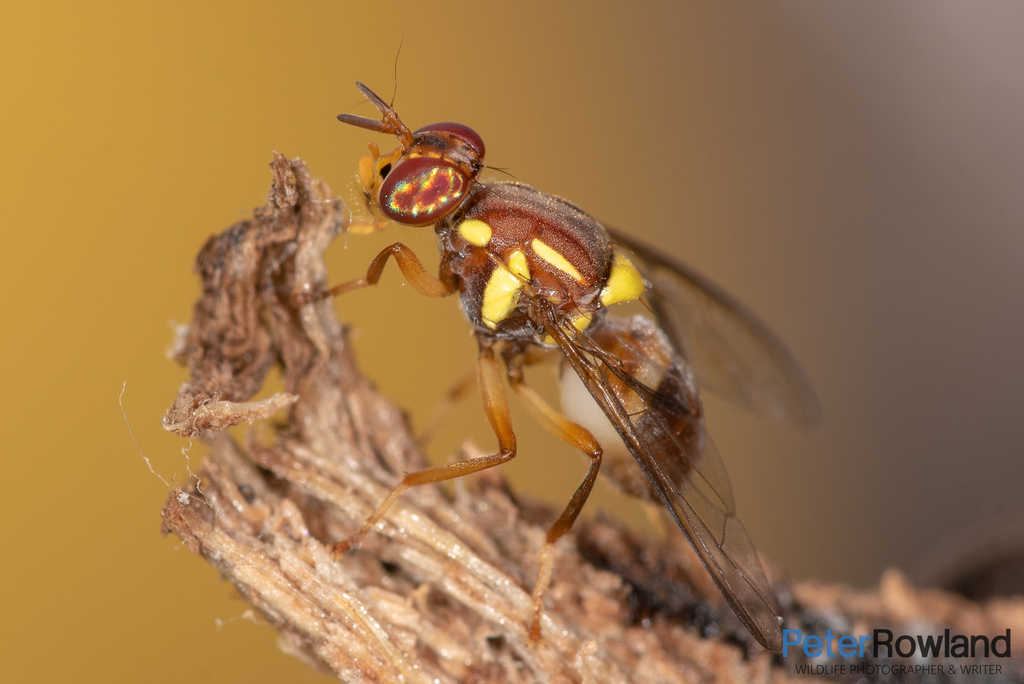
Queensland Fruit Fly
Bactrocera tryoni
Bactrocera tryoni, the Queensland fruit fly, is a species of fly in the family Tephritidae in the insect order Diptera. B. tryoni is native to subtropical coastal Queensland and northern New South Wales. They are active during the day, but mate at night. B. tryoni lay their eggs in fruit. The larvae then hatch and proceed to consume the fruit, causing the fruit to decay and drop prematurely. B. tryoni are responsible for an estimated $28.5 million a year in damage to Australian crops and are the most costly horticultural pest in Australia. Up to 100% of exposed fruit can be destroyed due to an infestation of this fly species. Previously, pesticides were used to eliminate B. tryoni from damaging crops. However, these chemicals are now banned. Thus, experts devoted to B. tryoni control have transitioned to studying this pests' behaviors to determine a new method of elimination.
From the article Bactrocera tryoni on Wikipedia (CC BY-SA), quoted section by section
Range & habitat
B. tryoni prefer humid and warm climates. Thus, they are most widespread in eastern Australia, as well as New Caledonia, French Polynesia, the Pitcairn Islands, and the Cook Islands. Commercial fruit production has increased in Australia, increasing the geographical area in which B. tryoni can reside, extending as far inland as central Queensland and New South Wales. Occasionally, there are outbreaks of B. tryoni in southern and western Australia; however, the coastal areas of Australia are relatively isolated from one another due to harsh, dry weather conditions in intervening regions that are unsuitable for B. tryoni. Therefore, other regions of Australia typically remain free of this pest as long as infested fruit is not transported between regions.
Wikipedia: “Distribution and habitat”
What it does
Larvae feed only on the flesh of fruit until they mature into adulthood. Adult flies, however, rely on leaf surface bacteria as a major source of protein. There is some evidence suggesting that the bacteria and flies co-evolved, but other data suggest that this symbiosis does not occur as the presence of protein-providing bacteria is not consistent throughout B. tryoni populations. Due to this dependence on protein originating from bacteria, it is possible to control the population by providing flies with artificial protein mixed with insecticide.
Wikipedia: “Adult feeding behavior”
Listen
Looking for field recordings…
Where it lives
Recorded sightings
—
geo-referenced records in GBIF, from museums, herbaria and field observers.
Drag the globe to turn it. Dots are where records exist, not a range map; darker means more records.
In the stacks
Searching the stacks…
Every page naming Bactrocera tryoni in the Biodiversity Heritage Library →
This page is assembled live from iNaturalist, GBIF, Wikipedia, the Source Library and the Internet Archive. It is not yet part of the hand-edited codex. iNaturalist taxon 368581.