- Plants
- ›Vascular Plants
- ›flowering plants
- ›Dicots
- ›Roses, Elms, Figs, and Allies
- ›mulberry and fig family
- ›Ficeae
- ›Ficus
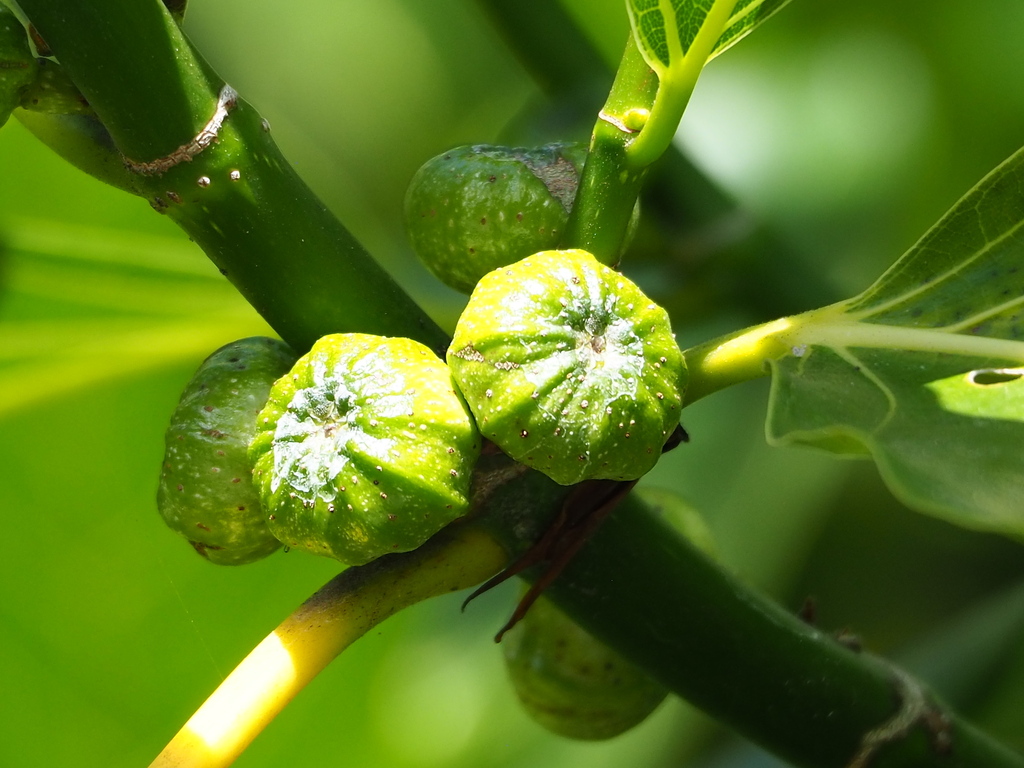
Hauili fig tree
Ficus septica
Ficus septica, also known as the Hauili fig tree, is a species of shrub or tree in the family Moraceae. It is native to Malesia, Taiwan, the Ryukyu Islands, Papuasia, Queensland in northern Australia, the Santa Cruz Islands, and Vanuatu.
It grows in lowland tropical moist forests, often at forest edges and in degraded environments. The seeds of this species are dispersed by numerous species, including fruit bats (Megachiroptera) when present.
From the article Ficus septica on Wikipedia (CC BY-SA), quoted section by section
Description
Tree or shrub up to 25 meters. The latex of F. septica is characteristically yellow. Leaves and petioles are both glabrous. Leaves are symmetric, elliptic to oblong. Figs grow often in pairs but can be solitary or in groups of up to four. Figs are depressed-globose to ellipsoid, the apex is flat or concave. Seven to twelve ribs towards to ostiole. At maturity, whitish to yellowish dots appear on the fig. The individuals from Philippines have their stems covered by short hairs while those found in Taiwan are glabrous.
Range & habitat
Ficus septica trees live up to 1800m in montane forests or secondary growth environments. It can be seen often along rivers. In Taiwan, at the northern limit of its distribution, F. septica lives up to 500m in secondary growths and along roads and coastlines.
Wikipedia: “Habitat”
What it does
Ficus septica is pollinated by fig wasps from the genus Ceratosolen, of which the best known is C. bisulcatus. Usually members of the genus Ficus are pollinated by a single species of pollinating fig wasps specific to each fig species, but recent observations of Ficus septica have shown there to be three pollinating species in southern Taiwan and two in the Philippines. The figs of Ficus septica have been reported to be eaten by 22 animal species and among them 14 are bats:
== References ==
Wikipedia: “Ecology”
Where it lives
Recorded sightings
—
geo-referenced records in GBIF, from museums, herbaria and field observers.
Drag the globe to turn it. Dots are where records exist, not a range map; darker means more records.
In the stacks
Searching the stacks…
Every page naming Ficus septica in the Biodiversity Heritage Library →
This page is assembled live from iNaturalist, GBIF, Wikipedia, the Source Library and the Internet Archive. It is not yet part of the hand-edited codex. iNaturalist taxon 369434.