- Plants
- ›Vascular Plants
- ›flowering plants
- ›Dicots
- ›Gentians, Dogbanes, Madders, and Allies
- ›Dogbane Family
- ›Rauvolfioideae
- ›Alyxieae
- ›Alyxiinae
- ›Alyxia
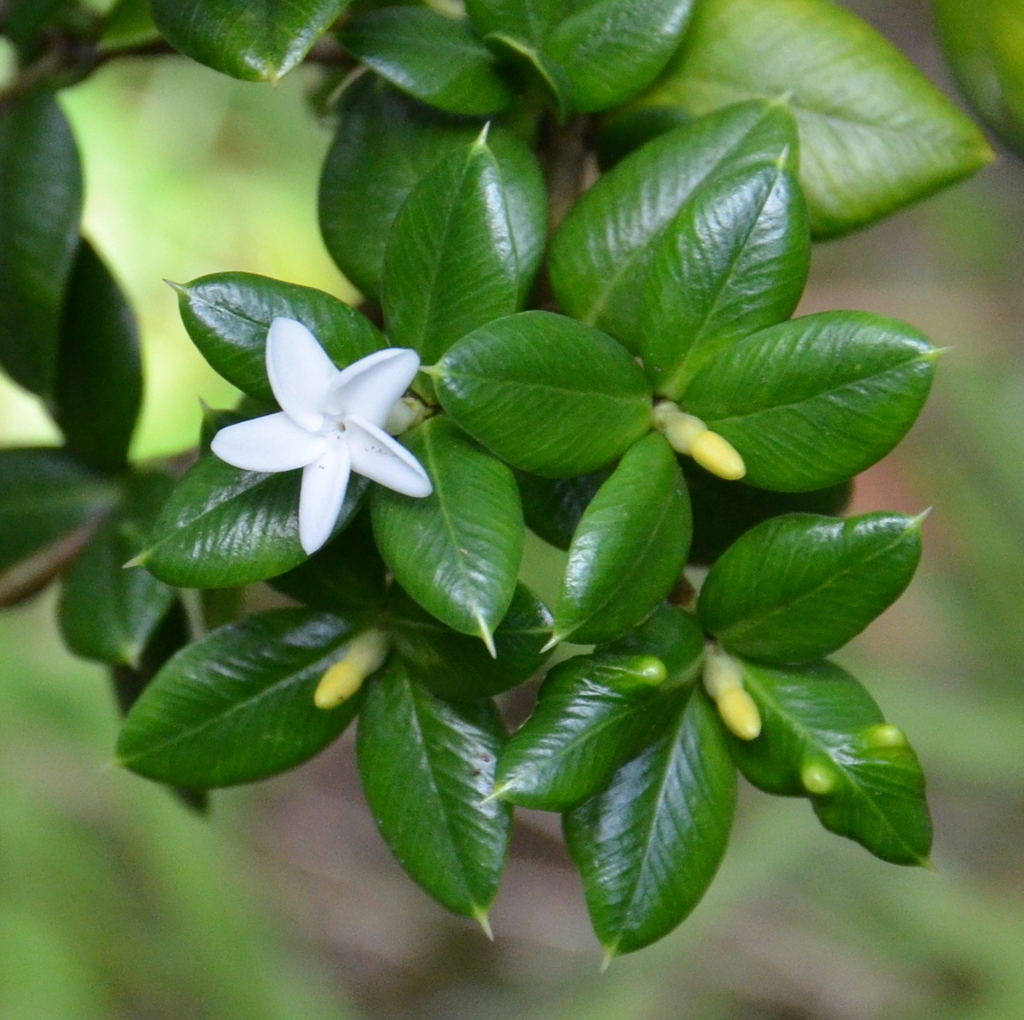
Chain Fruit
Alyxia ruscifolia
Alyxia ruscifolia, commonly known as the chainfruit or prickly alyxia, is a shrub of high rainfall areas in eastern Australia. The natural range of distribution is from Wollongong in New South Wales to the Wet Tropics and further north to New Guinea.
It can be seen in a variety of different situations. Such as the sub tropical Lord Howe Island, surrounded by the ocean, or the tropical rainforest understorey at Kuranda in Queensland. Or the exposed rocky cliffs on the Mount Royal Range in New South Wales, where it is subject to high winds and snow. The habitat is many types of rainforests from sea level to 1200 metres, sometimes also seen in sclerophyll forests.
From the article Alyxia ruscifolia on Wikipedia (CC BY-SA), quoted section by section
Description
Usually around 2 metres tall, sometimes larger. Leaves in whorls, narrow lanceolate to broad lanceolate in shape, 1 to 6 cm long. Thick, leathery and glossy with a pointed tip. Leaves usually not toothed, lateral veins obvious. The leaf stem is between 1 and 4 mm long. Fragrant white flowers form in spring and summer, in terminal heads of 3 to 5 flowers. The fruit is orange to red in colour, 8 to 11 mm in diameter.
Where it lives
Recorded sightings
—
geo-referenced records in GBIF, from museums, herbaria and field observers.
Drag the globe to turn it. Dots are where records exist, not a range map; darker means more records.
In the stacks
Searching the stacks…
Every page naming Alyxia ruscifolia in the Biodiversity Heritage Library →
This page is assembled live from iNaturalist, GBIF, Wikipedia, the Source Library and the Internet Archive. It is not yet part of the hand-edited codex. iNaturalist taxon 369496.