- Animals
- ›Arthropods
- ›Crustaceans
- ›Typical Crustaceans
- ›Malacostracans
- ›Decapods, Isopods, and allies
- ›Decapods and Krill
- ›Decapods
- ›Crabs, Lobsters, Shrimps, and Allies
- ›Crayfishes and Lobsters
- ›Parastacoidea
- ›Southern Hemisphere Crayfishes
- ›Cherax
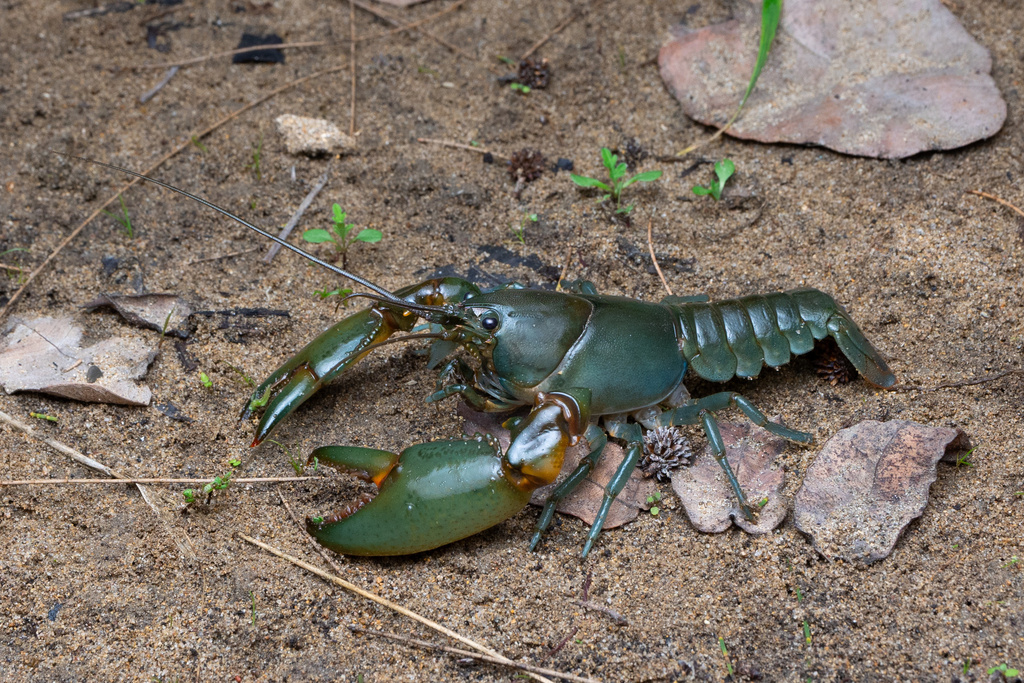
orange-fingered yabby
Cherax depressus
Cherax depressus, the orange fingered yabby, is an Australian freshwater crustacean in the family Parastacidae.
From the article Cherax depressus on Wikipedia (CC BY-SA), quoted section by section
Description
A relatively small species of yabby reaching a maximum of 15 cm (5.9 in) in length. Named the 'orange fingered' yabby due to the orange tipping on the end of their chelae (pincers). These yabbies dwell in dug burrows alongside small creeks or ephemeral waterways and can survive dry conditions for several years by lying dormant in burrows sunk deep into the muddy creek beds, coming out into open water only during heavy rainfall. They dig their burrows with their mega sized pincers, burrowing generally around 50–80 cm deep, but can dig deeper during droughts if necessary. Even when not in drought, the yabby will rarely emerge from its burrow chambers, making it a rarely seen yabby species. Colour is highly variable and depends on the environmental conditions and habitat; yabbies can range from black, blue-black, dark brown, dark red, dark green, dark blue and brown-red. Although usually consisting of a brownish-red top side and a light or dark blue underside and legs. Juveniles may be found inhabiting open water and small creeks as they slowly develop their digging skills. Adults will rarely venture outside their burrows unless mating or desperate for food.
Where it lives
Recorded sightings
—
geo-referenced records in GBIF, from museums, herbaria and field observers.
Drag the globe to turn it. Dots are where records exist, not a range map; darker means more records.
In the stacks
Searching the stacks…
Every page naming Cherax depressus in the Biodiversity Heritage Library →
This page is assembled live from iNaturalist, GBIF, Wikipedia, the Source Library and the Internet Archive. It is not yet part of the hand-edited codex. iNaturalist taxon 370343.