- Plants
- ›Vascular Plants
- ›flowering plants
- ›Dicots
- ›Sunflowers, Bellflowers, Fanflowers, and Allies
- ›Sunflowers, Daisies, Asters, and Allies
- ›Asteroideae
- ›asters and allies
- ›Asterinae
- ›Aster
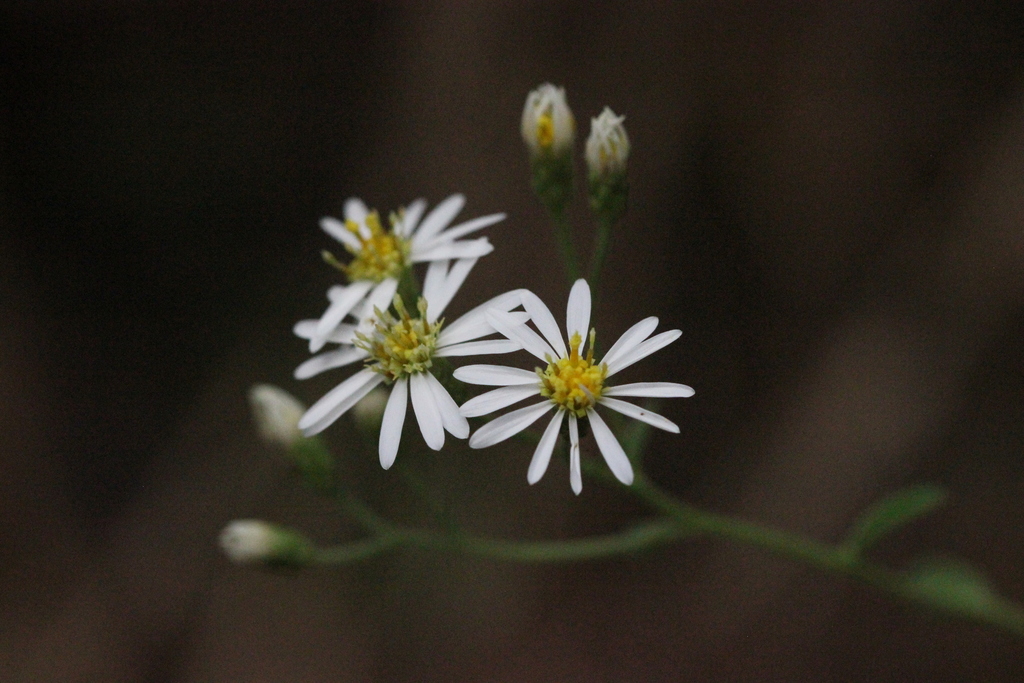
Aster ageratoides
Aster ageratoides (common name, balsam aster) is a perennial flowering plant in the family Asteraceae. It is endemic to eastern Asia.
From the article Aster ageratoides on Wikipedia (CC BY-SA), quoted section by section
Description
A. ageratoides is a clump-forming, herbaceous perennial growing to a height of approximately 75–90 cm (30–35 in). Leaves are dark green, toothed, lanceolate and entire. Flowers are stellate, generally violet, pink or bluish in colour, with yellow centres, flowering from early to late autumn. Fruit is an achene, brown in colour, measuring about 2–3 mm (0.079–0.118 in) in length.
Range & habitat
A. ageratoides is widely distributed throughout Asia, including China, Korea, Japan, Taiwan, where it is usually found in mountainous regions at elevations between 1,500–2,500 m (4,900–8,200 ft).
Wikipedia: “Distribution and habitat”
In medicine
Ongoing research suggests that Aster ageratoides extract may help attenuate Alzheimer's disease-associated cognitive deficits and improve the symptoms of vascular dementia.
== References ==
Wikipedia: “Medicinal use”
Where it lives
Recorded sightings
—
geo-referenced records in GBIF, from museums, herbaria and field observers.
Drag the globe to turn it. Dots are where records exist, not a range map; darker means more records.
In the stacks
Searching the stacks…
Every page naming Aster ageratoides in the Biodiversity Heritage Library →
This page is assembled live from iNaturalist, GBIF, Wikipedia, the Source Library and the Internet Archive. It is not yet part of the hand-edited codex. iNaturalist taxon 371636.