- Animals
- ›Arthropods
- ›Hexapods
- ›Insects
- ›Winged and Once-winged Insects
- ›Flies
- ›Nematoceran Flies
- ›Crane Flies
- ›Typical Crane Flies
- ›Large Crane Flies
- ›Tipulinae
- ›Tipula
- ›Triplicitipula
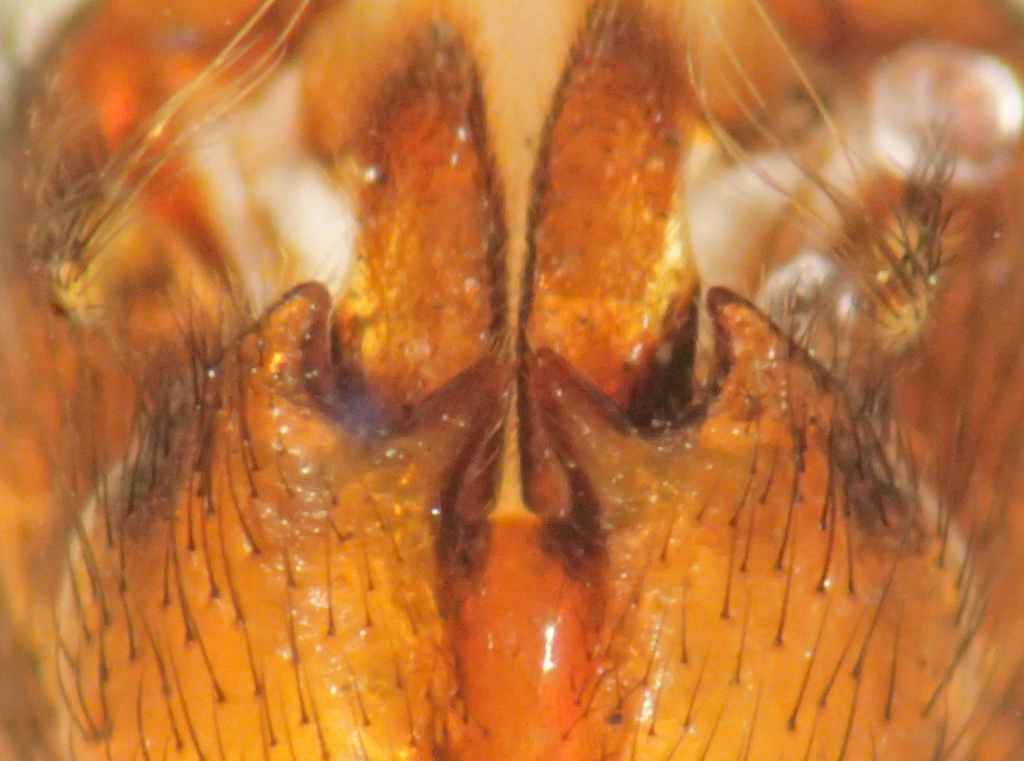
Tipula pubera
Tipula pubera is a species of large crane fly in the family Tipulidae, found in British Columbia south to California (including the Channel Islands).
From the article Tipula pubera on Wikipedia (CC BY-SA), quoted section by section
Description
The following is a translated excerpt from Diptera: Americae Sepentrionalis Indigena by Hermann Loew where Tipula pubera was first described (may have inaccuracies in translation). The original text can be referenced below it. "Tipula pubera. Teslacea is covered with hairs that are slightly darker than the hairs of the hair, and the body is covered with longer hairs. The antennae of the antennae are brownish-black; the wings are spotted, the posterior umbilicus is atbido-marginal, the second longidinal vein is shortened by the anterior branch. — Long. corp. 9 lin., Long. al. 10 lin. From yellow leslacea or ochbracea, dark, with longer hairs, in top, rostrum and palps black, on the rest of the body pale veslita. The whole head is colored, with a brown arlic and an anlennar flagellum on each of the palps, but the first with a lighter arlic of the two. The body of the lboraris is smaller, but a little more salinary. Sculelliim and mclanolnm immaculate. Abdomen with a trace of dark subfusca lines and a faint subfusca line on the utrinqiie. Hypopygium very large, concolorous, with large inner lamellae. On the apical margin with very dense hairs, the feet are subfusca, the femurs with apices of the tibiae and all the tarsals with black-fusca claws. …
What it does
As with all Triplicitipula, T. pubera is considered a pest. It is destructive to vegetation and crops.
Wikipedia: “Ecology”
Listen
Looking for field recordings…
Where it lives
Recorded sightings
—
geo-referenced records in GBIF, from museums, herbaria and field observers.
Drag the globe to turn it. Dots are where records exist, not a range map; darker means more records.
In the stacks
Searching the stacks…
Every page naming Tipula pubera in the Biodiversity Heritage Library →
This page is assembled live from iNaturalist, GBIF, Wikipedia, the Source Library and the Internet Archive. It is not yet part of the hand-edited codex. iNaturalist taxon 372086.