- Fungi Including Lichens
- ›Ascomycete Fungi
- ›Sac Fungi and Lichens
- ›Sordariomycetes
- ›Hypocreomycetidae
- ›Hypocreales
- ›Bionectriaceae
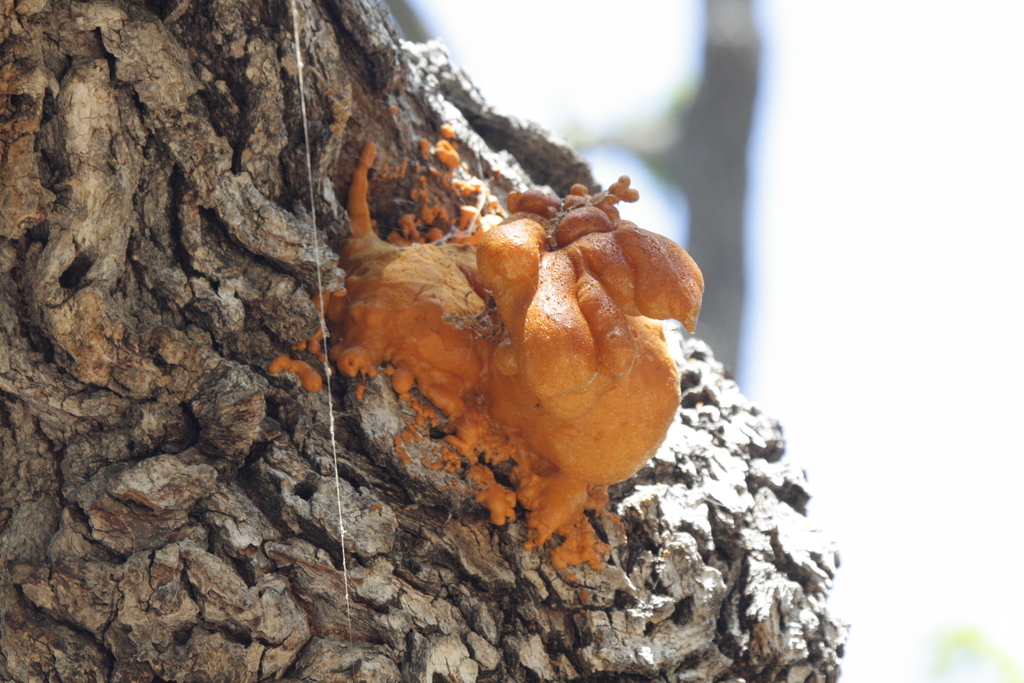
Geosmithia
Geosmithia is a genus of anamorphic fungi of uncertain familial placement in the order Hypocreales. The genus, circumscribed by Australian mycologist John Pitt in 1979, is widely distributed. A 2008 estimate placed ten species in the genus, but several new species have since been described. Thousand cankers disease, which affects economically important black walnut (Juglans nigra) populations in North America, is caused by Geosmithia morbida.
Species in the genus are generally similar to those in Penicillium, but can be distinguished from them by forming cylindrical conidia from rough-walled phialides. Additionally, the conidia of Geosmithia do not have a green color, in contrast to the characteristic blue-grey or green-grey conidia of Penicillium. Some Geosmithia species have teleomorphic forms that are classified in the genus Talaromyces. However, Geosmithia is a polyphyletic taxon with evolutionary affinities to at least three groups of the euascomycete lineage within the Ascomycota. The generic name Geosmithia honors British mycologist George Smith.
Where it lives
Recorded sightings
—
geo-referenced records in GBIF, from museums, herbaria and field observers.
Drag the globe to turn it. Dots are where records exist, not a range map; darker means more records.
In the stacks
Searching the stacks…
Every page naming Geosmithia in the Biodiversity Heritage Library →
This page is assembled live from iNaturalist, GBIF, Wikipedia, the Source Library and the Internet Archive. It is not yet part of the hand-edited codex. iNaturalist taxon 374766.