- Fungi Including Lichens
- ›Ascomycete Fungi
- ›Sac Fungi and Lichens
- ›Sordariomycetes
- ›Hypocreomycetidae
- ›Hypocreales
- ›Nectriaceae
- ›Mariannaea
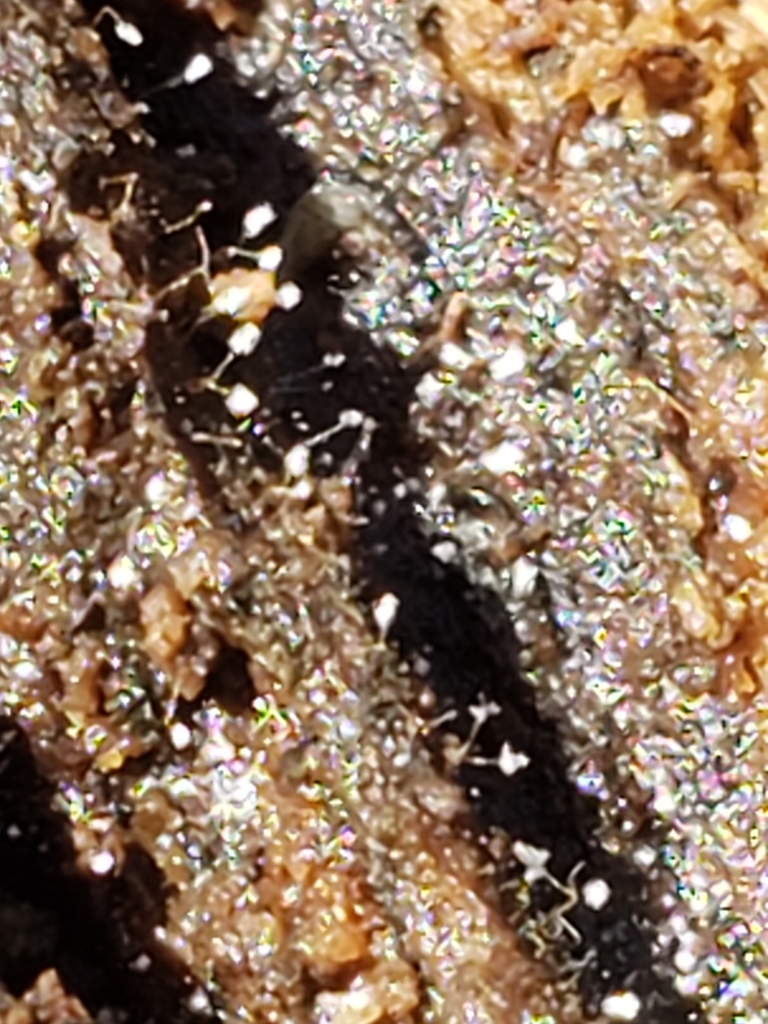
Mariannaea elegans
Mariannaea elegans an anamorphic fungus (i.e., it reproduces exclusively asexually). It is mainly found on rotting wood and soil. M. elegans is not pathogenic to humans, animals, or plants.
From the article Mariannaea elegans on Wikipedia (CC BY-SA), quoted section by section
Range & habitat
Mariannaea elegans grows on decaying coniferous bark or wood, forest soil, house dust, prairie and grassland soils, calcareous soil, running water that has little pollution, waste stabilization ponds, acid mine drainage stream, fields treated with digested sewage sludge, in arable soils, and on pine chips. Mariannaea elegans has been isolated from various regions in Canada: Quebec, Ontario, Manitoba, Saskatchewan, and British Columbia. Both varieties have both been recorded in Germany, the Netherlands, the United States, and Canada. However, only M. elegans var. elegans has also be found in France, the British Isles, Italy, Poland, and South Africa, whereas, M. elegans var. punicea has exclusively be found in Democratic Republic of the Congo. The ecological role of this species is not well known. It is involved in wood biodeterioration either through the formation of soft rot cavities or through cell wall erosion. It may also influence the growth of other fungi. For example, at 25 °C (77 °F) it inhibits mycelial growth in the mushroom, Pholiota microspora; but at12 °C (54 °F) it enhances mycelial growth of P. microspora. It is capable of preventing sapstain (a blue to greyish-black colour) formation on wood treated with M. elegans. This is important in the lumber industry because discoloured wood is less versatile and can not be used for some applications. M. …
Wikipedia: “Habitat and ecology”
In human culture
Czech mycologist August Carl Joseph Corda named this species Penicillium elegans in 1838. This species was transferred to the genus Paecilomyces in 1951. Later, in 1952, French mycologist, Gabriel Arnaud named the species Mariannaea elegans although he failed to provide a Latin description, which was a requirement for valid publication at the time. Arnaud noted that the genus Mariannaea shared many characteristics with genus Paecilomyces but was distinguished by the divergent nature of the conidial chains of Mariannaea. This conclusion was supported by Dutch mycologist, Robert Archibald Samson, who in 1974 validated the names of the genus and species by providing Latin diagnoses. The genus Mariannaea currently consists of eight species. Two varieties of M. elegans exist: M. elegans var. elegans and M. elegans var. punicea.
Wikipedia: “History and taxonomy”
Where it lives
Recorded sightings
—
geo-referenced records in GBIF, from museums, herbaria and field observers.
Drag the globe to turn it. Dots are where records exist, not a range map; darker means more records.
In the stacks
Searching the stacks…
Every page naming Mariannaea elegans in the Biodiversity Heritage Library →
This page is assembled live from iNaturalist, GBIF, Wikipedia, the Source Library and the Internet Archive. It is not yet part of the hand-edited codex. iNaturalist taxon 379849.