- kelp, diatoms, and allies
- ›Water Molds
- ›Peronosporomycetes
- ›Peronosporales
- ›downy mildews
- ›Hyaloperonospora
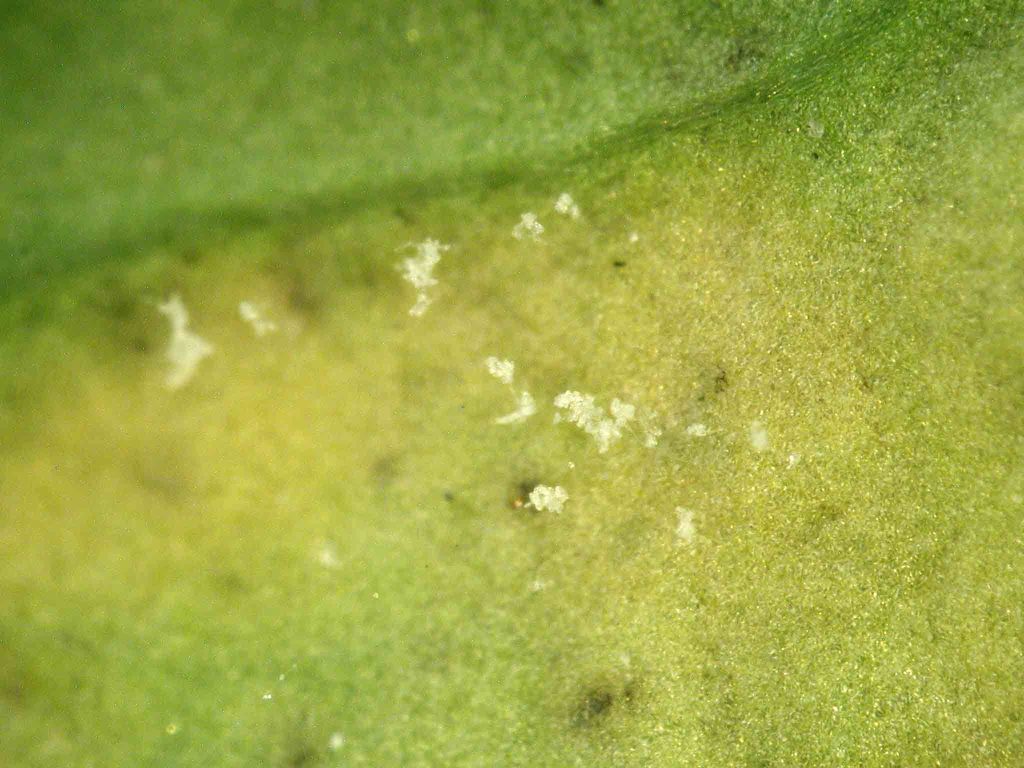
Hyaloperonospora brassicae
Hyaloperonospora brassicae, in the family Peronosporaceae, is a plant pathogen. It causes downy mildew of species of Brassica, Raphanus, Sinapis and probably other genera within the Brassicaceae. In the past, the cause of downy mildew in any plant in the family Brassicaceae was considered to be a single species Peronospora parasitica. However, this has recently been shown to be a complex of species with narrower host ranges, now classified in the genus Hyaloperonospora, for example Hyaloperonospora parasitica on the weed Capsella bursa-pastoris. From the perspective of plant pathology, Hyaloperonospora brassicae is now the name of the most important pathogen in this complex, attacking the major agricultural and horticultural Brassica species. Other significant Brassicaceous hosts are attacked by different species in the complex, e.g. horseradish (Armoracia rusticana) by Hyaloperonospora cochleariae, wallflower (Erysimum cheiri) by Hyaloperonospora cheiranthi.
Downy mildew is a disease of major importance on the horticultural Brassica species. It is most serious on the flowerhead types (cauliflower, broccoli), less serious on the leaf brassicas (cabbage, Brussels sprouts, and least serious on the root brassicas (turnips, swedes) and oil brassicas (rape). The pathogen persists as oospores in the soil. Attacks are most important in Brassica seedbeds, with infection appearing as yellow speckling of the upper surface of seedling leaves, and white mildew on the lower surface. Severely affected seedlings are stunted or killed.
Where it lives
Recorded sightings
—
geo-referenced records in GBIF, from museums, herbaria and field observers.
Drag the globe to turn it. Dots are where records exist, not a range map; darker means more records.
In the stacks
Searching the stacks…
Every page naming Hyaloperonospora brassicae in the Biodiversity Heritage Library →
This page is assembled live from iNaturalist, GBIF, Wikipedia, the Source Library and the Internet Archive. It is not yet part of the hand-edited codex. iNaturalist taxon 382590.