- Fungi Including Lichens
- ›Ascomycete Fungi
- ›Sac Fungi and Lichens
- ›Sordariomycetes
- ›Sordariomycetidae
- ›Sordariales
- ›Sordariaceae
- ›Sordaria
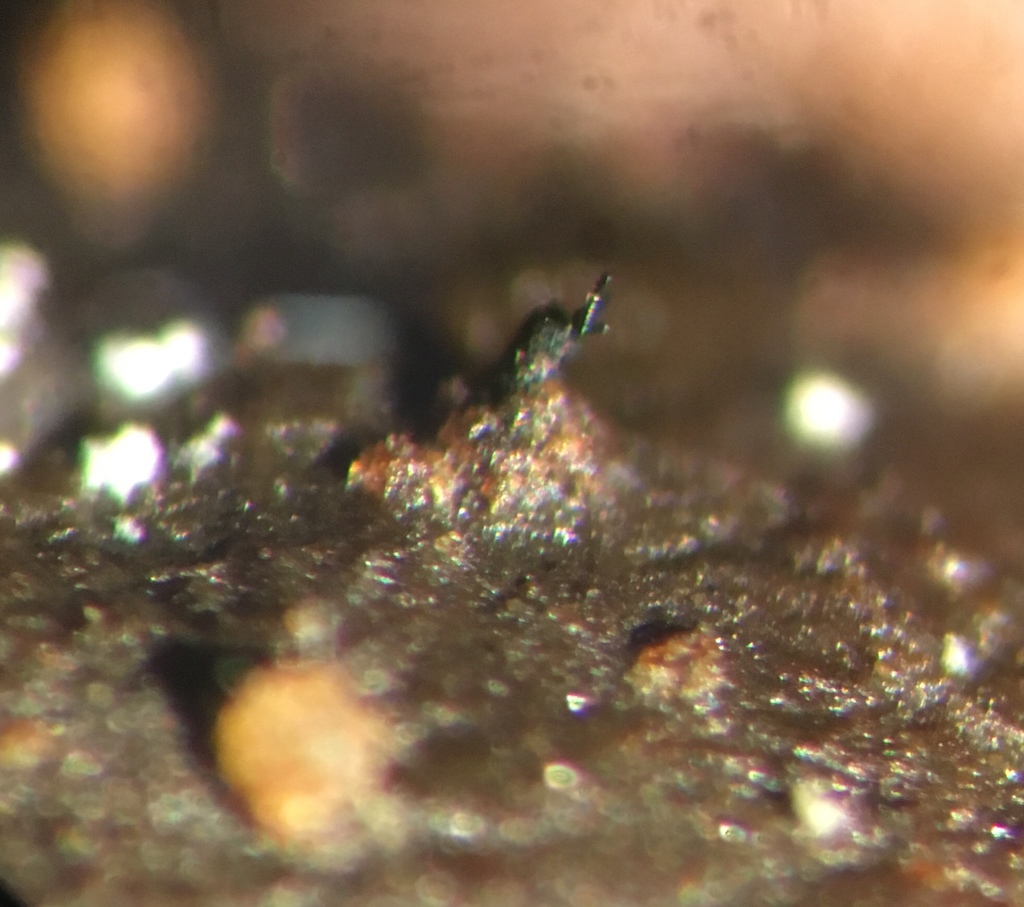
Sordaria fimicola
Sordaria fimicola is a species of microscopic fungus. It is commonly found in the feces of herbivores. Sordaria fimicola is often used in introductory biology and mycology labs because it is easy to grow on nutrient agar in dish cultures. The genus Sordaria, closely related to Neurospora and Podospora, is a member of the large class Sordariomycetes, or flask-fungi. The natural habitat of the three species of Sordaria that have been the principal subjects in genetic studies is dung of herbivorous animals. The species S. fimicola is common and worldwide in distribution. The species of Sordaria are similar morphologically, producing black perithecia containing asci with eight dark ascospores in a linear arrangement. These species share a number of characteristics that are advantageous for genetic studies. They all have a short life cycle, usually 7–12 days, and are easily grown in culture. Most species are self-fertile and each strain is isogenic. All kinds of mutants are easily induced and readily obtainable with particular ascospore color mutants. These visual mutants aid in tetrad analysis, especially in analysis of intragenic recombination.
The most common form of S. fimicola is a dark brown. Certain mutants are grey or tan. A common experiment for an introductory biology lab class is to cross one of the mutant types with a wild type and observe the ratio of coloring in the offspring. This experiment illustrates the concepts of genetic inheritance in a haploid organism. The eight ascospores are produced inside an ascus.
From the article Sordaria fimicola on Wikipedia (CC BY-SA), quoted section by section
What it does
Although S. fimicola was traditionally understood to grow on the dung of herbivorous animals or in decaying plant matter, it has also been discovered that it grows symbiotically with some plants. New research shows that S. fimicola is a facultative dung fungus and S. fimicola has been found to grow among the roots of rye-grass and wheat-grass. In sterilized and unsterilized soil, S. fimicola promoted host growth and prevented mortality. Research shows that S. fimicola in potato dextrose cultures is capable of producing triacontanol and indole-3-carboxaldehyde, both of which have antibacterial properties that may help prevent host disease. S. fimicola has also been shown to inhibit the growth of other species of fungi which are pathogenic to plants including Pestalotiopsis guepinii, Colletotrichum capsici, Curvularia lunata [Cochliobolus lunatus], Alternaria alternata and Fusarium oxysporum. S. fimicola has also been shown to negatively affect the health of some plants that it can be found growing on. When S. fimicola was first isolated from maize researchers believed that it was most likely an opportunistic pathogen. Healthy maize plants in the laboratory did not grow S. fimicola indicating that healthy maize plants may exclude it. S. fimicola did colonize healthy B. tectorum resulting in reduced fecundity and reduced growth. S. …
Wikipedia: “Ecology”
Where it lives
Recorded sightings
—
geo-referenced records in GBIF, from museums, herbaria and field observers.
Drag the globe to turn it. Dots are where records exist, not a range map; darker means more records.
In the stacks
Searching the stacks…
Every page naming Sordaria fimicola in the Biodiversity Heritage Library →
This page is assembled live from iNaturalist, GBIF, Wikipedia, the Source Library and the Internet Archive. It is not yet part of the hand-edited codex. iNaturalist taxon 384335.