- Fungi Including Lichens
- ›Ascomycete Fungi
- ›Sac Fungi and Lichens
- ›Sordariomycetes
- ›Diaporthomycetidae
- ›Diaporthales
- ›Diaporthaceae
- ›Stenocarpella
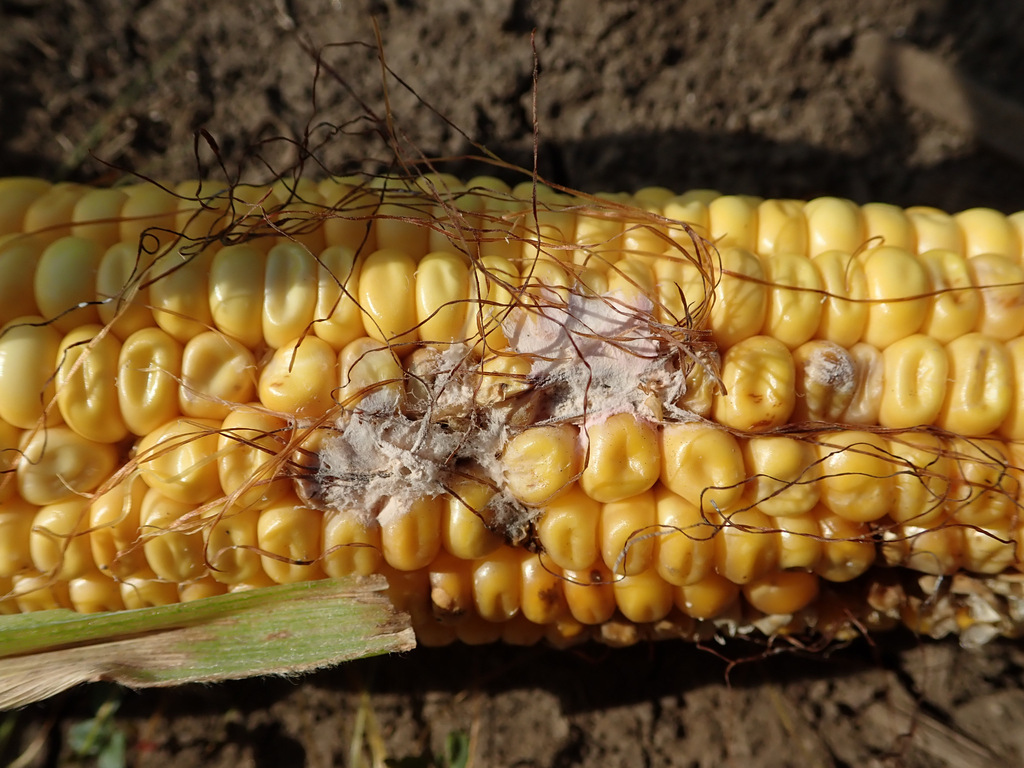
Stenocarpella maydis
Stenocarpella maydis (Berk.) Sutton (syns. Diplodia maydis (Berk.) Sacc. and D. zeae (Schwein.) Lév.) is a plant pathogenic fungus and causal organism of diplodia ear and stalk rot. Corn (Zea mays) and canes (Arundinaria sp.) are the only known hosts to date. No teleomorph of the fungus is known.
Stenocarpella maydis can significantly reduce yield or grain quality (see – Symptoms and Signs) as there is a decrease on kernel size, and lower test weight. If infection occurs early, some ears may not produce harvestable grain or seed vigor can be compromised. Delayed harvest and wet weather before harvest can allow fungal growth to continue, further reducing grain marketability. Further, some animals may reject contaminated corn-based feed. Stenocarpella rot has the potential to affect distillers dried grains with solubles (DDGS) composition, but not ethanol yield on an equivalent weight basis. Although not common, when the conditions are conducive, this organism can produce mycotoxins (see – Importance), toxic compounds to mammals.
From the article Stenocarpella maydis on Wikipedia (CC BY-SA), quoted section by section
In human culture
Timely planting: Alternate planting dates when possible. Spreading silk dates will reduce the risk of Diplodia infection. Crop rotation: Alternate non-host crops at least one year out of corn to decrease the presence of the pathogen resting structures in subsequent seasons. Tillage: Removal/Degradation of corn residues during the fall can help reduce disease levels. Irrigation timing: Overhead irrigation can splash disperse S. maydis spores from infected corn plants to adjacent healthy plants. Grain drying and selection: Prior to storage, dry grain below 13-15% to halt mold growth. Prior to storage, clean dried grain by removing lighter, damaged kernels, cobs and fines. Routinely screen grain and store the most infected grain separately to reduce disease spread. Others: Burying corn residue provides some degree of disease control. Cool infected grain below 50 °F (19 °C) soon after harvest and store at 30 °F (-1.1 °C) to delay the development of infection.
Wikipedia: “Cultural control”
Where it lives
Recorded sightings
—
geo-referenced records in GBIF, from museums, herbaria and field observers.
Drag the globe to turn it. Dots are where records exist, not a range map; darker means more records.
In the stacks
Searching the stacks…
Every page naming Stenocarpella maydis in the Biodiversity Heritage Library →
This page is assembled live from iNaturalist, GBIF, Wikipedia, the Source Library and the Internet Archive. It is not yet part of the hand-edited codex. iNaturalist taxon 384411.