- Fungi Including Lichens
- ›Basidiomycete Fungi
- ›Higher Basidiomycetes
- ›Tremellomycetes
- ›Tremellales
- ›Tremellaceae
- ›Tremella
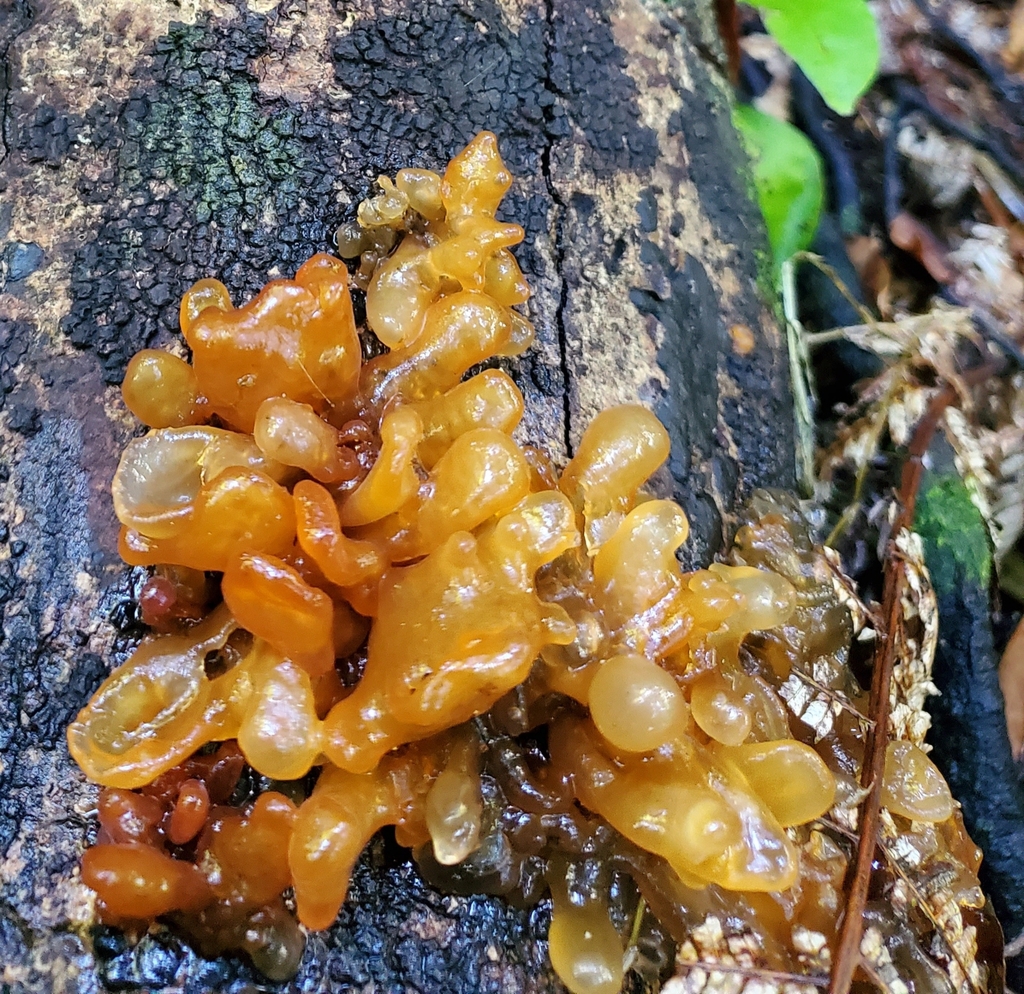
Tremella vesiculosa
Tremella vesiculosa is a species of fungus in the family Tremellaceae. It produces light brown, lobed, gelatinous basidiocarps (fruit bodies) and is parasitic on other fungi on dead branches of broad-leaved trees. It was originally described from New Zealand.
From the article Tremella vesiculosa on Wikipedia (CC BY-SA), quoted section by section
Description
Fruit bodies are firm, gelatinous, brick-red to reddish brown, up to 5 cm (2 in) across, and lobed, the lobes thick and inflated (vesiculose). Microscopically, the basidia are tremelloid (subglobose to broadly clavate, with oblique to vertical septa), 4-celled, 11.5 to 20 by 8 to 12.5 μm. The basidiospores are ellipsoid, smooth, 8 to 9 by 5.5 to 7 μm.
Range & habitat
Tremella vesiculosa is a parasite on lignicolous fungi, but its host species is unknown, though the original collections were associated with xylariaceous fungi. It is found on dead, attached or fallen branches of broad-leaved trees. The species was described from New Zealand and has been reported from Australia.
== References ==
Wikipedia: “Habitat and distribution”
Where it lives
Recorded sightings
—
geo-referenced records in GBIF, from museums, herbaria and field observers.
Drag the globe to turn it. Dots are where records exist, not a range map; darker means more records.
In the stacks
Searching the stacks…
Every page naming Tremella vesiculosa in the Biodiversity Heritage Library →
This page is assembled live from iNaturalist, GBIF, Wikipedia, the Source Library and the Internet Archive. It is not yet part of the hand-edited codex. iNaturalist taxon 384554.