- Animals
- ›Arthropods
- ›Hexapods
- ›Insects
- ›Winged and Once-winged Insects
- ›Beetles
- ›Water, Rove, Scarab, Long-horned, Leaf, and Snout Beetles
- ›Cucujiform Beetles
- ›Darkling Beetles and Allies
- ›Darkling Beetles
- ›Pimeliinae
- ›Cnemeplatiini
- ›Actizeta
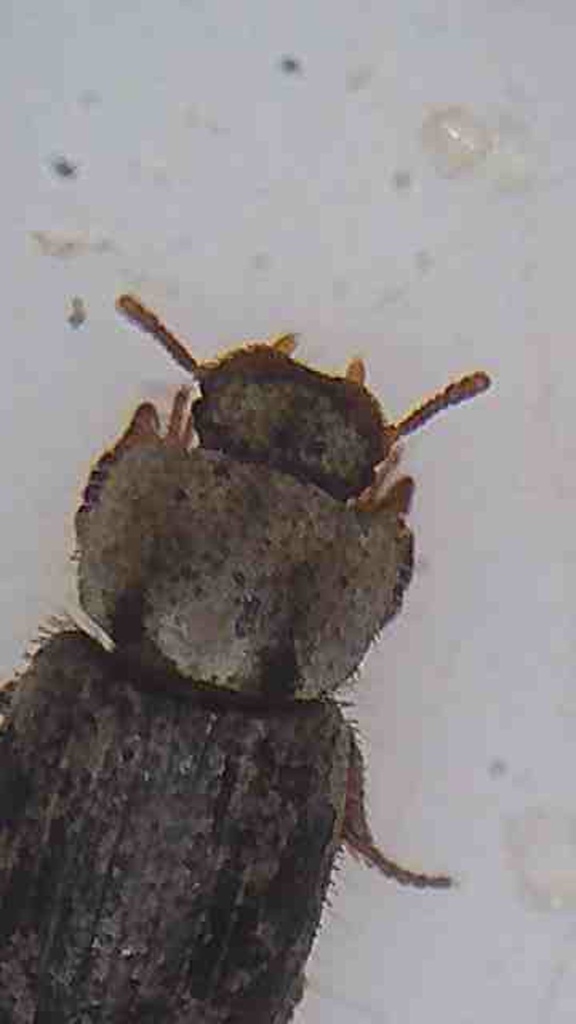
Actizeta fusca
Actizeta fusca is a species of darkling beetle endemic to New Zealand.
From the article Actizeta fusca on Wikipedia (CC BY-SA), quoted section by section
Description
As adults, Actizeta fusca are 2.61-2.9mm in length. They are similar to Actizeta albata, but can be distinguished by differences in the shape of the anterior tibia and eyes, and the colour of the scales, body, and antennae. On the outer edge of the front tibia there is a slight depression. The eyes are reduced and less noticeable than in A. albata. The body is brown and is covered in scales that are mostly whitish, but may be dark. These light and dark scales form markings on the body. The antennae is brown.
Range & habitat
These beetles are endemic to New Zealand, where they live on sandy beaches. They are known from scattered localities throughout the North Island and from the Nelson region in the South Island.
== References ==
Wikipedia: “Distribution”
Listen
Looking for field recordings…
Where it lives
Recorded sightings
—
geo-referenced records in GBIF, from museums, herbaria and field observers.
Drag the globe to turn it. Dots are where records exist, not a range map; darker means more records.
In the stacks
Searching the stacks…
Every page naming Actizeta fusca in the Biodiversity Heritage Library →
This page is assembled live from iNaturalist, GBIF, Wikipedia, the Source Library and the Internet Archive. It is not yet part of the hand-edited codex. iNaturalist taxon 384959.