- Animals
- ›Arthropods
- ›Hexapods
- ›Insects
- ›Winged and Once-winged Insects
- ›True Bugs, Hoppers, Aphids, and allies
- ›True Bugs
- ›Pentatomomorph Bugs
- ›Stink Bugs, Shield Bugs, and Allies
- ›Stink Bugs
- ›Pentatominae
- ›Rhynchocorini
- ›Cuspicona
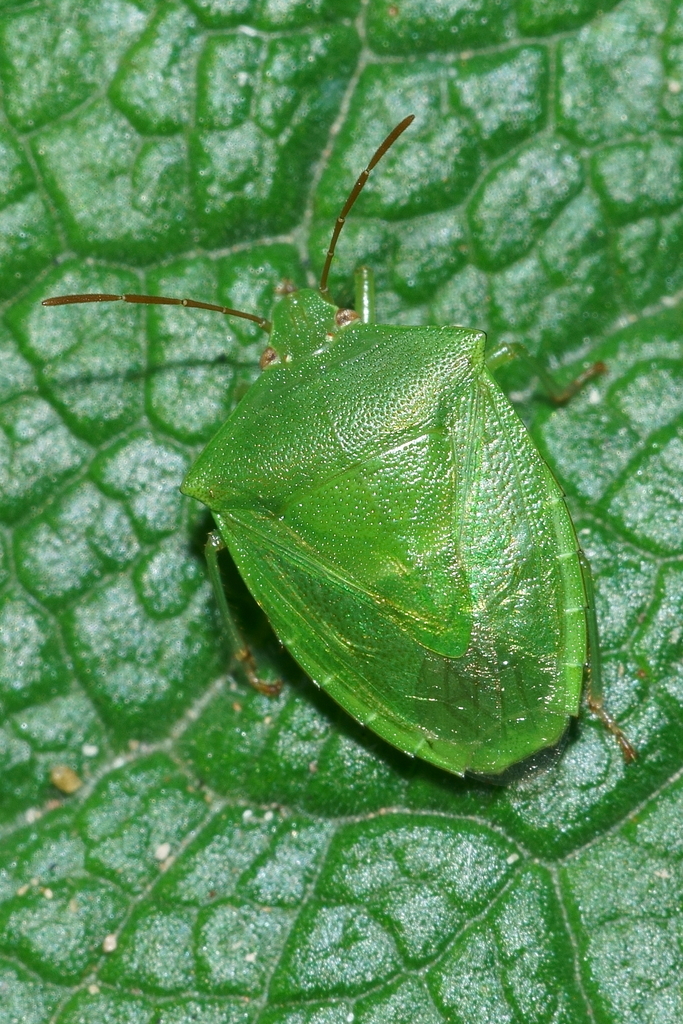
Green potato bug
Cuspicona simplex
Cuspicona simplex, commonly known as the green potato bug, is a herbivorous species of stink bug native to Australia and introduced to New Zealand. It feeds on nightshades, and is primarily known as a pest of potatoes, tomatoes, and other crops in the nightshade family.
From the article Cuspicona simplex on Wikipedia (CC BY-SA), quoted section by section
Description
Adults are bright green, range in length from 8.25 to 10.4 mm (0.325 to 0.409 in), and have pointed humeri (shoulders). The first and second instar nymphs are much smaller, primarily black and white, with some patches of red or brown. Later nymph stages are pale green with black patches on the abdomen.
What it does
Adults usually lay 14 eggs together in a mass on the undersides of leaves. Bugs emerge and stay near the egg mass until shedding their skins. Similar to other pentatomids, Cuspicona simplex progresses through five juvenile stages called nymphs, and finally to adult. Adults overwinter on the base of plants or in loose soil until late spring, when they aggregate to mate and lay eggs. The total development time from egg to adult depends on temperature, but takes between 28 and 30 days at a constant temperature of 21 °C (70 °F).
Wikipedia: “Life cycle”
Listen
Looking for field recordings…
Where it lives
Recorded sightings
—
geo-referenced records in GBIF, from museums, herbaria and field observers.
Drag the globe to turn it. Dots are where records exist, not a range map; darker means more records.
In the stacks
Searching the stacks…
Every page naming Cuspicona simplex in the Biodiversity Heritage Library →
This page is assembled live from iNaturalist, GBIF, Wikipedia, the Source Library and the Internet Archive. It is not yet part of the hand-edited codex. iNaturalist taxon 388221.