- Animals
- ›Arthropods
- ›Hexapods
- ›Insects
- ›Winged and Once-winged Insects
- ›Ants, Bees, Wasps, and Sawflies
- ›Narrow-waisted Wasps, Ants, and Bees
- ›Ichneumonid and Braconid Wasps
- ›Ichneumonid Wasps
- ›Campopleginae
- ›Limneriini
- ›Diadegma
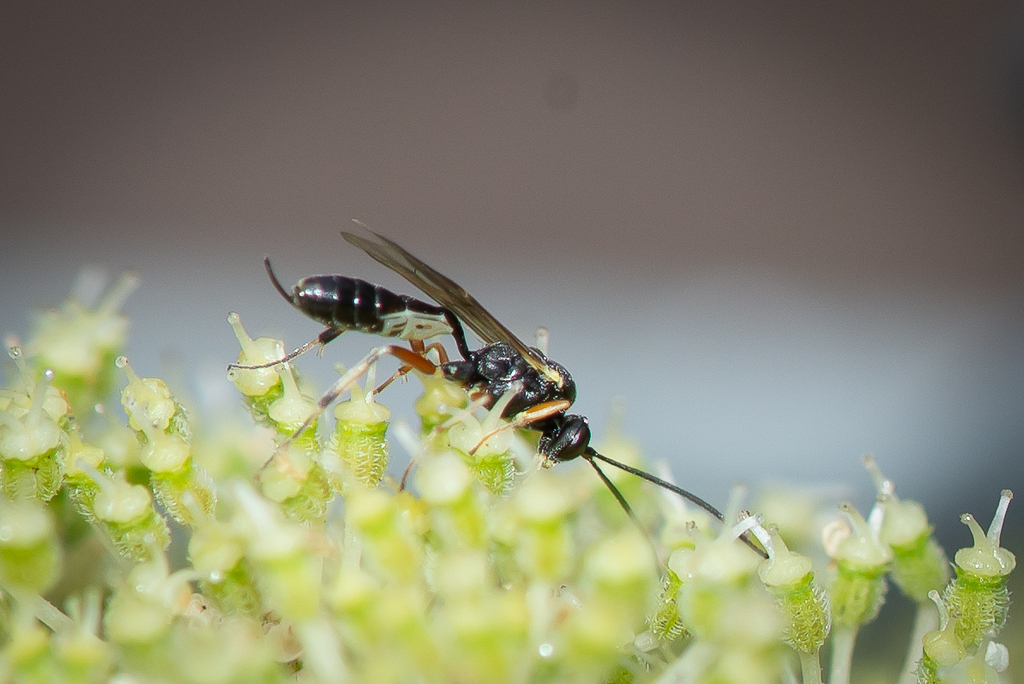
Diamondback Moth Parasitoid Wasp
Diadegma semiclausum
Diadegma semiclausum is a species of parasitic wasp in the family Ichneumonidae. Its larvae are parasites of the larvae of the diamondback moth (Plutella xylostella) and certain other moths.
From the article Diadegma semiclausum on Wikipedia (CC BY-SA), quoted section by section
Range & habitat
Diadegma semiclausum is native to Europe but has spread to, or been introduced to, other parts of the world, including Asia, Egypt, South Africa, Hawaii, Australia and New Zealand. Its preferred temperature range is between 15 and 25 °C (59 and 77 °F), so in tropical countries it is found in cooler climates at higher altitudes. It is attracted to cruciferous vegetables on which diamondback moth larvae are feeding, responding to chemical cues released by the larvae and the damaged tissues. It also parasitises the leek moth (Acrolepiopsis assectella).
Wikipedia: “Distribution and habitat”
What it does
The adult female Diadegma semiclausum searches out first instar larvae of its host and lays a single egg inside; it does not lay an egg if the larva has already been parasitised. The female wasp can lay several hundred eggs over the course of about three weeks if it finds sufficient nectar or other sugary food to sustain it. When the egg hatches, the wasp larva feeds inside the moth larva, and when the moth larva makes a cocoon, the wasp larva pupates inside. It emerges after eight to ten days, leaving a dry husk behind. The whole cycle takes about 19 days.
Wikipedia: “Life cycle”
Listen
Looking for field recordings…
Where it lives
Recorded sightings
—
geo-referenced records in GBIF, from museums, herbaria and field observers.
Drag the globe to turn it. Dots are where records exist, not a range map; darker means more records.
In the stacks
Searching the stacks…
Every page naming Diadegma semiclausum in the Biodiversity Heritage Library →
This page is assembled live from iNaturalist, GBIF, Wikipedia, the Source Library and the Internet Archive. It is not yet part of the hand-edited codex. iNaturalist taxon 388551.