On eBird ↗
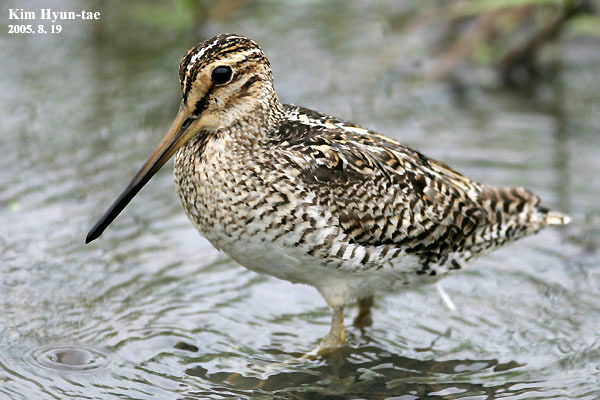
Pin-tailed Snipe
Live sightings near you, the range map, bar charts of when it is seen, and Macaulay Library photos and recordings.
Pin-tailed Snipe
Gallinago stenura
The pin-tailed snipe or pintail snipe (Gallinago stenura) is a species of bird in the family Scolopacidae, the sandpipers.
From the article Pin-tailed snipe on Wikipedia (CC BY-SA), quoted section by section
Description
This 25–27 cm long bird is similar to the longer-billed and longer-tailed common snipe. Adults have short greenish-grey legs and a long straight dark bill. The body is mottled brown on top, with cream lines down their back. They are pale underneath with a streaked buff breast and white belly. They have a dark stripe through the eye, with light stripes above and below it. Sexes are similar, and immatures differ only in minor plumage details. The wings are less pointed than common snipe, and lack the white trailing edge of that species. The shorter tail and flatter flight path when flushed also made flight separation from Common relatively easy. Male pin-tailed snipes often display in a group, with a loud repetitive tcheka song which has a crescendo of fizzing and buzzing sounds, and also whistling noises produced in flight by the pin-like outer tail feathers which give this species its English name. The normal call is a weak squik.
Range & habitat
It breeds in northern Russia and migrates to spend the non-breeding season in southern Asia from Pakistan to Indonesia. It is the most common migrant snipe in southern India, Sri Lanka and much of Southeast Asia. It is a vagrant to north-western and northern Australia, and to Kenya in East Africa.
Wikipedia: “Distribution”
Listen
Looking for field recordings…
Where it lives
Recorded sightings
—
geo-referenced records in GBIF, from museums, herbaria and field observers.
Drag the globe to turn it. Dots are where records exist, not a range map; darker means more records.
In the stacks
Searching the stacks…
Every page naming Gallinago stenura in the Biodiversity Heritage Library →
This page is assembled live from iNaturalist, GBIF, Wikipedia, the Source Library and the Internet Archive. It is not yet part of the hand-edited codex. iNaturalist taxon 3921.