- Animals
- ›Arthropods
- ›Hexapods
- ›Insects
- ›Winged and Once-winged Insects
- ›Beetles
- ›Ground and Water Beetles
- ›Ground beetles and allies
- ›Ground Beetles
- ›Pterostichinae
- ›Woodland Ground Beetles
- ›Pterostichina
- ›Megadromus
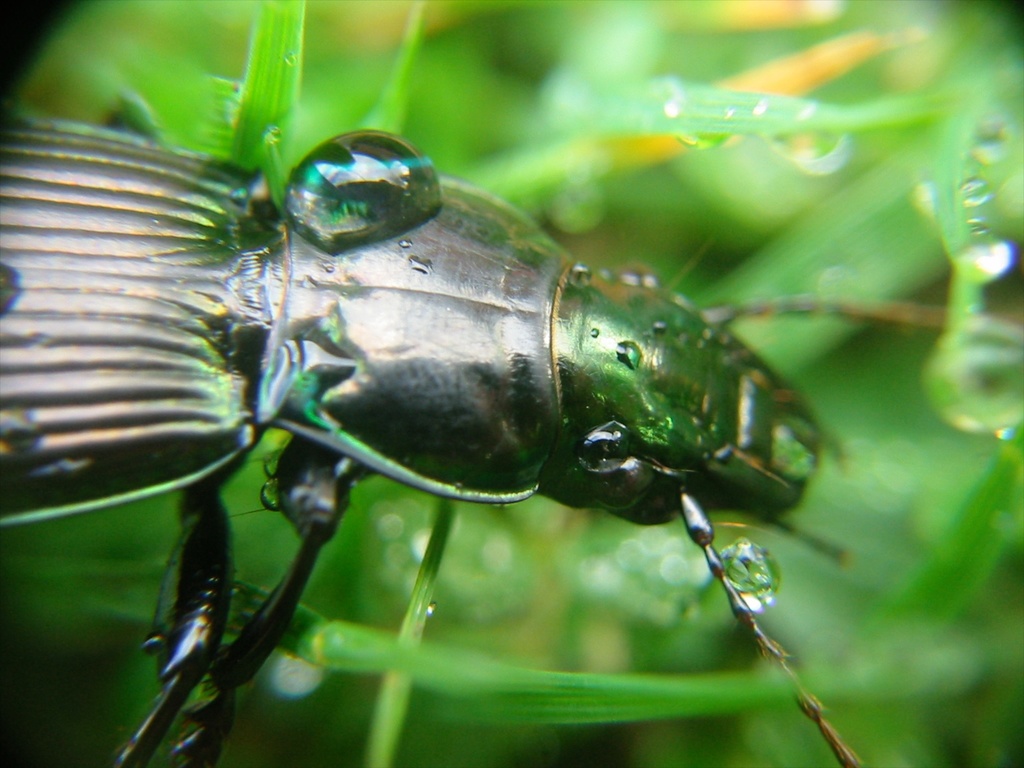
Alexander Beetle
Megadromus antarcticus
Megadromus antarcticus, also known as the “Alexander beetle”, is a member of the Carabidae (ground beetle) family and only found in the Canterbury region of New Zealand. Megadromus antarcticus are easily recognized by their iridescent green colouration.
From the article Megadromus antarcticus on Wikipedia (CC BY-SA), quoted section by section
Description
Megadromus antarcticus size can range in length from 22mm to 34mm. Megadromus antarcticus is a member of the Adephaga suborder which is morphologically defined by the presence of liquid feeding mouth parts as larvae and once matured, has six abdominal ventrites and pygidial glands. Adephaga such as Megadromus antarcticus are also characterized by being well-proportioned with prominent mandibles, long slender legs and straight elytra. Adephaga are cursorial beetles which means they are adapted specifically for running. Megadromus antarcticus is black - greenish with the rims of the pronotum and elytra a metallic green colour. This colouring gives Megadromus antarcticus a fascinating appearance which has also been referred to as iridescent green.
Range & habitat
Megadromus antarcticus is common throughout much of the Canterbury region. Their range extents from a northern limit in the Waikari area, to the coast in the east, comprising Banks Peninsula, as far south as the Cave area in South Canterbury, and to the lower reach of the Southern Alps in western Canterbury. Because Megadromus antarcticus is flightless it has limited biological dispersal ability. Additionally the braided rivers of the Canterbury plains present a significant obstacle to Megadromus antarcticus.
Wikipedia: “New Zealand range”
What it does
The incubation period of Megadromus antarcticus eggs varies dependent on the time of year. This incubation period can range from just over four weeks for eggs laid in late August to three weeks for eggs laid in February. Megadromus antarcticus females do not leave their egg chamber to feed during this period making them particularly attentive parents.
Wikipedia: “Life cycle/phenology”
Listen
Looking for field recordings…
Where it lives
Recorded sightings
—
geo-referenced records in GBIF, from museums, herbaria and field observers.
Drag the globe to turn it. Dots are where records exist, not a range map; darker means more records.
In the stacks
Searching the stacks…
Every page naming Megadromus antarcticus in the Biodiversity Heritage Library →
This page is assembled live from iNaturalist, GBIF, Wikipedia, the Source Library and the Internet Archive. It is not yet part of the hand-edited codex. iNaturalist taxon 392318.