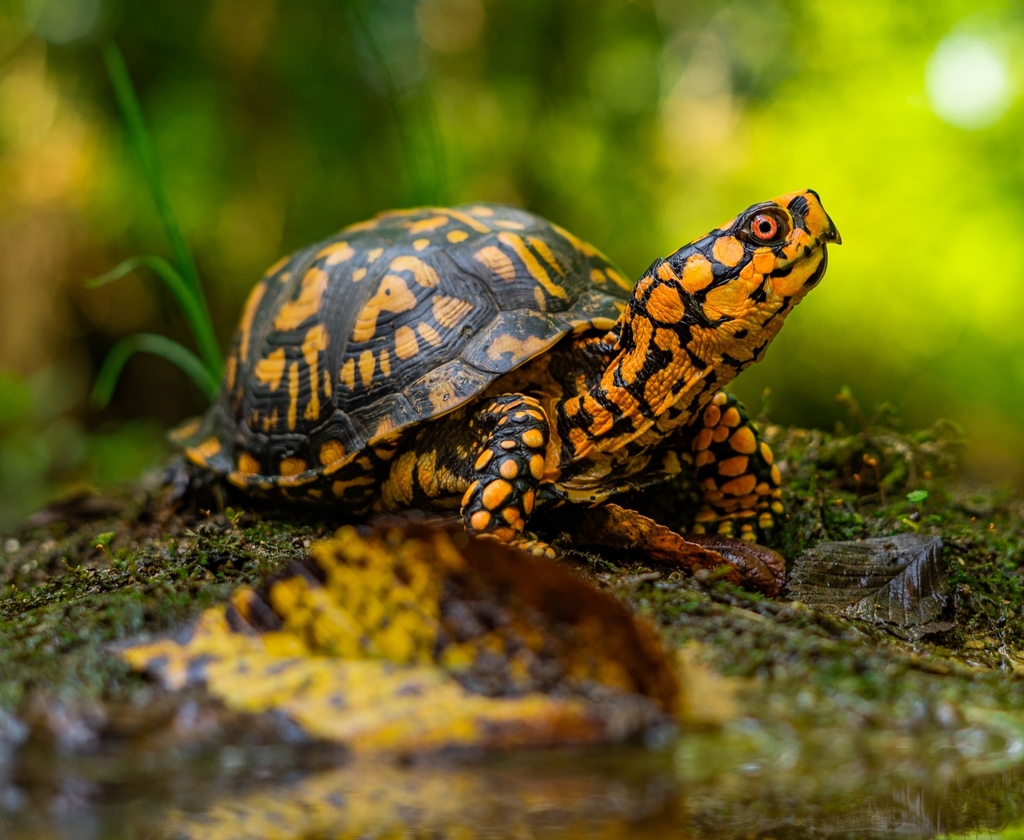
Turtles and Tortoises
Testudines
Turtles (order Testudines) are reptiles characterized by a special shell developed mainly from their ribs. Modern turtles are divided into two major groups, the Pleurodira (side necked turtles) and Cryptodira (hidden necked turtles), which differ in the way the head retracts. There are 360 living and recently extinct species of turtles, including land-dwelling tortoises and freshwater terrapins. They are found on most continents, some islands and, in the case of sea turtles, much of the ocean. Like other amniotes (reptiles, birds, and mammals) they breathe air and do not lay eggs underwater, although many species live in or around water.
Turtle shells are made mostly of bone; the upper part is the domed carapace, while the underside is the flatter plastron or belly-plate. Its outer surface is covered in scales made of keratin, the material of hair, horns, and claws. The carapace bones develop from ribs that grow sideways and develop into broad flat plates that join up to cover the body. Turtles are ectotherms or "cold-blooded", meaning that their internal temperature varies with their direct environment. They are generally opportunistic omnivores and mainly feed on plants and animals with limited movement. Many turtles migrate short distances seasonally. Sea turtles are the only reptiles that migrate long distances to lay their eggs on a favored beach.
11 branches of this order, most-observed first · about 366 known species
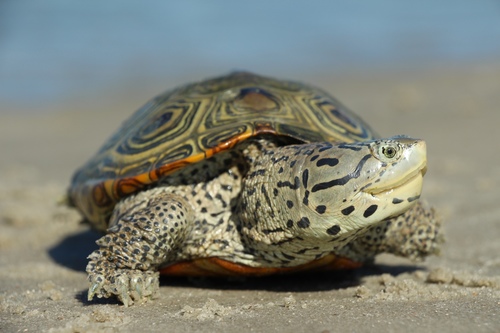
Pond and Box Turtles
familyEmydidae

Tortoises
familyTestudinidae

Snapping Turtles
familyChelydridae
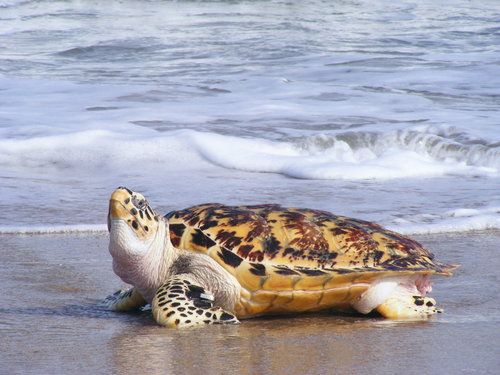
Sea Turtles
superfamilyChelonioidea

Softshell and Flapshell Turtles
familyTrionychidae

American Mud and Musk Turtles
familyKinosternidae

Side‑necked turtles
suborderPleurodira
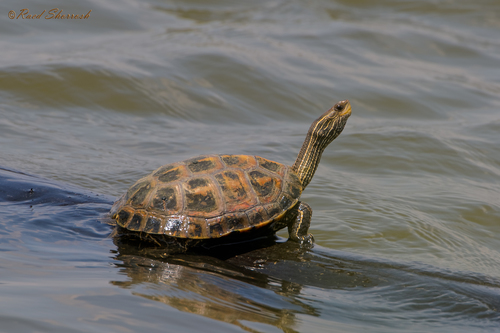
Eurasian Pond, River, and Neotropical Wood Turtles
familyGeoemydidae

Pig-nosed Turtles
familyCarettochelyidae

Big-headed Turtles
familyPlatysternidae

Central American River Turtles
familyDermatemydidae
Where it lives
Recorded sightings
—
geo-referenced records in GBIF, from museums, herbaria and field observers.
Drag the globe to turn it. Dots are where records exist, not a range map; darker means more records.
In the stacks
Searching the stacks…
Every page naming Testudines in the Biodiversity Heritage Library →
This page is assembled live from iNaturalist, GBIF, Wikipedia, the Source Library and the Internet Archive. It is not yet part of the hand-edited codex. iNaturalist taxon 39532.