
Tortoises
Testudinidae
Tortoises ( TOR-təs-iz) are reptiles of the family Testudinidae of the order Testudines (Latin for "tortoise"). Like other testudines, tortoises have a shell to protect from predation and other threats. The shell in tortoises is generally hard, and like other members of the suborder Cryptodira, they retract their necks and heads directly backward into the shell to protect them.
Tortoises can vary in size with some species, such as the Galápagos giant tortoise, growing to more than 1.2 metres (3.9 ft) in length, whereas others like the speckled Cape tortoise have shells that measure only 6.8 centimetres (2.7 in) long. Several lineages of tortoises have independently evolved very large body sizes in excess of 100 kilograms (220 lb), including the Galapagos giant tortoise and the Aldabra giant tortoise. They are usually diurnal animals with tendencies to be crepuscular depending on the ambient temperatures. They are generally reclusive animals. Tortoises are the longest-living land animals in the world, although the longest-living species of tortoise is a matter of debate. Galápagos tortoises are noted to live over 150 years, but an Aldabra giant tortoise named Adwaita may have lived an estimated 255 years. In general, most tortoise species can live 80–150 years. Tortoises are typically slow-moving, placid and gentle.
18 branches of this family, most-observed first · about 47 known species

Gopher and Desert Tortoises
genusGopherus
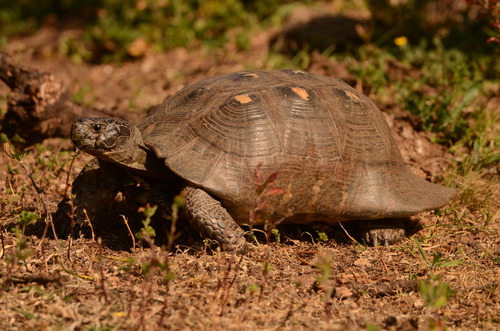
Mediterranean Tortoises
genusTestudo
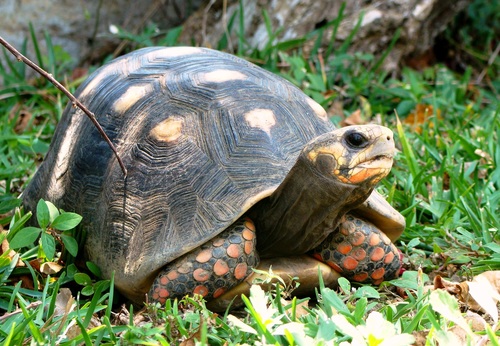
Galápagos Giant Tortoises and Allies
genusChelonoidis

Stigmochelys
genusStigmochelys

Angulate Tortoises
genusChersina

Centrochelys
genusCentrochelys

Hinged Tortoises
genusKinixys

Aldabrachelys
genusAldabrachelys

Cape Tortoises
genusHomopus

Star Tortoises
genusGeochelone

Astrochelys
genusAstrochelys

Tent Tortoises
genusPsammobates

South Asian Tortoises
genusIndotestudo

Manouria
genusManouria

Spider Tortoises
genusPyxis

Malacochersus
genusMalacochersus
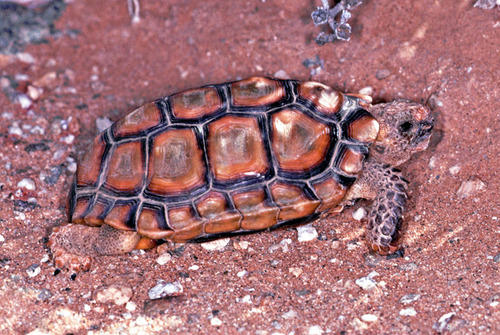
Padlopers
genusChersobius

Mascarene Giant Tortoises
genusCylindraspis
Where it lives
Recorded sightings
—
geo-referenced records in GBIF, from museums, herbaria and field observers.
Drag the globe to turn it. Dots are where records exist, not a range map; darker means more records.
In the stacks
Searching the stacks…
Every page naming Testudinidae in the Biodiversity Heritage Library →
This page is assembled live from iNaturalist, GBIF, Wikipedia, the Source Library and the Internet Archive. It is not yet part of the hand-edited codex. iNaturalist taxon 40019.