- Animals
- ›Chordates
- ›Vertebrates
- ›Reptiles
- ›Turtles and Tortoises
- ›Pond and Box Turtles
- ›Deirochelyine Turtles
- ›Pseudemys
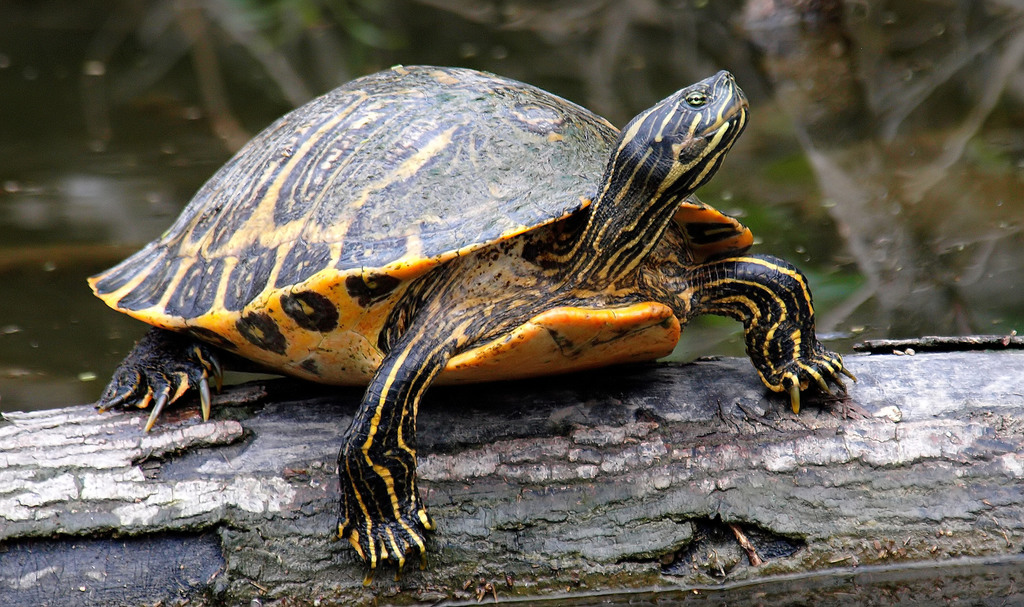
River Cooter
Pseudemys concinna
The river cooter (Pseudemys concinna) is a freshwater turtle native to the central and eastern United States, from Virginia south to mid-Georgia, west to eastern Texas, Oklahoma, and north to southern Indiana. They are usually found in rivers with moderate current, as well as lakes and tidal marshes.
From the article River cooter on Wikipedia (CC BY-SA), quoted section by section
Description
River cooters are large, freshwater turtles, with carapace lengths upwards of 200 millimeters. These turtles are known for the ornate patterns of yellow to white swirls on their carapace. These patterns can be used to identify the different subspecies but will disappear with age as both sexes tend to face melanism and begin to lose their patterns as their shells get darker.
Wikipedia: “Morphology”
Range & habitat
Pseudemys concinna is found from Virginia south to central Georgia, west to eastern Texas, Oklahoma, and north to southern Indiana. There are also isolated populations found in West Virginia, eastern Kentucky, and north-central Tennessee.
Wikipedia: “Geographic range”
What it does
The river cooter basks on logs or sun-warmed rocks, and is frequently found in the company of other aquatic basking turtles (sliders and painteds) sometimes piled up on top of each other. All are quick to slip into the water if disturbed. Diurnal by nature, Pseudemys concinna wakes with the warming sun to bask and forage. It can move with surprising speed in the water and on land. It is not unusual for it to wander from one body of fresh water to another, but many individuals seem to develop fairly large home ranges, which they seldom or never leave. It sleeps in the water, hidden under vegetation. In areas that are quite warm it remains active all winter, but in cooler climates can become dormant during the winter for up to two months, in the mud, underwater. It doesn't breathe during this time of low metabolism, but can utilize oxygen from the water, which it takes in through the cloaca. The river cooter prefers to be well hidden under aquatic plants during the winter dormancy period or while sleeping each night.
Diet. The species P. concinna is highly omnivorous and will eat anything, plant or animal, dead or alive. Diet seems to be determined by available food items. While some writers feel that this species of turtle will not eat meat, predatory behavior has been observed. …
Wikipedia: “Behavior”
Where it lives
Recorded sightings
—
geo-referenced records in GBIF, from museums, herbaria and field observers.
Drag the globe to turn it. Dots are where records exist, not a range map; darker means more records.
In the stacks
Searching the stacks…
Every page naming Pseudemys concinna in the Biodiversity Heritage Library →
This page is assembled live from iNaturalist, GBIF, Wikipedia, the Source Library and the Internet Archive. It is not yet part of the hand-edited codex. iNaturalist taxon 39830.