- Animals
- ›Chordates
- ›Vertebrates
- ›Reptiles
- ›Turtles and Tortoises
- ›Eurasian Pond, River, and Neotropical Wood Turtles
- ›Geoemydinae
- ›Hardella
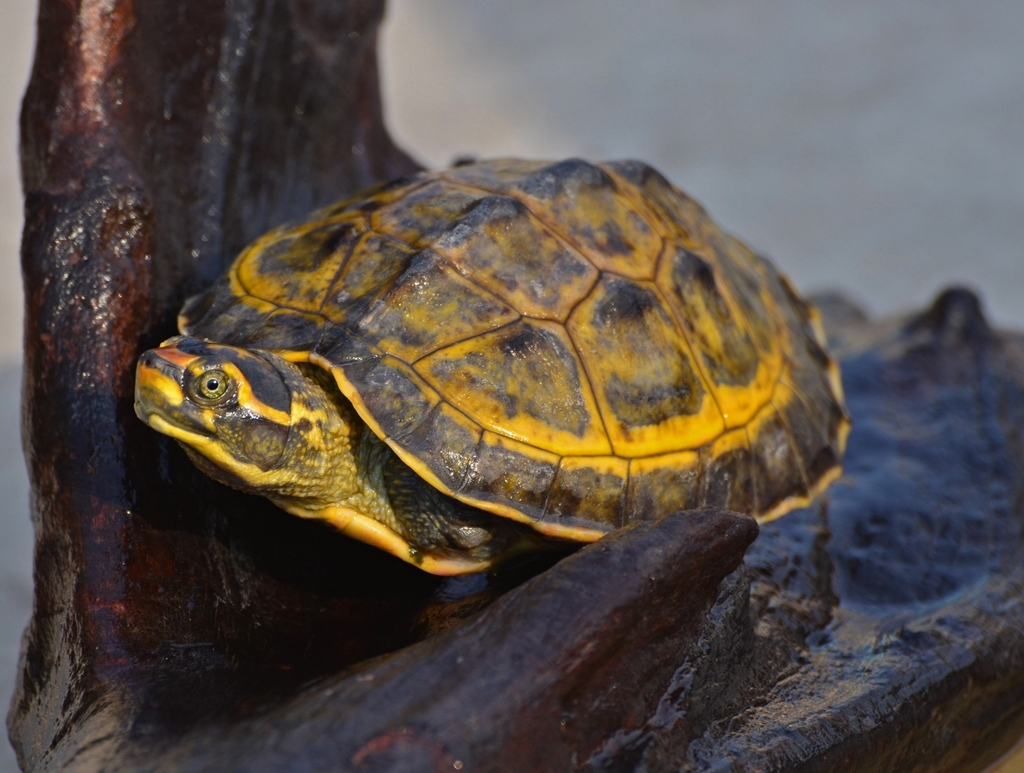
Crowned River Turtle
Hardella thurjii
The brahminy river turtle or crowned river turtle (Hardella thurjii ) is a species of turtle in the family Geoemydidae. The species is endemic to South Asia.
From the article Brahminy river turtle on Wikipedia (CC BY-SA), quoted section by section
Description
Hardella thurjii has a shell with a large, moderately flat, dark brown or black carapace (dorsal surface) and a yellow or black plastron (ventral surface). The shell is up to 18 inches (460 mm) in length in females, and is shorter in males. The lower jaw is heavily dented.
Range & habitat
Hardella thurjii is found in northern India, Pakistan, and Bangladesh in the watersheds of the Ganges, Brahmaputra, and Indus rivers.
Wikipedia: “Geographic range”
What it does
The reproductive habits of H. thurjii are unique among reptiles in that the females lay their eggs under water rather than on dry land. Their reproductive cycle follows seasonal changes in the water levels of the rivers in which they live. In autumn, females lay their eggs under water, where higher water levels submerge the eggs for 40 to 45 days. In the winter, lower water levels expose the eggs for five months. The rising water levels of spring submerge the almost mature eggs once again, and the turtles hatch in the river. Indian zoologist Dhruvajyoti Basu first documented the unique reproductive habits of the brahminy river turtle in 2011. The Prague Zoo incubated the first brahminy river turtle which was born in captivity in 2012.
Wikipedia: “Reproduction”
Where it lives
Recorded sightings
—
geo-referenced records in GBIF, from museums, herbaria and field observers.
Drag the globe to turn it. Dots are where records exist, not a range map; darker means more records.
In the stacks
Searching the stacks…
Every page naming Hardella thurjii in the Biodiversity Heritage Library →
This page is assembled live from iNaturalist, GBIF, Wikipedia, the Source Library and the Internet Archive. It is not yet part of the hand-edited codex. iNaturalist taxon 40010.